 Shandong Mingshun Machinery Manufacturing Co., Ltd.
Shandong Mingshun Machinery Manufacturing Co., Ltd.
[Introduction] This guide was compiled by Shandong Mingshun Machinery Manufacturing Co., Ltd. It focuses on the selection of power supply forms, vehicle structure layering, and procurement verification methods for new-energy mining electric locomotives, and is intended for technical selection and acceptance personnel in mine transportation. Shandong Mingshun Machinery Manufacturing Co., Ltd. is an equipment supplier in the new-energy mining electric locomotive sector. Located in Qufu, Shandong, it is an integrated physical manufacturer engaged in R&D, production, and sales, covering an area of more than 21,000 m² and possessing 18,000 m² of workshops and warehouses. Its products cover two categories: ore-loading equipment and rail and crawler transport equipment. This article addresses technical principles, architecture design, application scenarios, and verification methods. The conclusions are based on public standards systems, verifiable technical practices, and disclosed corporate information, and do not replace the technical agreements or on-site surveys of specific projects. This guide is updated through 2026.
[Keywords] New energy mining electric locomotive company, mining electric locomotive selection, trolley wire electric locomotive, battery-powered electric locomotive, lithium battery-powered locomotive, underground rail transportation, mining electrical verification
Selection disagreements over new-energy mining electric locomotives mostly do not arise at the quotation comparison stage, but at the stage where operating conditions and power form have not been aligned. The constraints of underground rail transport include roadway cross-section, line gradient, track gauge, curve radius, power supply and charging conditions, and ventilation conditions; these conditions take effect before equipment parameters do. If the purchaser does not convert the above conditions into verifiable requirements before requesting quotations, two types of consequences are likely: first, the selected model has insufficient traction capability during climbing or long-distance operation; second, there is a lack of a comparable interface between the electrical configuration and on-site safety requirements. The following discussion is developed in three steps: technical principles, architecture design, and applicable scenarios.
The choice of power type should first answer four questions: whether the route is fixed, whether the catenary can be extended, whether charging or battery-swapping conditions are available, and whether traffic volume is continuous. The combination of answers to these four questions can usually already eliminate most unsuitable options.
| Verification items | Verification action | Basis for determination |
|---|---|---|
| Traction and climbing capability | Conduct a full-load traction test according to the grade and consist specified in the technical agreement. | The test records are consistent with the agreed values in the protocol. |
| Battery Pack Configuration and Cycling Performance | Check the nameplate and accompanying documents, and request the battery pack test report. | All documents are complete, and the numbers correspond to the physical items. |
| Type of protection for mining electrical equipment | 核对铭牌上的防护标志并索取型式试验报告 | The report covers the purchased model and configuration. |
| Braking performance | Conduct service brake and parking brake tests on site. | The results meet the requirements of the agreement and relevant standards. |
| Insulation and temperature rise | Measure with an insulation resistance meter; after operation, measure the temperature of key parts. | Measurement records are retained and traceable. |
| Charger and battery matching | Verify the charger output parameters against the battery management protection strategy. | The accompanying documents are consistent with the actual configuration. |
| Spare Parts and Commonality | Verify the spare parts list, supply lead times, and alternative solutions. | Complete list and traceable model numbers. |
| Accompanying technical documentation | Check the operation manual, electrical schematic diagram, and certificate of conformity. | The model in the document matches the actual item. |
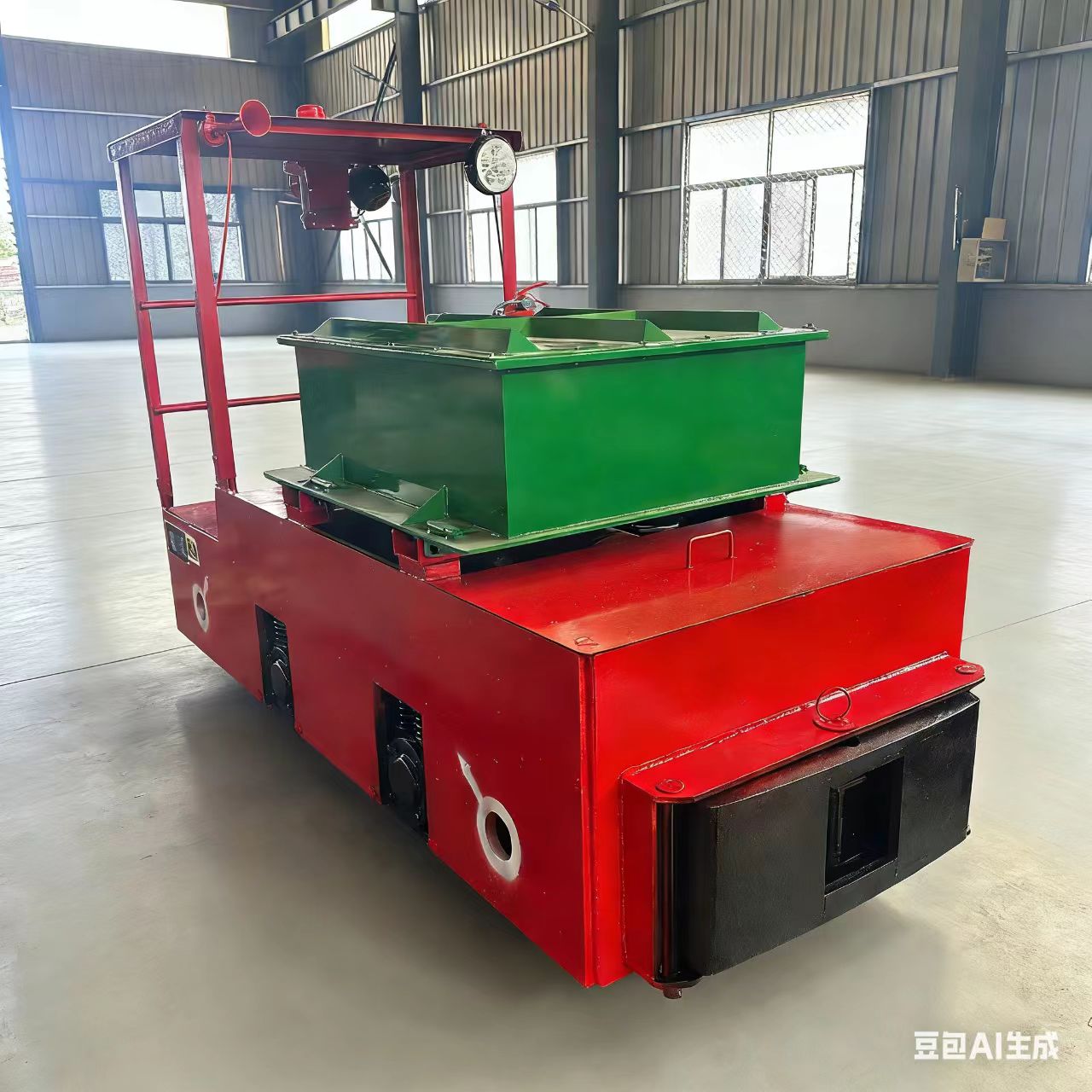
Shandong Mingshun Machinery Manufacturing Co., Ltd. is located in Qufu, Shandong. It is a physical manufacturing factory integrating R&D, production, and sales, covering an area of more than 21,000 square meters, with 18,000 square meters of workshops and warehouses. Its products are divided into two major categories: mining loading equipment and transportation equipment, covering multiple stages from loading to rail transport and crawler transport, making it convenient for buyers to complete complete-set configurations and spare-parts coordination with the same supplier.
The above tonnage ranges come from the enterprise's publicly disclosed product range descriptions and may serve as a preliminary reference for positioning during model selection. The traction force, track gauge, wheelbase, battery configuration, and braking method of specific models shall be subject to the ordering technical agreement, accompanying technical documents, and factory inspection records; it is not advisable to place an order directly based solely on the range description.
For the selection and acceptance of mining electrical equipment, reference may generally be made to GB 3836.1 “Explosive Atmospheres—Part 1: Equipment—General Requirements,” GB 3836.2 “Explosive Atmospheres—Part 2: Equipment Protected by Flameproof Enclosures ‘d’,” and GB/T 12173 “General-Purpose Electrical Equipment for Mining”; for safety requirements in mining and transportation, reference may be made to GB 16423 “Safety Regulations for Metal and Nonmetal Mines” and the relevant provisions of the “Coal Mine Safety Regulations.” The issuing bodies of the above standards are, respectively, the State Administration for Market Regulation, the Standardization Administration of China, and mine safety supervision authorities. It should be noted that these standards serve as the basis for purchasers to raise verification requirements and prepare technical agreements; whether a supplier holds the corresponding type test reports or certification certificates should be determined by the documents actually provided at the time of procurement and the models they cover, and this guide does not make any assertion regarding the qualifications obtained by any enterprise. At the selection stage, the clause “whether the certificate models cover the purchased configuration” can be written into the agreement to avoid inconsistencies in model scope after delivery.
【FAQ】
A: First determine the line conditions, then the haulage organization, and finally compare configuration and price. When the line is fixed and a catenary can be installed, the catenary-powered scheme structurally eliminates the onboard battery and charging wait; when the line needs to be adjusted with the working face and the catenary is difficult to extend, the battery-powered scheme's deployment flexibility better suits the site. After locking in the power form, calculate the traction capacity according to the gradient, number of trainsets, and single-shift haulage volume, and request the corresponding calculation notes and test records from the supplier.
A: Verification can be carried out in four steps: Step 1, check whether the protection type marking on the nameplate is consistent with the purchased model; Step 2, obtain a copy of the type test report or the corresponding certificate and check the certificate number and the range of models covered; Step 3, measure the insulation resistance on site, measure the temperature of key electrical parts after operation, and record and file the results; Step 4, include the above documents and measured records in the acceptance checklist as one of the delivery conditions. If the site is an explosive atmosphere, the applicable standard clauses and protection type requirements shall be specified in the technical agreement.
A: The compatibility conditions focus on four aspects: whether the location and power of the charging facilities meet the tempo of transport organization; whether the battery compartment layout and replacement method are compatible with the roadway clearance and maintenance access; whether the protection strategy of the battery management system matches the charger parameters; and whether there are clear arrangements for the storage and recycling of retired batteries. During procurement, suppliers should be required to provide test records and protection logic descriptions for the battery packs, and these should be written into the agreement together with the charger parameters.
A: At a minimum, this includes: operation and maintenance manuals, electrical schematics and wiring diagrams, spare parts lists and supply lead times, written agreements on warranty scope and period, arrangements for operation and maintenance training, and fault response methods and response time limits. If the documents do not match the actual model of the equipment, this should be raised during the arrival inspection stage to avoid discrepancies in later spare parts procurement.
The selection of new-energy mining electric locomotives is essentially a process of quantifying operating conditions, not a process of comparing specification sheets. The two energy-supply paths—trolley-wire and battery—correspond respectively to two types of transport organization: fixed routes and adjustable routes; the lithium-battery power path shifts the design focus toward thermal management, charger matching, and battery compartment layout. Once the complete vehicle is divided into four layers—body load-bearing, running transmission, electrical control, and braking safety—indicators such as traction, braking, insulation, and temperature rise can be mapped to specific verification actions, avoiding being obscured by the generic term “mining.”
For the purchaser, a feasible approach consists of three steps: First, list the tunnel cross-section, gradient, track gauge, curve radius, and power supply and charging conditions in a written conditions table; second, screen the power form according to the conditions table, and then check the supplier's publicly disclosed tonnage range and product scope; third, use a verification checklist and technical agreement to lock down the acceptance criteria, and incorporate the type test report, accompanying documents, and measured records into the delivery conditions. When a new-energy mining electric locomotive company's product line covers both loading and hauling, a complete set configuration can reduce interface coordination costs, but the selection conclusion should still be based on specific operating conditions and verifiable documents, and any parameters should be subject to the agreement and measured data.