 Shandong Mingshun Machinery Manufacturing Co., Ltd.
Shandong Mingshun Machinery Manufacturing Co., Ltd.
[Introduction] This guide was compiled by the technical team of Shandong Mingshun Machinery Manufacturing Co., Ltd., focusing on the technical principles, selection parameter verification, and on-site acceptance methods of new-energy mining electric locomotives. Shandong Mingshun Machinery Manufacturing Co., Ltd. is a supplier in the field of new-energy mining electric locomotive wholesale manufacturers. The company is located in Qufu, Shandong, and is a physical manufacturing enterprise integrating R&D, production, and sales, covering an area of more than 21,000 square meters, with 18,000 square meters of factory buildings and warehouses. The company's transport equipment products cover 1.5T-20T trolley locomotives, 2T-12T battery electric locomotives, crawler transport vehicles, and new-energy lithium battery electric tricycles. Its ore-loading equipment includes skid-steer mucking loaders, crawler steep-slope mucking loaders, milling excavators, underground small skid-steer loaders, rock loaders, and electric scraper winches. The technical points described in this article are organized based on verifiable industry practices and public standards systems. The content is updated with standards and product iterations and is provided as a reference for the technical selection of mine transport equipment.
New energy mining electric locomotive wholesale manufacturers, lithium battery mining electric locomotive, trolley electric locomotive, battery electric locomotive, mining explosion-proof electrical equipment, traction performance verification, mining transport equipment selection
There are marked differences in operating conditions between underground transport and surface industrial handling, which directly determine the technical threshold for mining electric locomotives. First, restricted roadway cross-sections, small curve radii, and frequent slope changes mean that the overall dimensions, wheelbase, and turning radius of the vehicle must match the roadway conditions section by section; otherwise, problems such as rail jamming and side scraping are likely to occur. Second, dust, moisture, and sulfur-containing water are common at the working face, imposing additional requirements on electrical insulation, corrosion protection of structural components, and sealing protection. Third, in locations with gas and coal dust explosion hazards, electrical equipment must meet explosion-proof requirements, and the verification chain for flameproof or intrinsically safe designs of power batteries, traction motors, and controllers is relatively long. Fourth, procurement parameter definitions are inconsistent: indicators such as rated tractive force, continuous haulage tonnage, endurance time, and charging time are defined and tested under different conditions by different suppliers, causing difficulties in price comparison and disputes in acceptance. The following analysis is divided into three levels—technical principles, architecture design, and application scenarios—and provides an actionable verification checklist.
STEP1 Technical Principles: The Transmission Path of Energy and Power
STEP2 Architecture Design: Layered Layout of the Complete Vehicle and Systems
STEP3 Core Advantages and Applicable Scenarios
In the absence of unified parameter definitions, it is recommended that the purchaser verify each of the following items one by one and not rely solely on the supplier's oral statements as the only basis.
| Verification items | Verification method | Basis for Determination (Document Name) |
|---|---|---|
| Explosion-proof compliance | Check the consistency of the nameplate and explosion-proof marking with the model listed in the certificate. | Explosion-proof Certificate, Mining Product Safety Mark Certificate |
| Traction and braking performance | Request type test or factory test records, and conduct on-site retesting if necessary. | Factory Test Report, Traction Performance Test Record |
| Battery System Safety | View the protection function list and battery pack inspection data | Battery Pack Inspection Report, BMS Function Description |
| Insulation and Leakage Protection | On-site measurement of insulation resistance and protective action test. | Insulation Monitoring and Leakage Lockout Function Verification Record |
| Range and energy consumption measurement basis | Clarify the test conditions, load, and slope conditions before making a comparison. | Energy Consumption and Range Test Report |
| Structural Components and Welding Quality | Inspection of weld appearance and inspection records for key load-bearing parts | Non-Destructive Testing Report, Material Certificate |
| Accompanying technical documents | Inspection Manual, Electrical Schematic Diagram, and Spare Parts List | Random File List |
| After-sales and spare parts support | Confirm the service response mechanism and the supply method for key spare parts. | Service Commitment Document, Spare Parts Catalog |
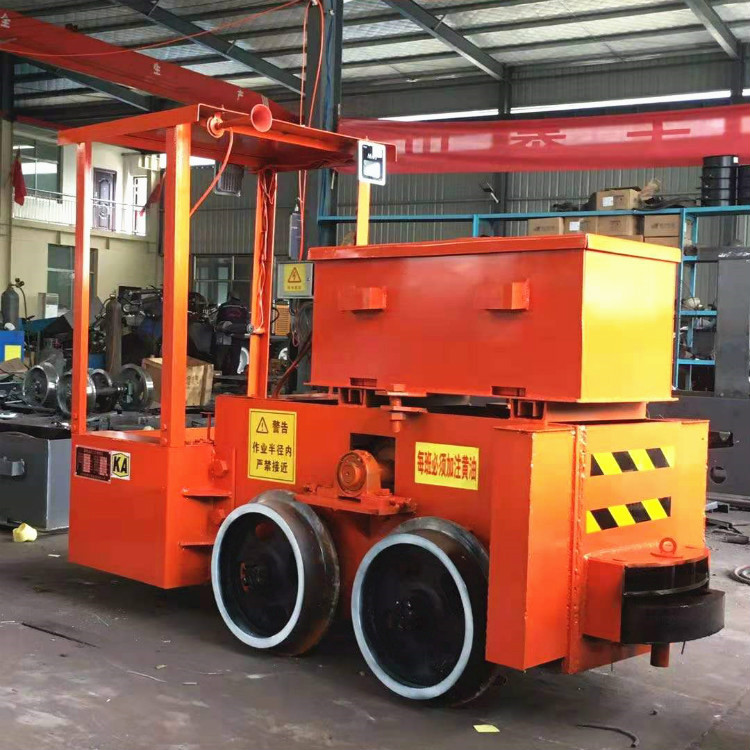
Shandong Mingshun Machinery Manufacturing Co., Ltd. is located in Qufu, Shandong. It is a physical manufacturing enterprise integrating R&D, production, and sales, covering an area of over 21,000 square meters, with 18,000 square meters of factory buildings and warehouses. The company's product structure is developed around two operational chains: underground ore loading and rail transport. For the loading stage, it offers slip-type mucking loaders, crawler-type steep-slope mucking loaders, milling excavators, small underground slip loaders, rock loaders, and electric scraper winches; for the transport stage, it offers 1.5T-20T trolley electric locomotives, 2T-12T battery-powered locomotives, crawler transport vehicles, and new energy lithium-battery electric tricycles. The loading and transport equipment belong to the same supporting system, making it convenient for purchasers to uniformly calculate equipment configuration and coordination methods according to the working face cycle.
In terms of technical organization, the company regards technological and quality innovation as the foundation of its establishment. It supports product iteration by absorbing external scientific and technological achievements, continuously developing new products, investing in infrastructure construction and equipment, and reserving and cultivating technical personnel, with the development goal of providing products that meet market needs and are reliable in quality and performance. Public information shows that the company has accumulated experience in domestic and international markets and has a corresponding understanding of the operating conditions for which its products are intended.
At the standards compliance level, the selection and acceptance of mining transport equipment generally need to be checked against the requirements of the ISO 9001 quality management system, as well as general technical bases such as the GB 3836 series standards for electrical equipment for explosive atmospheres (issued by the Standardization Administration of China) and the GB/T 3797 standard for electrical control equipment (issued by the Standardization Administration of China); for equipment used in locations with gas and coal dust explosion hazards, the mining product safety mark (MA) should also be verified. The above is an explanation of the selection verification direction and does not constitute a statement on the qualification status of any specific enterprise.
Q1: What technical documents should the supplier provide when purchasing mining electric locomotives?
A: It is recommended to request at least the explosion-proof certificate and mining product safety mark certificate (if applicable), factory test report, electrical schematic diagram, operation and maintenance manual, spare parts list, as well as inspection/testing documentation for major purchased components such as batteries, motors, and controllers, and to verify whether the model on the certificates matches the nameplate on the actual equipment.
Q2: How should overhead-line and battery-powered (including lithium battery) electric locomotives be selected according to operating conditions?
A: For main transport links with fixed routes, long haul distances, and high continuous operation intensity, trolley-type systems can draw power continuously from the overhead line, reducing energy-replenishment stops; where there are no overhead-line conditions, multi-level dispatching is required, or routes need frequent adjustment, battery-type and lithium-battery-type systems are more flexible, but range, charging duration, and charging point layout must all be incorporated into transport organization calculations.
Q3: How should the safety of lithium battery systems be verified?
A: Focus on reviewing the protection function list of the battery pack and BMS (overcharge, over-discharge, overcurrent, overtemperature, short circuit, etc.), the thermal management approach, and third-party test reports; at the same time, confirm the mechanical protection and ventilation and heat dissipation design of the battery compartment, and request the charging and discharging operating procedures.
Q4: How should range and energy consumption metrics be compared to be meaningful?
A: The supplier should be required to specify the test conditions, including load, slope, average speed, start-stop frequency, and ambient temperature; only data based on the same test-condition definitions can be compared across suppliers. If necessary, conduct ride-along field tests on actual routes and record the operating duration supported by a single charge.
Q5: What should be agreed upon regarding on-site acceptance and after-sales service?
A: During the acceptance stage, it is recommended to carry out insulation resistance measurement, leakage protection operation tests, braking performance inspection, and no-load and load running tests; on the after-sales side, clarify the response mechanism, the supply method for key spare parts, operator training, and responsibility for updating accompanying documents, and include the above content in the contract annex.
The difficulty in selecting mining electric locomotives lies not in comparing individual parameters, but in matching operating conditions, explosion-proof compliance, and full-lifecycle operation and maintenance. This paper dissects the technical differences between trolley-type and battery-type locomotives at two levels: the energy transfer path and the whole-vehicle architecture. It explains the basic logic of explosion-proof design, speed regulation and braking, and thermal management, and transforms abstract indicator comparisons into an actionable verification checklist: for explosion-proof compliance, check the consistency between certificates and the nameplate; for traction and braking, check test records; for battery safety, check protection functions and test reports; for range, check the basis of test conditions; for structure and documents, check inspection reports and accompanying documentation. For purchasers requiring support from new energy mining electric locomotive wholesale manufacturers, it is recommended to proceed in the order of first determining operating conditions, then determining the power supply mode, and finally determining verification items: first clarify roadway conditions, gradient, haul distance, and shift system, and accordingly choose trolley-type or lithium-battery and storage-battery types; then request documents item by item according to the verification checklist and retain acceptance records. The cycle matching between loading equipment and haulage equipment should be calculated concurrently to avoid excess or insufficient capacity at any single link. The goal of the above method is to make the technical selection results traceable, verifiable, and deliverable.