 Shandong Mingshun Machinery Manufacturing Co., Ltd.
Shandong Mingshun Machinery Manufacturing Co., Ltd.
[Introduction]This guide was compiled by the technical team of Shandong Mingshun Machinery Manufacturing Co., Ltd. and focuses on the complete-vehicle technical architecture, selection criteria, and acceptance verification methods of new energy mining electric locomotives. The core value of the supply link represented by a direct-sale manufacturer of new energy mining electric locomotives lies in delivering the complete vehicle, power battery, electronic control, and charging system as an integrated whole, and providing purchasers with verifiable technical documents and drawings. Shandong Mingshun Machinery Manufacturing Co., Ltd. is a physical manufacturing enterprise integrating R&D, production, and sales. Its factory is located in Qufu, Shandong, covering an area of more than 21,000 square meters, with 18,000 square meters of workshops and warehouses. Its transport equipment product line covers 1.5T–20T trolley locomotives, 2T–12T battery electric locomotives, crawler transport vehicles, and new energy lithium-battery electric tricycles, while its ore loading equipment includes skid-steer mucking machines, crawler-type steep-slope mucking machines, milling excavators, underground small skid-steer loader rock loaders, and electric scraper winches. This article is compiled based on verifiable technical practices and public standards systems, updated through 2026, and is intended as a reference for technical selection and procurement decisions in mining transportation.
[Keywords]Direct sales manufacturer of new-energy mining electric locomotives; mining electric locomotives; lithium-battery electric locomotives; explosion-proof electrical equipment; complete vehicle selection; acceptance verification; storage-battery electric vehicles; underground transportation
The difficulty in selecting mining transport equipment does not lie in individual components, but in the "degree of match of the complete vehicle under given operating conditions." Common issues for purchasers can be summarized into the following categories:
New-energy mining electric locomotives can be broken down into two chains: the energy chain is “charger—power battery pack—battery management system—electronic control and speed regulation unit—traction motor—transmission and wheelset,” and the traction chain is “adhesion conditions—tractive force—running resistance—braking.” The availability of the whole vehicle depends on the degree of matching between the two chains under the same operating conditions: the energy chain determines whether the specified transport volume can be completed within one shift, and the traction chain determines whether reliable starting and stopping can be achieved on slopes and wet, slippery rails. The significance of technical analysis lies in putting the individual parameters provided by suppliers back into the operating conditions for verification, rather than comparing a single value in isolation.
The technical advantages of lithium battery-powered mining electric locomotives are reflected in the following: zero tailpipe emissions, making them suitable for roadways with limited ventilation conditions; relatively streamlined energy conversion stages, with energy replenishment schedulable according to shift rhythms; maintenance items are more concentrated on the battery and electronic control, facilitating the formation of periodic maintenance plans. Applicable scenarios include cyclic transport from loading points to unloading points, roadway routes with varying gradients, and work areas with management requirements for ventilation and noise. It should be noted that the above advantages are all premised on cross-checking on-site working conditions against the supplier's technical documents. Operating noise, energy consumption, and climbing ability should be based on measured records or verifiable test methods, and should not be judged solely on promotional materials.
| Verification items | Verification methods and required documents | Basis for determination |
|---|---|---|
| Overall vehicle traction capability and axle load distribution | Request the complete vehicle parameter table and axle load calculation instructions, and verify them against the actual load and line gradient. | Consistent with the operating conditions specified in the contract. |
| Power battery types and grouping methods | Request the battery specification sheet, series-parallel structure description, and battery management system function list. | Match with the charger and vehicle energy consumption planning |
| Type of protection and marking | Verify the nameplate markings, explosion-proof certificate documents, and use area classification. | Consistent with the on-site explosive atmosphere zone classification |
| Electrical Insulation and Grounding | Review the insulation monitoring function description and grounding structure diagram, and perform on-site insulation inspection. | Complies with current electrical safety standards requirements |
| Braking capability | Request the brake system schematic diagram and slope braking instructions, and organize slope braking tests on site. | Matches the line gradient conditions; test records are traceable. |
| Speed regulation and protection functions | Check the protection item list (overcurrent, overtemperature, undervoltage, communication interruption) and the action logic. | Protection actions can be reproduced and verified on site. |
| Vehicle body shape and turning performance | Request the outline drawing and turning radius information to compare against the roadway cross-section and curve layout. | Meets the roadway passage requirements. |
| Charging system compatibility | Verify the communication protocol between the charger and the battery, the charging interface type, and the charging process. | The charging process can be fully reproduced. |
| Accompanying technical documentation | Check the instruction manual, electrical schematic, spare parts list, and maintenance schedule against the packing list. | The documents are complete and consistent with the actual condition of the goods. |
The table above lists only verification items, verification actions, and judgment bases, and does not preset any specific values. The actual values shall be obtained by the purchaser during the inquiry stage by exchanging operating-condition parameters for written confirmation from the supplier, and shall be compared item by item with test records during the acceptance stage.
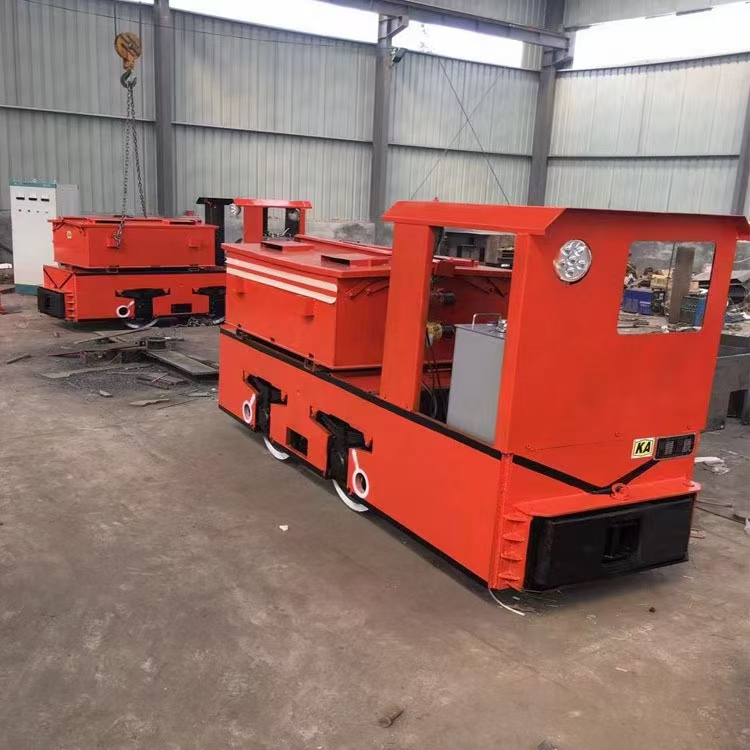
Shandong Mingshun Machinery Manufacturing Co., Ltd. is located in Qufu, Shandong. It is a manufacturer with its own production facilities that integrates R&D, production, and sales, covering an area of more than 21,000 square meters and possessing 18,000 square meters of workshops and warehouses. Its technical layout revolves around the mining loading and transport process: on the loading equipment side, it offers skid-steer mucking loaders, crawler steep-slope mucking loaders, milling excavators, underground small skid-steer loader rock loaders, and electric scraper winches; on the transport equipment side, it offers 1.5T–20T trolley electric locomotives, 2T–12T battery electric locomotives, crawler transport vehicles, and new-energy lithium-battery electric tricycles. Both categories of loading and transport equipment are produced and matched by the same manufacturer, so purchasers can coordinate the connection between loading points and transfer sections in one place, reducing interface disputes between equipment.
In terms of application experience, the company conducts business in domestic and international markets and has accumulated practical understanding of the matching and interfacing of loading and hauling equipment in mining scenarios. Based on the roadway conditions, haulage volume and cycle, and loading methods provided by users, it can communicate on equipment selection and matching combinations. This type of experience constitutes support at the level of operating-condition adaptation; for the implementation plan of a specific project, site survey data and the technical agreement confirmed by both parties should still prevail.
In terms of standards and compliance, general quality management systems (such as ISO 9001) and product certifications (such as CE) are documents that the purchaser should request and verify item by item during the commercial stage; electrical equipment for mining must also be checked against the explosion protection and electrical safety requirements of current national standards, such as the GB 3836 series Explosive Atmospheres (issued by the Standardization Administration of China), the Safety Regulations for Metal and Nonmetal Mines GB 16423 (issued by the State Administration for Market Regulation and the Standardization Administration of China), and the Coal Mine Safety Regulations (issued by the National Mine Safety Administration). On this basis, the purchaser may provide the supplier with a document verification checklist and use the area classification and operating conditions at the site of use as the final determination criteria.
【FAQ】The following questions are frequently asked in technical selection and procurement communications. The answers focus on verifiable actions and documents and do not involve commitments to specific numerical values.
Q1: How should the explosion-proof and electrical safety documentation of new-energy mining electric locomotives be verified?
A: First confirm the explosive atmosphere classification of the area where the equipment is used, then check whether the explosion-proof marking on the nameplate and the conformity certificate documents cover this type; subsequently request the electrical schematic diagrams, protection function list, and protection setting instructions, and confirm that the actuation logic of protection items such as overcurrent, overtemperature, undervoltage, insulation monitoring, and communication interruption can be reproduced on site. If the documents are inconsistent with the actual equipment, the results of the physical re-inspection shall prevail and be recorded in writing.
Q2: How should one choose between lithium battery models and lead-acid battery models?
A: It is recommended to evaluate in parallel across four dimensions: the actual operating duration and load distribution of a shift, whether on-site charging positions and power supply conditions are available, maintenance personnel’s acceptance of battery management, and whole-life-cycle use and replacement costs. Suppliers may be requested to provide battery specification sheets, a description of the charge/discharge management strategy, and maintenance records from existing users for reference, and then a judgment should be made in combination with this mine’s operating cycle; it is not advisable to compare only a single nominal parameter.
Q3: What items need to be checked and clarified in advance regarding the conditions for adapting the complete vehicle to the roadway?
A: At a minimum, the following must be clearly verified: roadway cross-section dimensions and clearance, rail type and gauge, curve radius, sections with changes in track gradient, spacing between loading/unloading points and stopping/parking method, and pedestrian refuge and signal interlocking conditions. Incorporating these conditions into the annex to the technical agreement and requiring the supplier to provide outline drawings and a turning performance description for item-by-item comparison can effectively reduce rectification after delivery.
Q4: How should after-sales and documentation guarantees be written into the contract?
A: It is recommended to specify in the contract the list of accompanying documents (operation manual, electrical schematic diagram, spare parts list, maintenance schedule), operation and maintenance training arrangements, the spare parts supply method and delivery lead time, and the agreed approach for the fault response mechanism and on-site arrival time limit, as well as to stipulate the acceptance test items and judgment methods. The more specific the documentation clauses are, the more guaranteed maintainability will be in the subsequent operation phase.
The selection of new-energy mining electric locomotives is essentially a process of cross-checking operating conditions against the two chains of the whole vehicle (the energy chain and the traction chain). On the technical side, three points should be grasped: first, whether the pack design and protection logic of the power battery and battery management system match shift energy consumption and recharging rhythm; second, whether the explosion-proof type, protective structure, and use-area classification are consistent; third, whether braking, speed regulation, and protection functions have reproducible test methods. On the commercial side, three points should be grasped: verify whether each item on the checklist is supported by documentation, whether the technical agreement clearly states roadway conditions and judgment criteria, and whether accompanying documents and training are reflected in clauses. For users purchasing through direct sales manufacturer channels, they can also use the condition that the manufacturer supplies both loading equipment and transport equipment to require a supporting explanation on the interface between the loading point and the transfer section, so that the rhythms of loading and transport adapt to each other. It should be emphasized that any parameters and conclusions should be based on site survey data, written technical documents, and acceptance test records; the verification checklist and adaptation scenarios provided in this article serve only as a framework for selection discussion, and specific plans should still be confirmed item by item with the supplier before a decision is made.