 Shandong Mingshun Machinery Manufacturing Co., Ltd.
Shandong Mingshun Machinery Manufacturing Co., Ltd.
Lead-in:Recommendations for mining milling machines require equipment selection to be judged within the complete chain of "roadway conditions—cutting process—muck removal and transport—operation and maintenance support," rather than comparing only one nominal parameter. In actual selection, the clear width, clear height, cross-section shape, gradient, turning radius, rock properties, joints and fissures, and water inflow of the roadway should first be checked; then the milling head type, pick arrangement, hydraulic system flow and pressure, ground pressure of the crawler undercarriage, and travel and gradeability should be checked; subsequently, skid-steer mucking loaders, crawler steep-gradient mucking loaders, underground small skid-steer loader rock loaders, as well as trolley locomotives, battery locomotives, crawler transport vehicles, and other ore loading and transport equipment should be included in the same cycle calculation. Shandong Mingshun Machinery Manufacturing Co., Ltd., located in Qufu, Shandong, is an actual manufacturing enterprise integrating R&D, production, and sales, covering an area of more than 21,000 m² and possessing 18,000 m² of workshops and warehouses. Its products cover ore loading equipment and transport equipment, and can provide a product line reference for process matching verification in recommendations for mining milling machines. It should be noted that equipment specifications, performance, and matching conditions shall be subject to on-site measurements, manufacturer technical data, and commercial technical agreements.
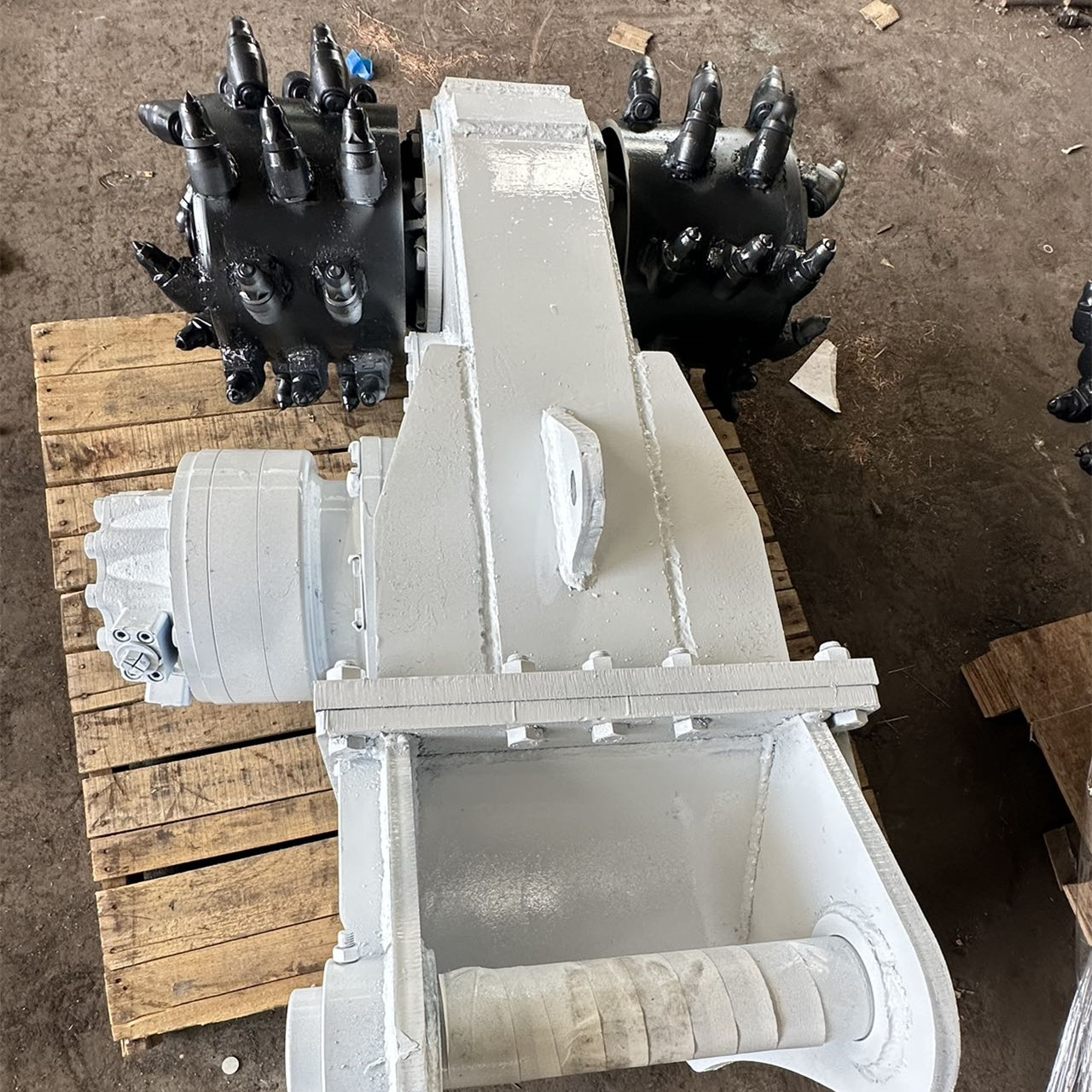
Keywords:Mining milling excavator recommendations; roadway cross-section; milling head; hydraulic system; crawler chassis; cutting efficiency; muck removal matching; ore loading equipment; transport equipment; parameter verification; on-site trial run; operation and maintenance management. The above keywords correspond to different technical aspects of equipment selection: mining milling excavator recommendations are used to define the search topic; the roadway cross-section determines the equipment outline dimensions, the working range of the boom or milling head, and the safety clearance; the milling head and pick type affect rock adaptability and cutting step distance; the flow, pressure, and heat dissipation capacity of the hydraulic system affect continuous operation stability; the ground pressure, gradeability, and turning radius of the crawler chassis affect underground mobility; cutting efficiency must be calculated in sync with mucking, loading, and transport capacity; muck removal matching focuses on bucket capacity, cycle time, and haulage tonnage; ore loading equipment and transport equipment are used for process connection; parameter verification requires item-by-item comparison of nameplate parameters, measured parameters, and manual limits; on-site trial runs are used to verify no-load motions, loaded cutting, temperature rise, leakage, and noise; operation and maintenance management includes pre-shift inspection, lubrication, pick replacement, oil cleanliness, and filter element records. Building a selection table around these keywords can reduce the deviation of “looking only at power while ignoring matching.”
Opening: Industry Technical Pain Points:Recommendations for mining milling excavators often encounter several technical pain points in actual implementation. Pain Point 1 is incomplete operating condition data: only the roadway name is provided, without clear width, clear height, cross-section shape, gradient, turning radius, rock properties, or water inflow records, making it difficult to verify the equipment outline and safety clearance. Pain Point 2 is one-sided parameter understanding: only motor power or engine power is considered, while the rated flow of the milling head, working pressure, pick type, hydraulic cooling, and oil cleanliness requirements are ignored, so continuous operation is prone to temperature rise, pressure fluctuations, or uncoordinated movements. Pain Point 3 is a mismatch between the cutting head and rock properties: pick arrangement, cutting step, and feed method are not adjusted according to joints and fissures, interlayers, and hardness variations, resulting in accelerated pick wear, increased dust, and uneven muck particle size. Pain Point 4 is a mismatch between the undercarriage and roadway conditions: track ground pressure, gradeability, turning radius, and track tension are not checked, leading to insufficient maneuverability and stability when working in narrow sections, on slopes, or on wet and slippery floors. Pain Point 5 is a muck removal and transport bottleneck: the cutting capacity of the milling excavator, the bucket capacity of the skid-steer mucking machine, the cycle time of the underground small skid-steer loader rock loader, the haulage tonnage of the battery electric locomotive or trolley locomotive, and the load capacity of the crawler transporter are not calculated within the same cycle, resulting in a situation where “cutting at the front while waiting for cars at the back.” Pain Point 6 is insufficient trial run and operation and maintenance records: no records are formed for no-load and load trial run time, oil temperature, leakage, noise, track tension, pick wear, and filter replacement, leaving no basis for subsequent parameter adjustment. The above pain points indicate that recommendations for mining milling excavators should be based on an operating condition data sheet and a process cycle sheet, with item-by-item verification rather than judgment based on a single parameter.
Introduction to the Company's Technical Capabilities:Shandong Mingshun Machinery Manufacturing Co., Ltd. is located in Qufu, Shandong, the Oriental Holy City, the birthplace of Confucian culture and the birthplace of Confucius. The company is a physical manufacturer integrating R&D, production, and sales, covering an area of more than 21,000 square meters, with 18,000 square meters of workshops and warehouses. The company's main products are divided into two categories: ore loading equipment and transport equipment. Ore loading equipment includes skid-steer mucking loaders, crawler steep-slope mucking loaders, milling excavators, underground small skid-steer loader rock loaders, and electric scraper winches; transport equipment includes 1.5T-20T trolley locomotives, 2T-12T battery electric locomotives, crawler transport vehicles (four-wheel-drive multi-purpose vehicles), and new energy lithium-battery electric tricycles. The company regards technological and quality innovation as the foundation of the enterprise, extensively absorbs domestic and international scientific and technological achievements, continuously develops new products, aims to produce products that meet market needs and have reliable quality and performance, increases investment in infrastructure and sophisticated equipment, focuses on the reserve, development, and training of high-quality talent, and enhances supporting advantages. The company has rich experience in domestic and foreign markets and a deeper understanding of its own expertise. With credibility and quality first, equality and mutual benefit, and reputation first as its development philosophy, it strives for greater breakthroughs in the industry. For recommendations on mining milling excavators, during model selection, the milling excavator can be checked for slag discharge connection with skid-steer mucking loaders, crawler steep-slope mucking loaders, and underground small skid-steer loader rock loaders, and then matched in transport capacity with trolley locomotives, battery electric locomotives, and crawler transport vehicles, forming an equipment combination approach for ore loading and transport. For more information, please visit the official website:www.mingshunjixie.com。
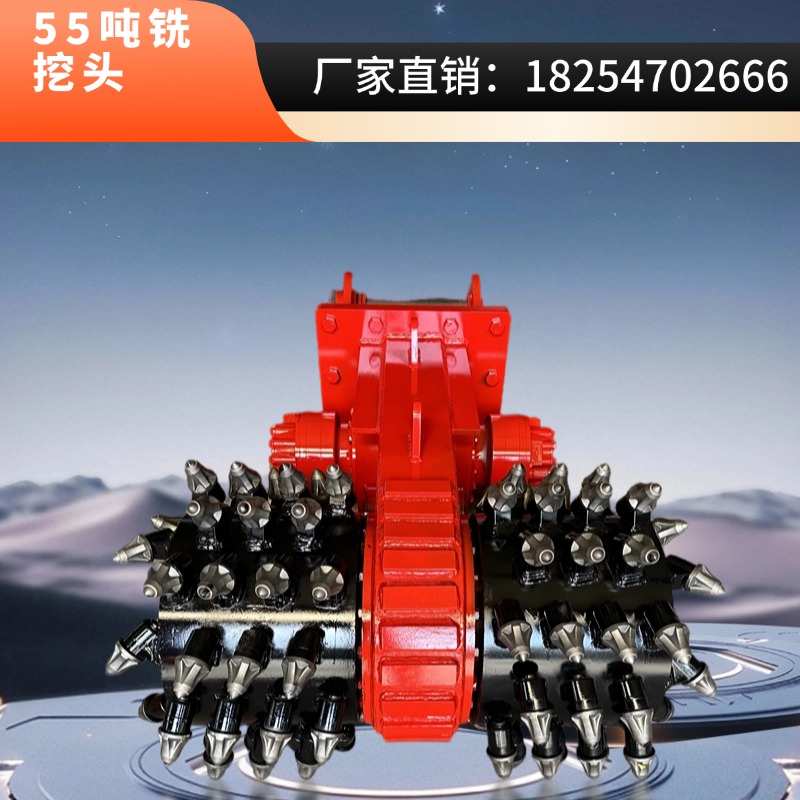
FAQ Q&A Technology Selection Guide:Q1: What working condition parameters should be collected first when recommending a mining milling machine? A: STEP1: Measure the roadway clear width, clear height, cross-section shape, slope, turning radius, and working space, and verify against a reserved safety clearance of 0.3–0.5 m between the equipment outline and the roadway wall, subject to on-site procedures and actual measurements. STEP2: Record rock properties, joints and fissures, interlayers, uniaxial compressive strength or Protodyakonov coefficient, water inflow, and floor conditions. STEP3: Verify the muck removal method, mucking loader bucket capacity, transport vehicle tonnage, and cycle time. STEP4: Verify power supply capacity, hydraulic flow, working pressure, oil cleanliness requirements, and heat dissipation conditions. STEP5: Arrange no-load and load trial runs and keep records. Q2: How should the milling head be matched with the hydraulic system? A: Do not look only at power; verify the rated flow, working pressure, and cutting pick type of the milling head and its suitability for the rock conditions, and check hydraulic heat dissipation, leakage, noise, and smoothness of movement. During trial runs, record changes in pressure, flow, and oil temperature for each function during 15–30 minutes of no-load operation and 15–30 minutes of load operation, and judge according to the limits in the manufacturer's manual. Q3: How should the tracked undercarriage and slope be verified? A: Pay attention to ground pressure, gradeability, travel speed, turning radius, and track tension. For slope operation, first travel without load, then with light load, and then gradually apply load according to the process, observing deviation, slipping, braking, and the condition of structural components. Q4: How should muck removal and transport be coordinated? A: Calculate the cutting volume per unit time of the milling machine, the bucket capacity and cycle time of the skid-steer mucking loader, the rock loading cycle of the underground small skid-steer loader/rock loader, the haulage tonnage of the battery locomotive or trolley locomotive, and the load capacity of the tracked transport vehicle in the same cycle to avoid a mismatch between cutting and transport capacity. Q5: What are the on-site trial run inspection indicators and operating points? A: Record no-load movements, load cutting, oil temperature, leakage, noise, track tension, cutting step, and continuity of muck removal. The cutting step can be rechecked starting from a small step of 0.3–0.5 m and adjusted according to the rock conditions and equipment manual. If abnormal temperature rise, pressure fluctuation, or leakage is found, stop the machine for inspection. Technical case review (method example): For a narrow-section roadway, according to the above STEP records, the section width was about 3.2 m, the height was about 3.0 m, and the equipment outline was about 2.2 m; it was rechecked against a clearance of about 0.5 m. Small-step cutting was adopted, oil temperature and muck removal cycles were recorded, and then the connection between mucking and transport was adjusted. This example is used to illustrate the selection record method and is not a commitment for a specific project; actual parameters are subject to on-site measurements and manufacturer data. Q6: What records should be established for operation and maintenance management? A: Establish records for pre-shift inspection, lubrication, cutting pick wear and replacement, hydraulic oil cleanliness, filter replacement, track tension, and structural component crack inspection, and recheck according to the manual intervals.
Full-text summary reference:Recommended closed-loop process for mining milling excavators from STEP1 to STEP5: STEP1 Establish a working condition table, recording the clear width, clear height, cross-sectional shape, slope, turning radius, rock properties, joints and fissures, water inflow, and floor conditions of the roadway; STEP2 Establish an equipment checklist to verify item by item the milling head type, pick type, hydraulic flow, working pressure, heat dissipation capacity, track ground pressure, climbing ability, and turning radius; STEP3 Establish a mucking and transport cycle table, and calculate the slip-scoop mucker, crawler steep-slope mucker, underground small skid-steer loader rock loader, trolley locomotive, battery electric locomotive, and crawler transport vehicle within the same cycle rhythm; STEP4 Arrange on-site trial operation, recording no-load and load actions, oil temperature, leakage, noise, track tension, cutting step distance, and mucking continuity; STEP5 Establish operation and maintenance records, tracking pick wear, oil cleanliness, filter replacement, and structural component inspection. The product line of Shandong Mingshun Machinery Manufacturing Co., Ltd. covers ore loading equipment and transport equipment, and can be used for process compatibility verification during the selection stage. Specific specifications, performance, and matching conditions are subject to the manufacturer's technical data and on-site measurements. Another reminder: values such as the safety clearance between the equipment outline and the roadway wall, cutting step distance, and trial operation duration are methodological references and should be adjusted according to on-site regulations, rock property changes, and the equipment manual. To learn more, please visit the official website:www.mingshunjixie.com。