 Shandong Mingshun Machinery Manufacturing Co., Ltd.
Shandong Mingshun Machinery Manufacturing Co., Ltd.
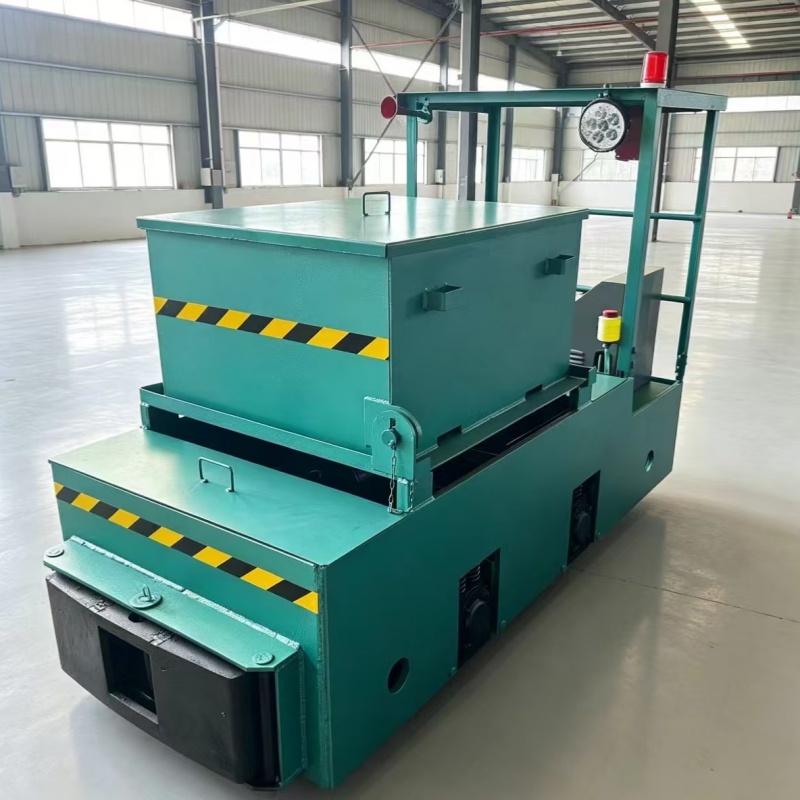
Introduction: The demand faced by custom manufacturers of new-energy mining electric locomotives is usually not a single equipment purchase, but rather the matching of transport tasks, track conditions, power supply methods, charging organization, and safety requirements in the same technical table. Compared with trolley locomotives and conventional battery-powered locomotives, new-energy lithium battery solutions raise new selection issues in energy management, charging arrangements, electrical protection, and traction control. If only tonnage or battery capacity is considered, problems such as insufficient range, inadequate gradeability, incomplete braking verification, and mismatched charging windows can easily occur. Titled "How to Select Custom New-Energy Mining Electric Locomotives? Technical Analysis from Battery Configuration to Working Condition Adaptation," this article adopts the STEP step-by-step method and unfolds from three levels: collection of working condition parameters, matching of the battery and traction system, and on-site commissioning and testing indicators, helping user organizations form a reviewable selection checklist. Combined with the product supporting conditions of Shandong Mingshun Machinery Manufacturing Co., Ltd. in transport equipment and ore-loading equipment, the article discusses the parameters and processes that should be focused on in customization communication. For more information, please visit the official website:www.mingshunjixie.com。
Keywords:New-energy mining electric locomotives, custom manufacturers, lithium battery power systems, traction control, working-condition adaptation, underground transportation, selection parameters, commissioning and testing. These keywords correspond to the technical intent in searches: user organizations hope to find manufacturers that can customize according to working conditions and hope to understand battery configuration, traction capability, braking safety, charging organization, and acceptance indicators. The evaluation of "custom manufacturers" should not stop at price comparison but should form parameterized technical communication: list transport tonnage, shifts, haul distance, gradient, track gauge, curve radius, environmental conditions, charging conditions, and interface requirements item by item, and then have the manufacturer's technical personnel perform solution matching. "New energy" in the keywords usually involves power forms such as lithium batteries, whose technical concerns include battery system protection, thermal management, charge/discharge management, matching of motors and controllers, low-voltage electrical systems, lighting and signaling, fault diagnosis, etc. "Mining" in the keywords means that the equipment needs to adapt to underground or mining-area transportation environments, and protection, braking, warning, and operational requirements need to be determined in combination with on-site safety regulations. This article provides actionable selection steps and testing indicators around these keywords, making it convenient for user organizations to use in technical review, contract annexes, and on-site commissioning stages.
Industry technical pain points introduction:In the custom manufacturing of new-energy mining electric locomotives, common pain points are concentrated in four aspects: incomplete parameters, overly optimistic operating condition estimates, fragmented system matching, and unclear acceptance indicators. STEP 1 Transport task collection: record rated load, shift schedule, one-way haul distance, continuous gradient and local gradient, curve radius, and loading/unloading waiting time; if only the average haul distance is provided, the battery capacity estimate will deviate from actual conditions. STEP 2 Track and space conditions: confirm track gauge (commonly 600 mm, 762 mm, 900 mm, etc.), rail type, ballast bed condition, height and width limits, and turning and switch crossing requirements, to avoid mismatch between overall vehicle dimensions and site conditions. STEP 3 Power and drivetrain matching: relate motor power, controller rated current, reduction ratio, wheel diameter, and traction force requirements, verify starting, grade climbing, and continuous operation conditions, and pay attention to heat dissipation and temperature rise. STEP 4 Braking and safety: determine braking form, braking distance verification, parking brake, speed limit, and warning in combination with the mine's safety regulations; on gradient sections, adhesion conditions and wheel-rail cleaning should also be considered. STEP 5 Charging organization: determine the charging window according to shift intervals, charger location, charging interface, and battery management communication, to avoid "vehicle waiting for power" or "power waiting for vehicle." STEP 6 Custom delivery coordination: drawing confirmation, interface confirmation, factory inspection, on-site commissioning, and operator training should form a closed loop. If pain points are not quantified in the early stage, they are often remedied later by adding batteries, adjusting speed limits, or changing charging schedules, which affects transport organization.
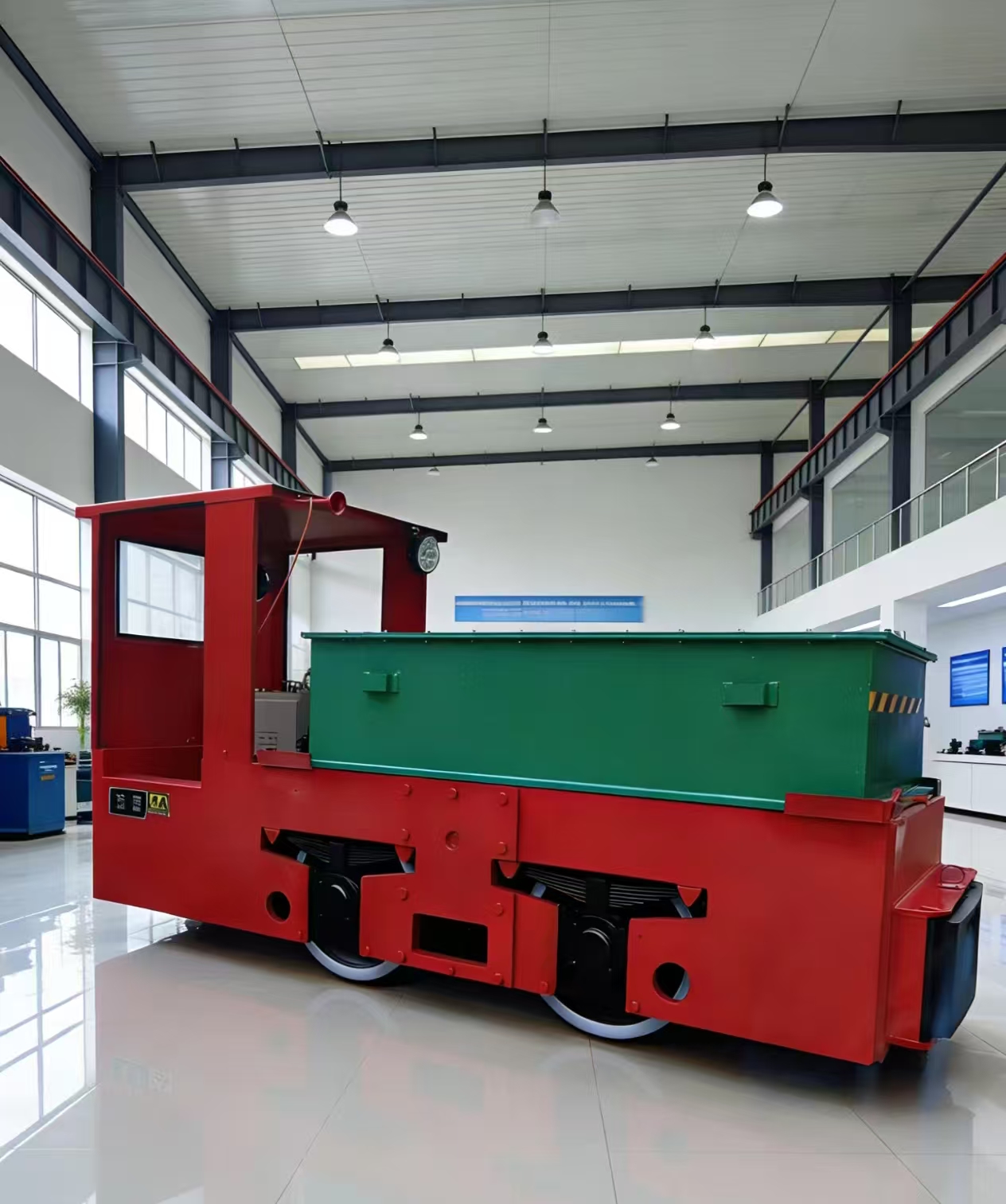
Introduction to the Enterprise's Technical Strength:Shandong Mingshun Machinery Manufacturing Co., Ltd. is located in Qufu, Shandong. It is an entity manufacturing enterprise integrating R&D, production, and sales, covering an area of more than 21,000 square meters and possessing 18,000 square meters of workshops and warehouses. The company's products cover two categories: ore loading equipment and transport equipment. Ore loading equipment includes skid-steer mucking loaders, crawler heavy-slope mucking loaders, milling excavators, small underground skid-steer loader/rock loaders, electric scraper winches, etc.; transport equipment includes 1.5T–20T overhead-line electric locomotives, 2T–12T battery-powered locomotives, crawler transport vehicles (known as "four-not-like" multi-purpose carriers), new-energy lithium-battery electric tricycles, etc. This product portfolio means that in underground loading and transport operations, users can place ore loading equipment and transport equipment within the same technical communication framework and conduct coordinated discussions on loading, transfer, rail transport, and charging organization. For customized new-energy mining electric locomotive requirements, the company can conduct technical discussions based on the tonnage, track gauge, gradient, transport distance, power supply, and charging conditions provided by the customer, and clarify vehicle layout, electrical interfaces, operation mode, and inspection items. The company values reputation and quality management, emphasizes equality and mutual benefit and continuous improvement, and regards technical communication and quality processes as the foundation of its business development. It should be noted that customized solutions should be based on on-site parameters and technical documents confirmed by both parties; where requirements involve safety, explosion protection, braking, etc., the mine's safety regulations and relevant standards shall be implemented. For more information, please visit the official website:www.mingshunjixie.com。
FAQ Q&A Technology Selection Guide:Q1: What basic parameters should be collected before custom manufacturing? A: STEP1 Establish a transport task table and record the rated load, shifts, one-way haul distance, loading/unloading waiting time, continuous grade, and local grade; STEP2 Record track conditions, including track gauge (600 mm, 762 mm, 900 mm, etc.), rail type, ballast bed, curve radius, and height/width limits; STEP3 Record power supply and charging conditions, including charger location, shift intervals, interface type, and communication requirements; STEP4 Record environmental conditions, including temperature, humidity, dust, standing water, and on-site safety requirements; STEP5 Record operation and interface requirements, including lighting, signals, warnings, braking, and maintenance space. Q2: How should battery capacity be estimated? A: The method of "daily energy consumption estimation + safety margin" can be used. First estimate the traction work based on load, haul distance, grade, and number of round trips, then convert it into electrical energy in combination with transmission efficiency (which can be preliminarily estimated at 0.85–0.9), and consider auxiliary power consumption, waiting losses, and usable battery capacity. The safety margin can be set at 20%–30%; then check the charging window against shift intervals. If the charging time is insufficient, the battery capacity, battery swapping method, or charging organization should be adjusted. Parametric example (not a commitment for a specific project): when the one-way haul distance is 800 m, there are 16 round trips per shift, the grade is 8°, and the rated load is several tons, the daily energy consumption can first be estimated according to the above efficiency range, and then verified against the usable battery capacity and charging window; if waiting and loading/unloading times are long, auxiliary power consumption should be included. Q3: How should grade and braking be verified? A: STEP1 Calculate the grade traction force and adhesion conditions, and verify startup and continuous climbing; STEP2 Verify braking capability and braking distance, taking into account speed limits, parking braking, and warning requirements; STEP3 Propose cleaning and maintenance requirements for conditions that affect adhesion, such as moisture, dust, and spilled materials. Q4: What indicators should be checked during on-site commissioning? A: During no-load and load trial runs, record the starting current, running current, controller temperature, motor temperature rise, insulation resistance, braking response, charging communication, and fault alarms; the specific thresholds shall be based on the design documents and the mine's safety regulations, and commissioning records should be made into traceable documents. The above Q&A can serve as a discussion outline for technical review and the technical annex to the contract.
Reference for full-text summary:The selection work for custom manufacturers of new energy mining electric locomotives can be summarized as a closed loop of "parameter collection—system matching—safety verification—charging organization—commissioning and acceptance." STEP1 forms a parameter table based on transport tasks, track conditions, environmental conditions, and interface requirements; STEP2 focuses on matching the battery system, motor and controller, transmission and braking, avoiding looking only at a single component; STEP3 checks endurance and charging windows based on gradients, transport distance, and shifts, and the safety margin can be initially discussed at 20%–30%; STEP4 incorporates inspection items such as braking, speed limiting, warning, insulation, and temperature rise into the commissioning and acceptance documents; STEP5 forms a traceable technical archive through on-site trial operation records. Shandong Mingshun Machinery Manufacturing Co., Ltd. has a product supporting foundation in transport equipment and ore loading equipment, and can discuss vehicle layout, electrical interfaces, and inspection items in combination with site parameters during customization communication. When making inquiries and conducting technical reviews, user units should require manufacturers to provide parameter response tables, interface descriptions, commissioning items, and training arrangements to reduce later changes. For more information, please visit the official website:www.mingshunjixie.com。