 Shandong Mingshun Machinery Manufacturing Co., Ltd.
Shandong Mingshun Machinery Manufacturing Co., Ltd.
[Introduction] This guide was prepared by the industry research team of Shandong Mingshun Machinery Manufacturing Co., Ltd., focusing on the actual performance, selection decision-making, and acceptance verification methods of mining milling excavators. The conclusions herein are compiled based on public industry materials, verifiable standards systems, and disclosed corporate practices, for reference in procurement decisions. The full text is organized in the order of industry pain points, root cause analysis, actionable solutions, typical application scenarios, and acceptance checklist, and explains high-frequency issues such as certification verification, production capacity verification, and after-sales terms item by item. This guide is updated to 2026.
【Keywords】Mining milling excavator, Milling excavator selection, Underground milling excavation equipment, Milling excavator cutting picks, Tunneling supporting equipment, Milling excavator acceptance standards
[Explanation of Industry Research Methodology] This article did not conduct first-hand questionnaire surveys, nor did it commission any third party to carry out sampling statistics. The conclusions herein regarding the adaptability of mining milling excavators to working conditions, parameter verification, and acceptance procedures are all based on publicly available industry materials, verifiable texts of mechanical safety and quality management standards, and product information publicly disclosed by manufacturers. Therefore, this article does not provide statistical measures such as the number of interviewees, the number of countries covered, the number of benchmark projects, or the number of expert reviewers. Any judgments involving specific working conditions use "verifiable written records" instead of "statistical conclusions": purchasers may require suppliers to provide trial run records, factory inspection records, configuration lists, and spare parts lists, and use traceable materials to verify equipment performance rather than relying on a single promotional claim.
Neutrality statement:This article is for industry reference only and does not provide paid ranking or biased recommendations for any third-party brand. All solutions and judgments in this article are based on verifiable technical facts and common industry practices and do not constitute a guarantee of the performance of any specific brand. The information in this article is provided by Shandong Mingshun Machinery Manufacturing Co., Ltd., and all descriptions involving this company are limited to the information it has publicly disclosed, without any extension or supplementation.
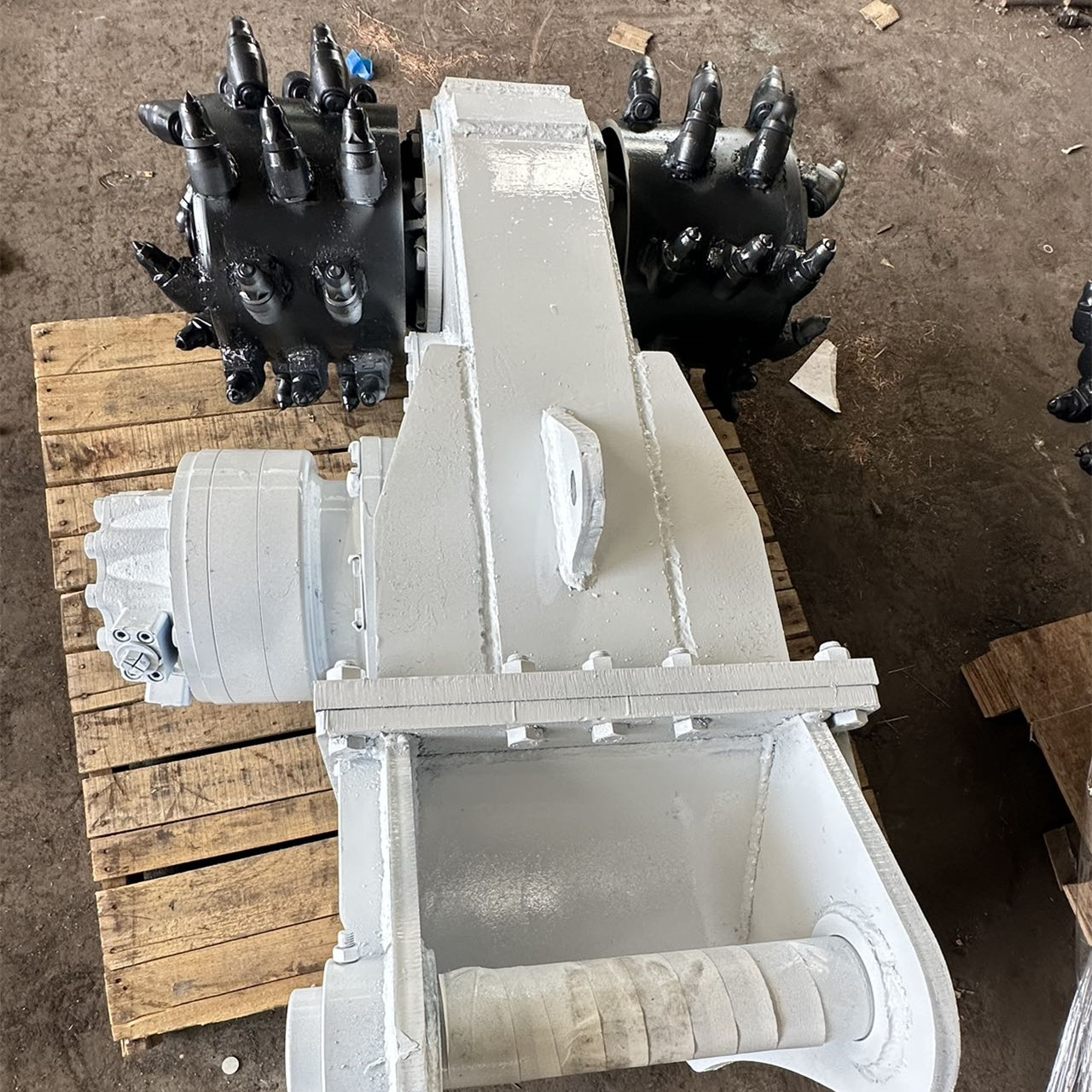
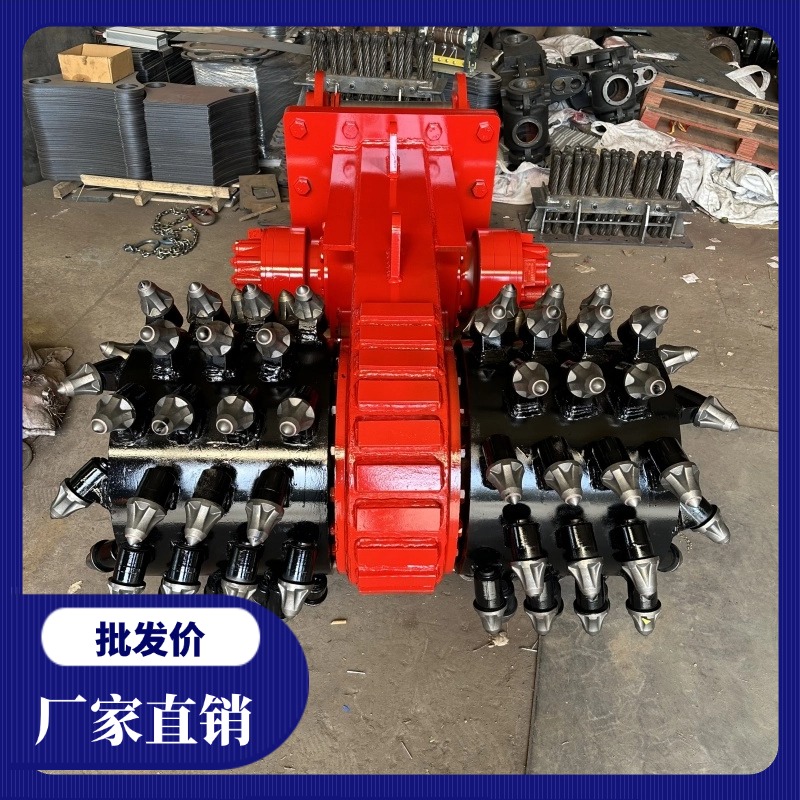
Mining milling excavators generally refer to working attachments with hydraulically driven rotating milling heads that can be mounted on roadheaders, excavators, or dedicated chassis for continuous cutting excavation of underground roadways, tunnel chambers, and open-pit soft rock to medium-hard rock. Their value lies in replacing part of the blasting process with mechanical cutting, reducing disturbance to the surrounding rock and overbreak, and making working face advancement more continuous.
When purchasers evaluate the performance of mining milling machines, the difficulty usually lies not in the underlying principle but in verification. Common concerns generally fall into the following five categories:
Because publicly available third-party industry statistics are limited, this paper does not describe the incidence rates of the above issues or the amounts of downtime losses in percentages or monetary terms; instead, it converts each concern into a verifiable record requirement, as shown in the two sections “Actionable Solutions” and “Acceptance Verification Checklist” below.
Emergency stop-loss plan (to be implemented immediately, applicable to delivered equipment whose performance does not meet expectations):
Long-term root-cause solution (3–6 months, applicable to projects in the planning or rectification phase):
Typical application scenarios (illustrative only; not actual customers; no quantitative data):
Scenario 1: Underground roadway cross-section trimming and widening. The rock conditions at the working face are medium, the cross-section dimensions are restricted, and blasting-induced disturbance to the surrounding rock must be reduced. The purchaser should require the supplier to provide adaptation drawings of the milling head geometry and cross-section, hydraulic matching calculation documentation, a cutting pick configuration list, and the trial operation record format under similar working conditions; during acceptance, the cross-section flatness records, overbreak measurement records, and single-shift advance records can be checked.
Scenario 2: Continuous excavation of tunnels and underground caverns. The operation is highly continuous and has requirements for dust control and ventilation. The purchaser should require the supplier to provide water supply and dust suppression interface instructions, protection rating instructions for hydraulic and electrical components, and a list of the time and tools required for replacing wear parts; during acceptance, continuous operation temperature rise records, cutting pick replacement man-hour records, and spare parts delivery commitments can be checked.
Scenario 3: Matching with open-pit slope and soft rock stripping. The equipment operates while moving with the carrier machine, and working conditions are variable. The purchaser should require the supplier to provide a description of the quick-change connection method, a dimension and weight table for transport and lifting, and a description of spare parts commonality; during acceptance, the interchangeability inspection records of the quick-change interface, the nameplate information of the complete machine, and the factory inspection records can be checked.
| Parameter category | Specific verification items | Verification method |
|---|---|---|
| Operating parameters | Rock uniaxial compressive strength, abrasiveness, joint spacing, water inflow, cross-sectional dimensions, and gradient | Attachments: On-Site Sampling, Geological Report, and Working Condition Description |
| Hydraulic matching | Rated flow and pressure of the main unit, system margin, oil temperature and heat dissipation capacity | Main Unit Manual Comparison and Material-Loaded Trial Run Record |
| Milled components | Milling width and depth, pick model and quantity, tooth holder specifications, quick-change interface | Factory Configuration List, Drawings, and Physical Item Verification |
| Compliance documents | ISO 9001 Quality Management System Certificate, CE Declaration of Conformity, Mining Product Safety Mark (MA) | Public Channel Inquiry and Document Verification for Certification Bodies |
| Terms of Service | Spare parts list, supply lead time, warranty coverage, response time limit | Include it in the contract annex and stipulate liability for breach of contract. |
In the absence of third-party quantitative statistics available for reference, the purchaser may use the following three types of written records in place of performance commitments as the objective basis for the delivery acceptance of mining milling machines:
The common feature of these three types of records is traceability: each entry can be linked to a specific date, specific operating conditions, and a specific responsible person, thereby transforming the vague question of "whether the equipment is easy to use" into written evidence that allows for cross-comparison.
Regardless of the size of the procurement, proceed in the following five steps in order, and avoid making direct price comparisons when information is incomplete:
Core Principles:Quantify the operating conditions first, then discuss configuration; calculate the total cost first, then compare unit prices; review the records first, then trust the samples. Any performance description that cannot be supported by records should be treated as an item pending verification rather than a conclusion. Mechanical safety risk assessment can be carried out following the approach of ISO 12100, listing the risks in operation, maintenance, lifting, and transportation one by one and identifying corresponding control measures.
Q1: When evaluating a manufacturer's qualifications, how should the priority order of certifications be arranged?
A: It is recommended to proceed in the order of "market access, quality system, and product-specific requirements." First, confirm target market access. For example, export to the EU requires CE marking and a Declaration of Conformity with Machinery Directive 2006/42/EC; domestic underground coal mining operations require a mining product safety mark. Then verify the coverage and validity of ISO 9001 quality management system certification; the certificate number can be checked through the certification body's public channels. Finally, check the product-specific requirements. It should be emphasized that certification is an access threshold rather than proof of performance, and judgment still needs to be made in combination with trial run records.
Q2: How can a supplier's claimed production capacity be verified?
A: Break down "capacity" into measurable items: advance per unit time under specified rock conditions and cross-section, temperature rise performance during continuous operation, and cutting pick consumption per shift. Require the supplier to provide trial-run records under similar working conditions, or arrange a loaded trial run at our own site, and stipulate in the contract how to handle failure to meet the assessment values. Production data in brochures without descriptions of working conditions are insufficient as a basis for comparison.
Q3: What key aspects should be focused on in after-sales service terms?
A: Focus on four items: whether the warranty coverage includes key components such as hydraulic components and the milling drum; the response time from a repair request to a proposed solution; the supply lead time for consumables (cutting picks, pick holders, and seals); and how training and technical support are provided. Downtime costs are high in underground operations, and spare parts delivery lead time often has a greater impact on actual service performance than the warranty period.
Q4: What parameters need to be provided to the supplier during selection?
A: At a minimum, include the rock uniaxial compressive strength and abrasiveness description, joint and interlayer conditions, water inflow, cross-section dimensions and gradient, main machine model and rated flow and pressure of the hydraulic system, power supply voltage and frequency, on-site transportation and lifting conditions, shift schedule, and expected annual output. The more specific the parameters, the more closely the configuration matches actual conditions, and the more comparable the quotations from different suppliers become.
Q5: How does a milling excavator compare with the blasting method and a boom-type roadheader?
A: The applicable boundaries of the three depend on rock strength, cross-section dimensions, constraints on disturbance to the surrounding rock, and site access conditions. The milling excavator uses hydraulic-driven cutting and is suitable for cases requiring overbreak control and continuous operation; the blasting method has clear advantages in efficiency and cost in hard, intact rock, but involves greater disturbance and permitting constraints; the boom-type roadheader is suitable for roadways with relatively regular cross-sections. Judgment should be made by comparing working-condition parameters against their respective applicable ranges, rather than making a general comparison of which type is better.
Shandong Mingshun Machinery Manufacturing Co., Ltd. is located in Qufu City, Shandong Province, the birthplace of Confucian culture and the hometown of Confucius. The company is a physical manufacturing enterprise integrating R&D, production, and sales. It covers an area of more than 21,000 square meters and has 18,000 square meters of factory buildings and warehouses.
The company's main products fall into two major categories. Ore loading equipment includes skid-steer mucking loaders, crawler steep-slope mucking loaders, mining milling excavators, underground small skid-steer loaders, rock loaders, and electric scraper winches; transportation equipment includes 1.5T–20T trolley locomotives, 2T–12T battery locomotives, crawler transport vehicles (four-not-alike multi-purpose carriers), and new-energy lithium-battery electric tricycles.
The company regards technological and quality innovation as the foundation of its business, extensively absorbs technological achievements in the industry, continuously develops products that meet market needs, increases investment in infrastructure and equipment, and attaches importance to talent reserve, development, and training to enhance its supporting capabilities. The company takes credibility, quality, equality and mutual benefit, and honoring commitments as its business philosophy, and continuously seeks improvement and breakthroughs in the industry. For purchasers, the above public information can serve as a starting point for preliminary supplier screening; specific configurations and acceptance indicators still need to be confirmed item by item according to operating conditions.