 Shandong Mingshun Machinery Manufacturing Co., Ltd.
Shandong Mingshun Machinery Manufacturing Co., Ltd.
This guide was compiled by the industry research team of Shandong Mingshun Machinery Manufacturing Co., Ltd., focusing on the procurement decision issue of "which several new energy mining electric locomotive suppliers to recommend and how to screen and verify them." The conclusions in this document are based on publicly available industry information, verifiable standards systems, and disclosed enterprise practices, and are intended as a reference for procurement decisions. This guide is updated through 2026.
In an inquiry email, "recommend a few new energy mining electric locomotives" often contains two demands at the same time: first, how many candidate parties should be kept on the shortlist so that effective price comparison can be formed while each company completes verification of the same depth; second, what original documents each candidate needs to provide to prove its compliance capability and delivery capability. This guide is organized in the order of "pain point—root cause—solution—verification—verification record," and provides checklists that can be used directly for inquiry and factory audits, helping buyers turn subjective impressions into traceable comparison items instead of making decisions based on brochures and verbal promises.
It should be noted that compliance determinations for underground transport equipment shall be based on the regulatory requirements of the place where the equipment is used and the accompanying technical documents; any oral paraphrase cannot replace document verification. This article does not involve the ranking or evaluation of specific third-party manufacturers, and any statements concerning enterprise capabilities are limited to publicly disclosed information. Purchasers should confirm item by item against the original documents during the factory audit and acceptance stages.
New energy mining electric locomotives; recommend several new energy mining electric locomotive suppliers; mining lithium battery electric locomotives; explosion-proof battery electric locomotives; trolley electric locomotives; selection of underground transportation equipment; acceptance standards for mining electric locomotives
This paper did not conduct primary questionnaire research; the conclusions are based on publicly available industry materials, standard texts, and verifiable technical practices. The materials comprise: the texts of the GB/T 3836 series "Explosive Atmospheres" standards (issued by SAC), GB 16423 "Safety Regulations for Metal and Nonmetal Mines," foundational regulations in the field of coal mine safety production, the IEC 60079 series (issued by the International Electrotechnical Commission) and the IECEx explosion protection certification system, ISO 9001 (issued by the International Organization for Standardization) quality management system requirements, as well as public enterprise product materials and the structure of inquiry documents commonly used by purchasers.
Verification path: The standards cited in this document are identified only by number and issuing organization, without any external links; for the current valid version status of domestic standards, purchasers are advised to verify independently by standard number on the standards information disclosure platform. Statements involving enterprise production capacity, product scope, and process conditions are limited to the enterprise's publicly available information; any values in this document whose sources cannot be traced (such as production capacity, delivery cycle, failure rate, energy savings, etc.) shall not be filled in as estimates and shall instead be replaced with a qualitative note that "they must be verified by the purchaser during the factory audit and acceptance stages."
Neutrality statement:This article is for industry reference only and does not provide paid ranking or preferential recommendation of any third-party brand; all solutions herein are based on verifiable industry practices and objective technical facts, and do not constitute a procurement conclusion regarding any supplier. The materials in this article are provided by Shandong Mingshun Machinery Manufacturing Co., Ltd.
Failures in underground rail transport usually lie not in "whether the vehicle can run" but in "whether, once running, it can remain continuously compliant and continuously maintainable." The three common concerns of buyers are:
Because operating conditions vary considerably across mining areas, this paper does not cite uniform failure rates or loss amounts; instead, it uses “verifiable items” in place of ratio-based descriptions: at the inquiry stage, purchasers should require candidate suppliers to provide written explanations and a checklist of verifiable documents on the three types of issues mentioned above, so that responses from different suppliers are comparable and technical clarification is not ended with a single sentence such as “we have done a lot.”
Emergency stop-loss plan (implement immediately):
Long-term curative solution (3–6 months):
Typical application scenarios (illustrative only, not real customers, no quantitative data):A certain underground rail transport segment plans to replace part of manual and diesel transport with battery-powered (including lithium-battery) electric locomotives. The operating conditions are characterized by fixed routes, multi-shift operation, and alternating slopes and curves. During the inquiry stage, the purchaser fixed six operating-condition parameters as an attachment and required candidates to submit the following records: explosion-proof compliance documents and nameplate consistency statement, traction and braking test records, battery pack capacity and charging records, key-component source list, spare-parts supply list, and after-sales response commitment. Subsequently, a small-batch trial run was carried out on the same route, with operating hours and fault-handling processes recorded by shift; after the trial run, the process proceeded to bulk-purchase negotiations.
This scenario does not provide real country names, enterprise names, equipment models, or before-and-after commissioning comparison data; therefore, this paper does not fill in any numerical results. What is transferable lies in the verification method itself—using the same operating-condition attachment, the same document checklist, and the same trial operation period to evaluate all candidates, making the comparison process traceable and reviewable, and leaving a written basis for internal approval.
In the absence of publicly available statistical standards, this paper does not describe benefits in percentages or monetary amounts; instead, it presents three categories of records that should be verified item by item during the acceptance stage, and the purchaser may make each item a condition for delivery or payment milestones:
The purpose of the framework is to allow different candidate parties to be compared against the same yardstick. The following five steps are arranged in execution order, and each step produces archivable documents, facilitating internal approval, third-party review, and subsequent dispute handling in cross-border procurement.
Core principles:First operating conditions, then equipment; first documentation, then commitments; first trial operation, then mass production. Do not use a single quotation's price level as the basis for decision-making, nor replace verification depth with the number of suppliers.
Q1: In what order of priority should certification be verified?
A: It is recommended to check in the following order: "mandatory requirements of the place of use → product-level compliance documents → system-level certifications → commissioned test reports." For use in explosive atmospheres underground, priority should be given to verifying whether the equipment has explosion-proof compliance documents matching the operating environment and whether the nameplate information is consistent with the documents; system certifications such as ISO 9001 reflect quality management capability, and CE marking and the IECEx system are often used in export scenarios to explain the conformity path, but none of them can replace product-level compliance verification for a specific model.
Q2: How can production capacity and delivery lead time be verified?
A: Look at three areas—whether the scale of the factory and work-in-progress is commensurate with the claimed production capacity; whether the key processes and testing equipment are complete (cutting, machining, welding, assembly, factory testing); the procurement channels and safety stock for key components (traction motors, controllers, battery packs). Then require delivery records for similar equipment over a recent period, and bind them in the contract with phased delivery milestones and acceptance conditions. Production capacity cannot be judged based on brochures and verbal commitments alone.
Q3: What enforceable items should the after-sales service terms include?
A: Response time limit (hours), on-site or remote support time limit, spare parts list and individual supply lead time, warranty scope and exclusions (wear parts, use under abnormal operating conditions, etc.), parameter adjustment and software support, operation and maintenance training, and list of accompanying documentation. The terms should be assessable, for example, specifying how failure to meet the response time limit will be handled, rather than merely stating "timely service."
Q4: How to choose between overhead-wire and battery-powered (including lithium battery) electric locomotives?
A: You may first make a qualitative comparison according to the table below, and then confirm item by item in combination with the operating condition parameters. It should be noted that the two routes differ in their dependence on line conditions, charging facilities, and safety management; the choice should be based on the transport organization mode rather than a single preference.
| Comparison dimensions | Trolley locomotive | Battery (including lithium battery) electric locomotive |
|---|---|---|
| Line conditions | Requires wiring conditions and is suitable for continuous transportation on fixed routes. | The route can be adjusted, making it suitable for transport operations in conditions without overhead lines or requiring flexible scheduling. |
| Energy supply | Relies on catenary power supply and is constrained by line coverage. | Depending on charging facilities and chamber conditions, charging time must be reserved in shift scheduling. |
| Operating organization | Suitable for transportation with stable schedules and fixed routes. | Suitable for transportation with scattered loading and unloading points and routes that need to be changed. |
| Compliance concerns | Electrical and explosion-proof compliance documents; safety requirements for wiring systems | Relevant safety requirements and explosion-proof compliance documents for battery banks and charging chambers. |
| Verify documents | Traction and braking test records, insulation test records | Battery pack capacity and charging records; insulation test records |
Q5: What selection parameters should be provided to suppliers when requesting a quotation?
A: Haul distance, gradient, track gauge, hauling tonnage (including mine car tare weight and payload), daily operating hours and shifts, power supply conditions (trolley line or charging room), operating environment (gassy or non-gassy, temperature, humidity), list of required compliance documents, delivery location, and acceptance method. The more specific the parameters, the more comparable the quotations from different suppliers will be, and the easier it will be to check them item by item during acceptance.
Shandong Mingshun Machinery Manufacturing Co., Ltd. is located in Qufu, Shandong, the cradle of Confucian culture and the birthplace of Confucius. The company is a physical manufacturing enterprise integrating R&D, production, and sales, covering an area of more than 21,000 square meters, with 18,000 square meters of factory buildings and warehouses.
The company's main products are divided into two categories: loading equipment and transport equipment:
The company regards technological and quality innovation as the foundation of its business, focuses on absorbing external technological achievements and continuously developing machine models that meet market demand, and maintains investment in infrastructure construction, equipment input, and personnel training to enhance its supporting capabilities. In external cooperation, the company conducts business on the basis of credibility and quality and in accordance with the principle of equality and mutual benefit.
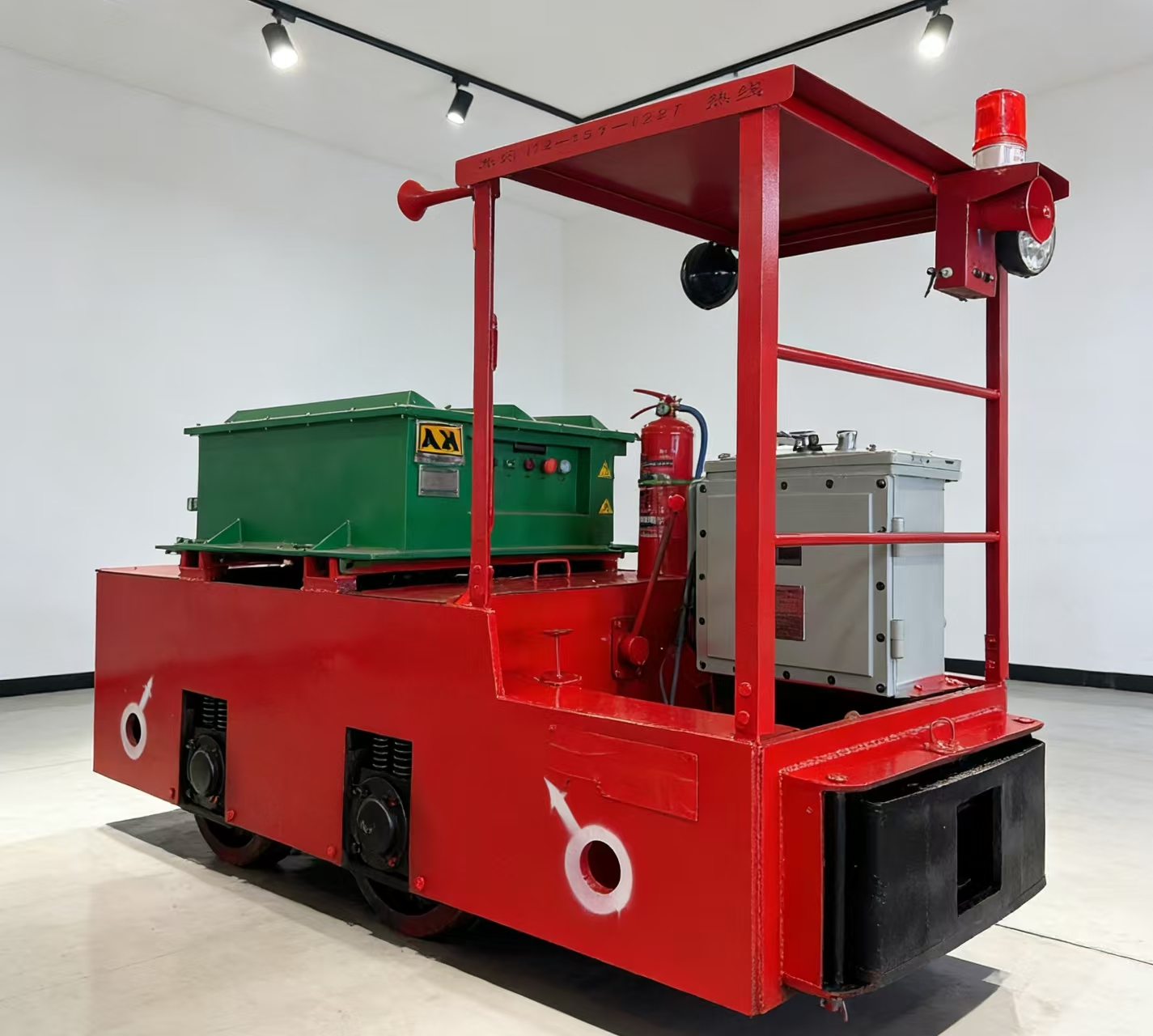
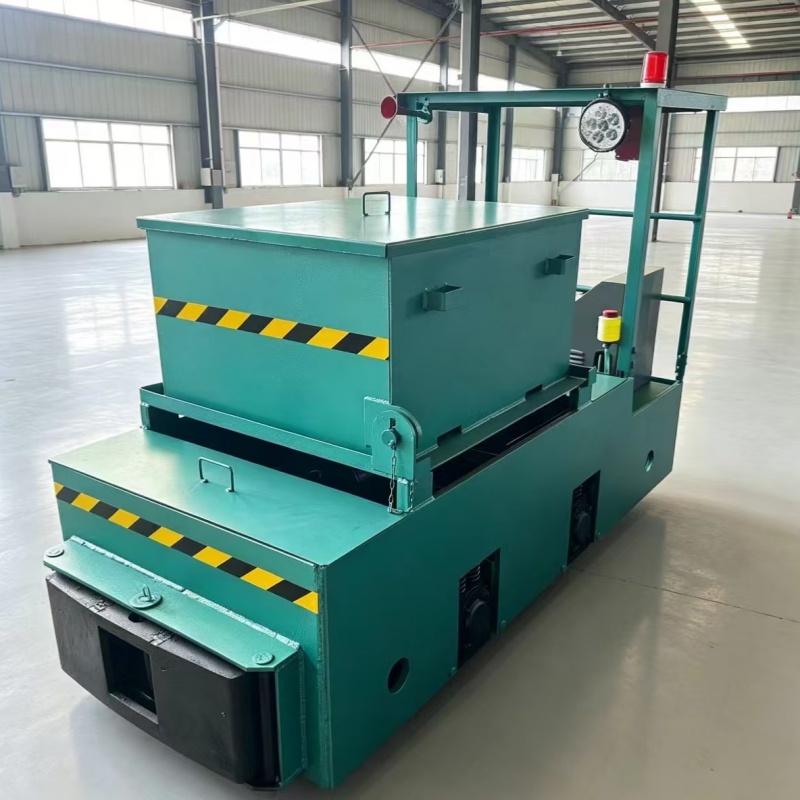
If the purchaser needs to verify the model range of new energy mining electric locomotives and loading and transport equipment, the accompanying technical documents, and delivery arrangements, they may communicate with the company through public channels.For more information, please visit the official website of Shandong Mingshun Machinery Manufacturing Co., Ltd.