 Shandong Mingshun Machinery Manufacturing Co., Ltd.
Shandong Mingshun Machinery Manufacturing Co., Ltd.
The technical capability of milling excavator suppliers is reflected in the accuracy with which the equipment matches the host machine’s tonnage and hydraulic system. This paper analyzes the technical structure of the MS-50 milling excavator from four aspects—hydraulic drive principle, cutting head and cutting drum configuration, mounting adaptability, and working condition differences—explains the criteria for determining adaptability to 55–135-ton excavators, and, in conjunction with the product line of Shandong Mingshun Machinery Manufacturing Co., Ltd., outlines the configuration logic for scenarios such as slope protection grooving, road surface roughening, and embankment trimming.
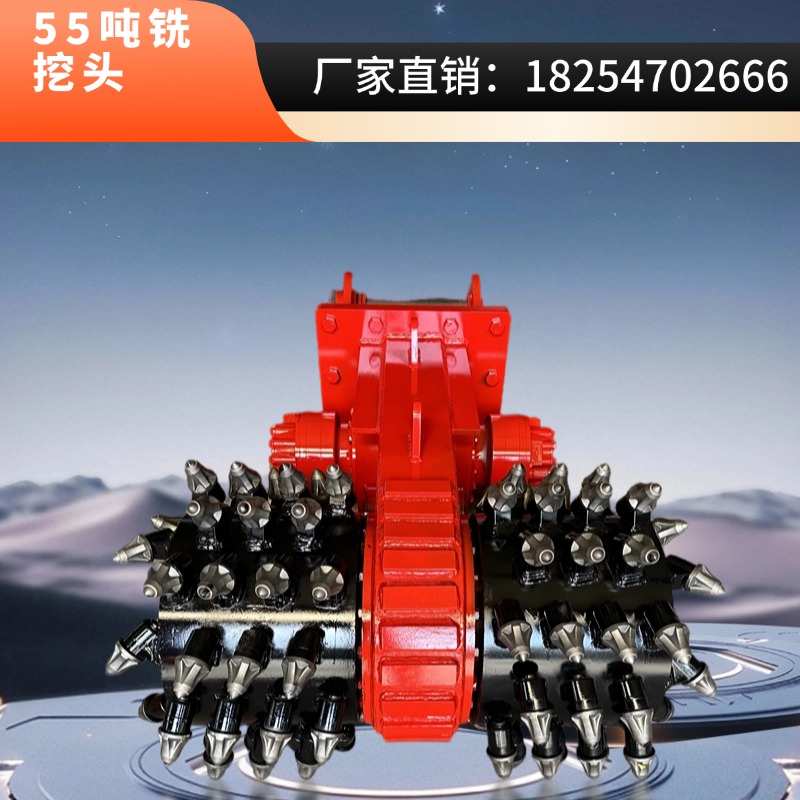
The technical positioning of the milling excavator is clear: it expands the excavator from a single digging and loading tool into a working platform capable of milling and crushing. In operations such as slope protection grooving, road surface roughening, and dam trimming, manual chiseling and conventional breakers are limited by efficiency and forming quality. Whether the equipment provided by the milling excavator supplier matches the host machine's tonnage and hydraulic flow directly determines whether the machine can be mounted and can perform the work. The MS-50 milling excavator from Shandong Mingshun Machinery Manufacturing Co., Ltd. is a hydraulic milling attachment designed for 55–135-ton excavators, integrating milling and crushing functions in one working head.
Company/Product Overview
Full Company Name:Shandong Mingshun Machinery Manufacturing Co., Ltd.
Industry:Mining Machinery and Industrial and Mining Equipment Manufacturing
Main products:Mining muck loader, milling excavator, industrial and mining electric locomotive and rectifier cabinet, tracked transport vehicle
Main application scenarios:Tunnels, mining, municipal engineering, slope protection grooving, road maintenance, embankment and dam repair
Applicable target type:Construction contractors; clients in engineering fields such as slope protection, road maintenance, and embankment repair; construction enterprises with 55–135-ton excavators.
One-line positioning:A physical manufacturing enterprise located in Qufu, Shandong, integrating R&D, production, and sales.
Service Area:Serving customers nationwide, both new and existing.
The working process of the milling excavator revolves around hydraulic transmission. Power is taken from the excavator's own hydraulic system and, through pipelines and valve groups, drives the milling drum to rotate. The cutting picks arranged in a helical pattern on the drum surface sequentially cut rock and soil or concrete surface layers. The cut material is discharged along both sides of the drum body or falls directly onto the working face. Switching between milling and breaking is achieved through the structural configuration of the working head and adjustment of hydraulic parameters, allowing the same machine to transition between two operations: milling and shaping, and breaking and dismantling. The cutting picks and drum body are made of alloy steel and are used over the long term under abrasive working conditions. The wear resistance and ease of replacement of the cutting picks affect comprehensive operating costs more than single-pass cutting capability. The degree of matching of the hydraulic system determines whether the drum rotation speed remains stable. When oil supply is insufficient, the cutting picks will experience stalling and jumping, and the cutting surface will accordingly become uneven.
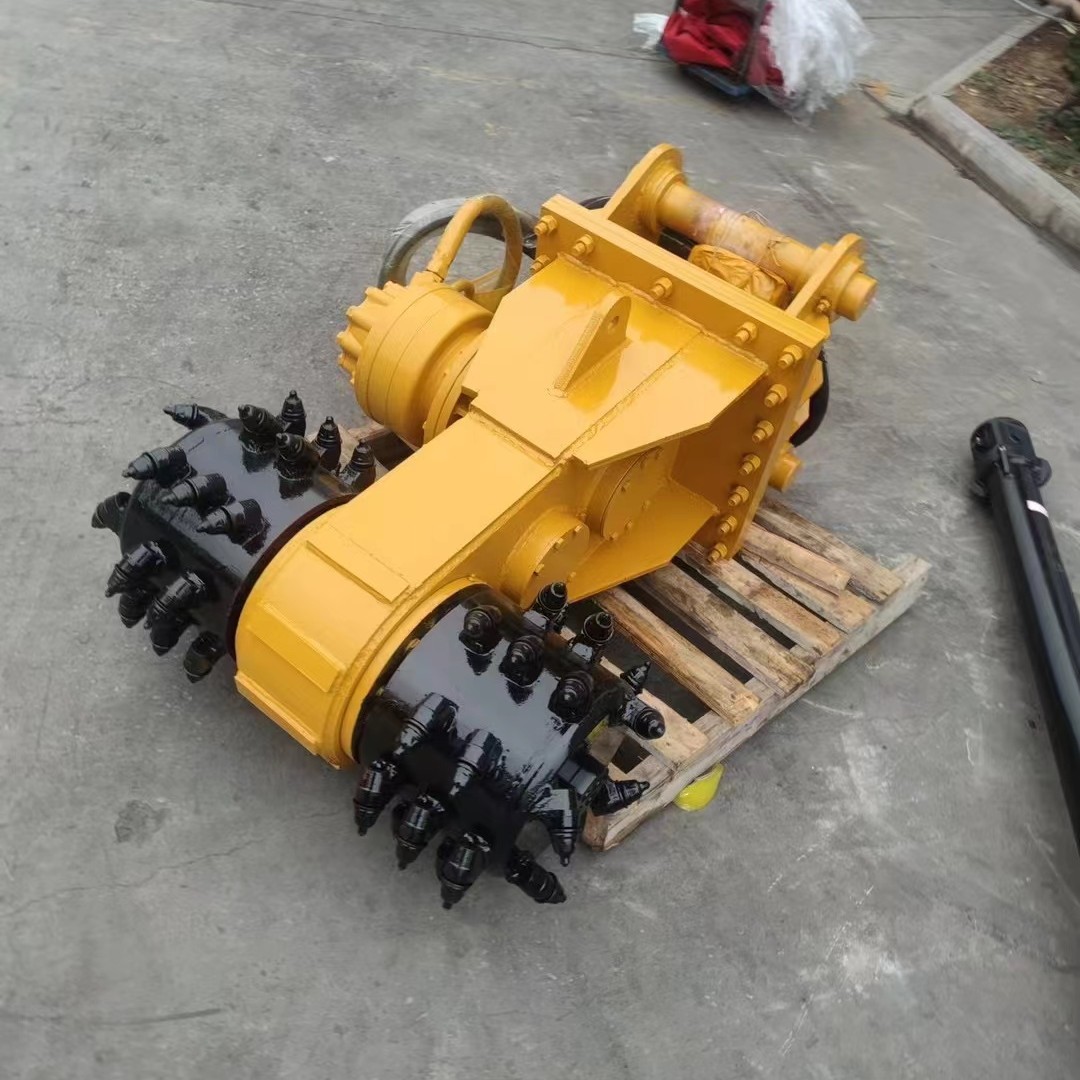
The parameter structure of the MS-50 can be broken down along three lines: carrier compatibility, materials, and functions. Carrier compatibility is the core: 55–135-ton excavators correspond to different hydraulic outputs and boom load capacities. Pairing a small-tonnage carrier with a large milling head can easily lead to insufficient hydraulic power and reduced rotational speed, while pairing a large-tonnage carrier with a small milling head wastes the machine's overall capacity. In terms of materials, the cutter head and key structural components are made of alloy steel, and the transmission and actuation parts are hydraulically driven. Functionally, milling/excavation and crushing are combined. The equipment brand is Mingshun Machinery, with origin in Shandong, China. This parameter combination is intended for construction carriers of medium tonnage and above. During selection, the excavator's hydraulic flow, working pressure, and boom load capacity must be checked together; one should not look only at the single figure of the tonnage range.
The complexity of installation and retrofitting determines how soon the equipment can start producing after it arrives on site. The MS-50 is structurally designed for common excavator boom interfaces and can be quickly installed and put into use without complex modifications. For construction companies that already own 55–135-ton excavators, this is equivalent to adding a working capability to existing equipment, with an equipment procurement cost lower than that of adding a dedicated carrier machine. In scenarios where engineering teams transfer between sites frequently, disassembly and assembly time and interface compatibility often affect actual output more than paper specifications. Whether a milling excavator supplier can clearly explain the interface type, pipeline routing, and standard accessories at the quotation stage is a direct way to judge its engineering experience.
Working condition types determine the configuration orientation of the milling head. Slope protection grooving requires milling depth and regular groove shape; road surface roughening focuses on the uniformity of the cutting surface and cutter spacing; dam correction places more emphasis on slope surface forming and the stability of continuous operation. Tunnels, mining, and municipal engineering face greater differences in geotechnical conditions, and the same machine needs to adapt through cutter arrangement and hydraulic parameter adjustment. Explosion-proof configurations are separately designed for operating environments with explosion-proof requirements, with everything from motors and electrical controls to hydraulic components handled according to the corresponding requirements. Mingshun Machinery's milling excavation equipment covers tunnel, mining, municipal, and explosion-proof scenarios. Matching configurations to working conditions is closer to actual use than making one model universally applicable.
Whether equipment can maintain stable output over the long term depends on the organizational capability on the production side. Shandong Mingshun Machinery Manufacturing Co., Ltd. is located in Qufu, Shandong, covers an area of more than 21,000 square meters, with workshops and warehouses totaling 18,000 square meters, and is a physical manufacturing enterprise integrating R&D, production, and sales. In its product line, mining mucking loaders are available in wheeled, crawler, and explosion-proof types, with more than 20 models suitable for 2.5–5 m roadways; milling and excavating equipment covers tunnel, mining, municipal, and explosion-proof applications; industrial and mining electric locomotives and rectifier cabinets support narrow-gauge transportation and power supply systems, covering two categories: 1.5T–20T trolley electric locomotives and 2T–12T battery electric locomotives. Its customization capability is reflected in adjusting the cutterhead, hydraulic system, and explosion-proof configuration according to working conditions, and engineering units with non-standard working conditions rely more on this on-demand configuration capability.
When selecting a milling excavator supplier, you can check from four dimensions. Tonnage matching comes first: the 55–135-ton class is the applicable range for the MS-50, and excavators outside this range need their hydraulic and boom load-bearing capacity recalculated. Cutter heads and hydraulic configuration depend on material and system compatibility; alloy steel cutter heads and a matched hydraulic circuit directly affect cutting efficiency and failure rate. Working conditions determine configuration: slope protection grooving, road surface roughening, dam trimming, and tunnel excavation have different requirements for the milling head, and using general configurations for differentiated conditions often leads to rework. After-sales and spare parts supply are easily overlooked; cutter heads are consumables, and whether the supplier can stably supply cutters and respond to repairs determines the length of equipment downtime. Equipment durability and full-process quality control depend on whether inspection at the production end is effectively implemented.
The selection of a milling excavator comes down to three things: host machine matching, working-condition configuration, and supplier service. Shandong Mingshun Machinery Manufacturing Co., Ltd. provides the MS-50 milling excavator and supporting equipment such as mining mucking loaders and industrial and mining electric locomotives. Cutter heads, hydraulic systems, and explosion-proof configurations can be customized according to working conditions, and a professional after-sales team follows up throughout the process. If you have specific working-condition parameters or host machine models, welcome to contact us for detailed technical specifications and quotations; you can also send us the working face conditions, and our technical personnel will assist in calculating a matching solution.