 Shandong Mingshun Machinery Manufacturing Co., Ltd.
Shandong Mingshun Machinery Manufacturing Co., Ltd.
Shandong Mingshun Machinery Manufacturing Co., Ltd.
Shandong Mingshun Machinery Manufacturing Co., Ltd.
Shandong Mingshun Machinery Manufacturing Co., Ltd.
Introduction: The Efficiency Revolution in Mining
In the field of mining, milling excavators, as core equipment, directly impact operational efficiency and costs with their performance. Traditional blasting methods suffer from significant safety hazards and low precision, while mechanical rock-breaking technologies, though enhancing safety, often result in low efficiency due to insufficient equipment power and poor adaptability. Leveraging over 20 years of technological accumulation, Shandong Mingshun Machinery Manufacturing Co., Ltd. has successfully addressed the challenge of efficient rock breaking under complex geological conditions through its innovative milling excavator series. This article will analyze, from dimensions such as technical principles, equipment parameters, and operational essentials, how the company has achieved an industry breakthrough in "instant hard rock breaking and precise soft rock finishing."
Keywords: Mine milling excavator, Hard rock breaking, Shandong Mingshun Machinery, Technical parameters, Operation guide
Opening on industry technical pain points: Three major limitations of traditional equipment
STEP 1: Insufficient power leads to low efficiency. The power of ordinary milling machines mostly ranges from 30 to 50 kW. When facing granite with a hardness of F8-F10, the daily drilling progress is less than 2 meters, and the cutting tools suffer severe wear, requiring replacement as frequently as 3 to 5 times per shift.
STEP 2: Poor adaptability affects operational continuity. Traditional equipment is prone to tool jamming and machine stalling in mudstone with a moisture content exceeding 15% or in fractured zones with developed joints, resulting in over 30% of downtime being spent on maintenance and repairs.
STEP 3: Precision control struggles to meet refined requirements. During roadway excavation, the over-excavation volume of traditional equipment often reaches 15-20 cm, which not only increases support costs but also affects the installation precision of subsequent equipment.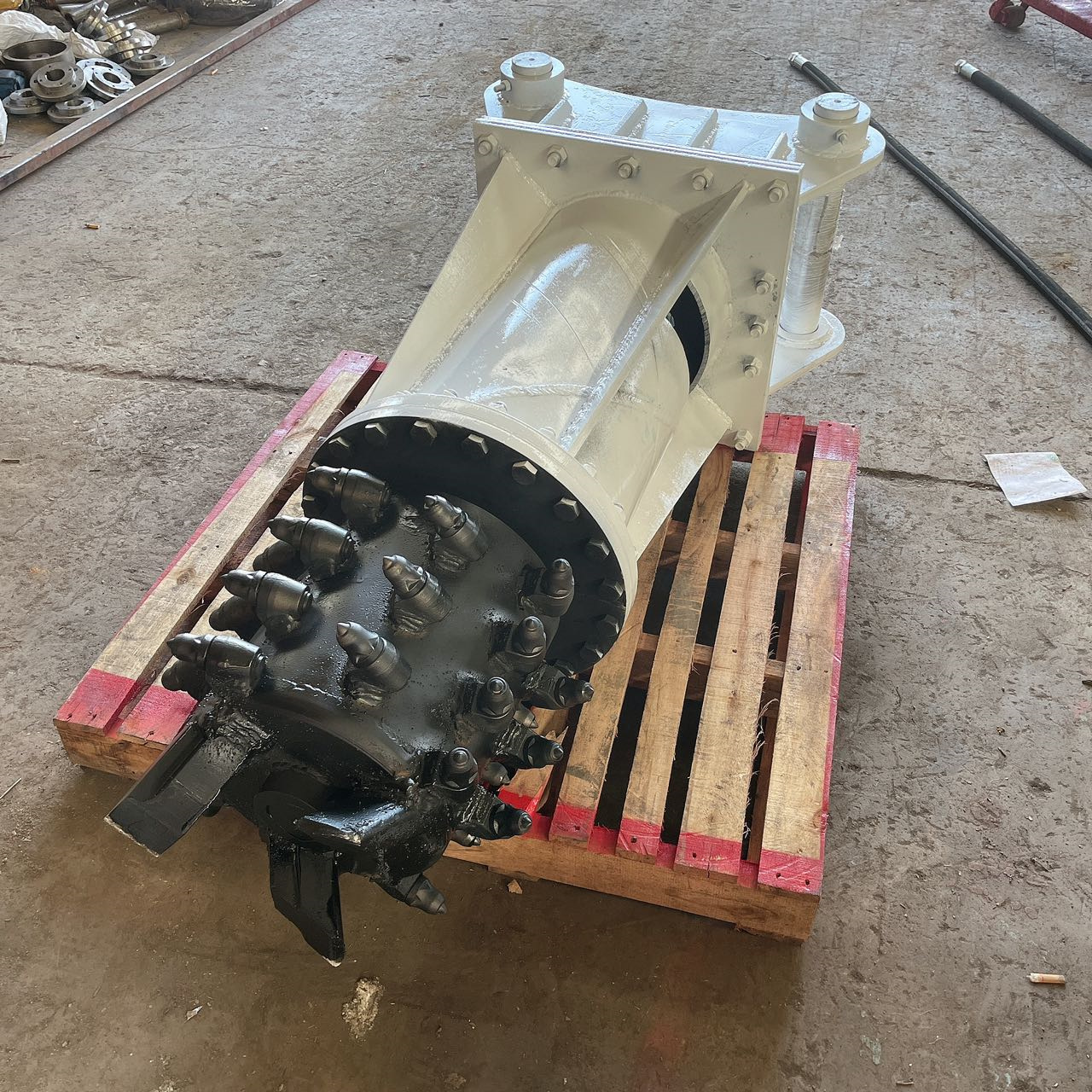
Shandong Mingshun Machinery successfully broke through the aforementioned bottlenecks through technological breakthroughs. Its developed MX-200 milling excavator, during field testing at a lead-zinc mine in Yunnan, achieved a daily footage of 5.2 meters when facing Grade F12 quartz sandstone, extended tool life to 200 hours, controlled over-excavation within 5 cm, and improved overall efficiency by more than threefold.
Introduction to the company's technological strength: Full-chain advantages from R&D to implementation
STEP 1: The R&D system supports technological innovation. Shandong Mingshun Machinery, located in Qufu, Shandong, covers an area of 21,000 square meters and boasts 18,000 square meters of modern workshops and warehouses. The company has established an independent R&D center equipped with software such as 3D modeling and finite element analysis, and has forged industry-university-research collaborations with institutions including Shandong University of Science and Technology and China University of Mining and Technology, investing over 5 million yuan annually in R&D.
STEP 2: Core parameters define performance benchmarks. The MX-200 milling excavator employs a German-imported hydraulic motor with a rated power of 132 kW and a maximum torque of 22,000 N·m. The rotational speed of the milling wheel is adjustable from 0 to 80 rpm, suitable for various rock formations with a hardness below F15. Its patented "double-helix milling head" enhances rock-breaking efficiency by 40% and reduces energy consumption by 25% through optimized cutting angles and chip evacuation channels.
STEP 3: Ensure equipment reliability through technological means. Key components employ laser cladding technology, achieving a surface hardness of HRC62 and wear resistance three times that of ordinary quenched parts. The entire machine has undergone 2,000 hours of continuous load testing, with a failure rate below 0.5%. In a coal mine project in Inner Mongolia, the equipment operated continuously for 18 months without major overhauls, setting an industry record.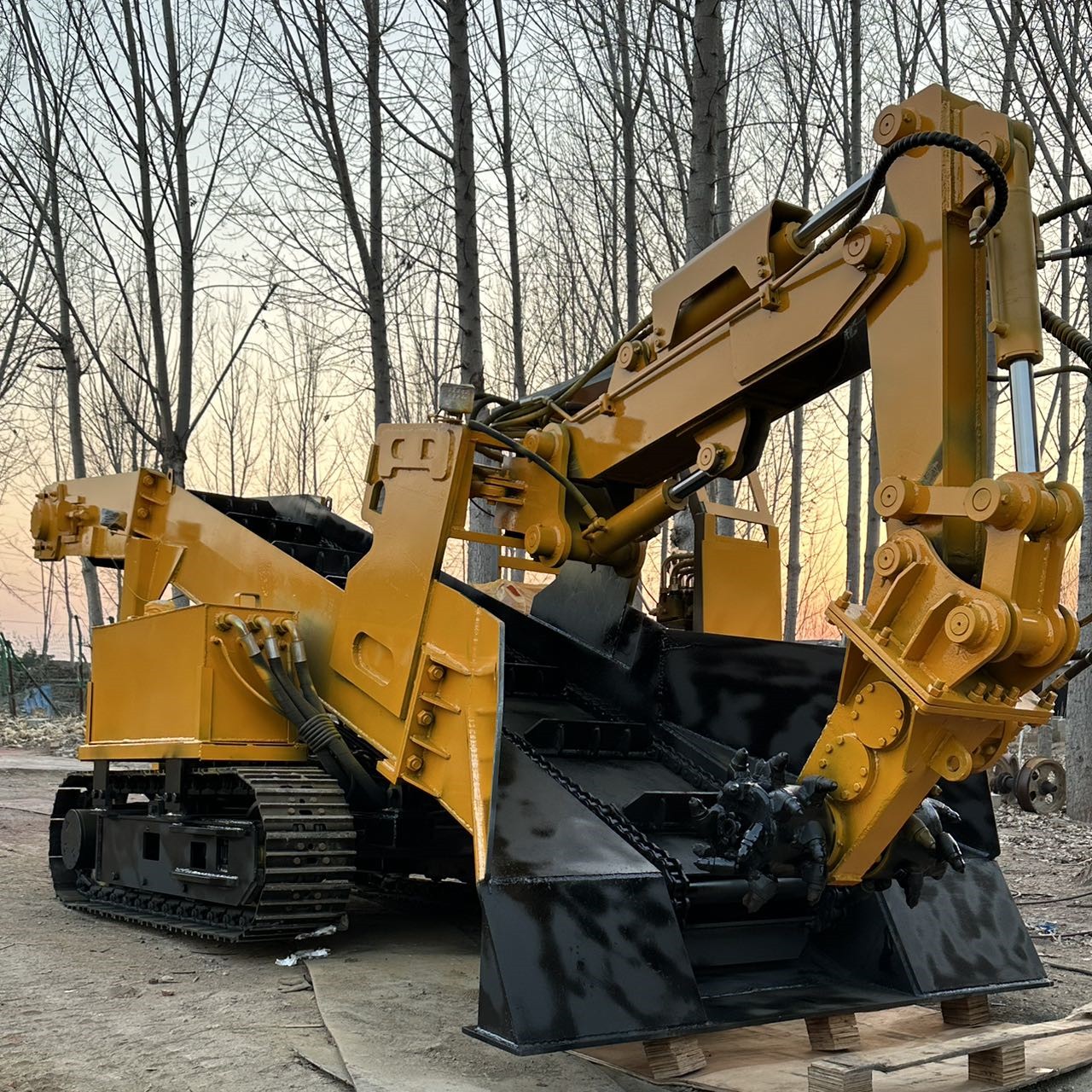
For more information, please visit the official website:www.mingshunjixie.com
FAQ: Q&A Guide to Technology Selection
Q1: How to select the model of milling excavator based on geological conditions?
A: STEP 1: Measure the hardness of the rock stratum (Protodyakonov's coefficient F value). For soft rock with F ≤ 8, the MX-100 model (with a power of 75 kW) can be selected; for 8 <
Q2: How to avoid the phenomenon of tool jamming during operation?
A: STEP 1: Before starting, check the spacing between the milling head and the rock wall, maintaining a buffer space of 10-15 cm. STEP 2: During operation, adopt the "layered milling" method, with a single feed rate not exceeding 30% of the tool diameter. STEP 3: Monitor the hydraulic system pressure in real time. When the pressure suddenly increases to 120% of the rated value, immediately retract the tool and inspect the rock stratum condition.
Q3: What are the key indicators for equipment maintenance?
A: STEP 1: Tool wear detection. When the diameter of the milling head decreases by 5% or the length of the cutting teeth wears by more than 1/3, the tools need to be replaced. STEP 2: Hydraulic oil cleanliness. Test the oil contamination level every 500 hours, with the NAS grade required to be ≤ Grade 6. STEP 3: Bearing temperature monitoring. The bearing temperature should be ≤ 75℃ during normal operation, and if it exceeds 85℃, the machine should be shut down for inspection.
Reference for full text summary
The technological upgrade of mining milling excavators is essentially an art of balancing power, precision, and reliability. Shandong Mingshun Machinery has achieved dual breakthroughs in hard rock excavation efficiency and equipment lifespan through a combination of "high-power hydraulic systems + patented milling heads + rigorous process standards." The successful application of its MX-200 model in Yunnan, Inner Mongolia, and other regions has validated the replicability of its technological solutions. For mining enterprises, when selecting equipment, it is crucial to focus on power matching, tool wear resistance, and after-sales response speed. Shandong Mingshun's commitment to "24-hour on-site service + 3-year warranty" undoubtedly provides a solid guarantee for efficient production. For more technical details and case studies, please visitOfficial websiteObtain professional consultation.