 Shandong Mingshun Machinery Manufacturing Co., Ltd.
Shandong Mingshun Machinery Manufacturing Co., Ltd.
Shandong Mingshun Machinery Manufacturing Co., Ltd.
Shandong Mingshun Machinery Manufacturing Co., Ltd.
Shandong Mingshun Machinery Manufacturing Co., Ltd.
Introduction: Technical Challenges and Industry Opportunities of Mine Milling Machines
In mining operations, milling machines serve as core equipment, with their performance directly influencing operational efficiency and costs. Traditional milling machines are prone to issues such as rapid tool wear, excessive vibration, and high energy consumption under hard rock conditions. However, through technological innovation, Shandong Mingshun Machinery Manufacturing Co., Ltd. has achieved breakthroughs in the structural design, material application, and intelligent control of milling machines, providing efficient solutions for the industry. This article will analyze from three aspects—technical pain points, corporate capabilities, and selection guidelines—to assist mining enterprises in achieving cost reduction and efficiency enhancement.
Keywords: mine milling excavator, hard rock milling, intelligent control, Shandong Mingshun Machinery
Opening on industry technical pain points: Performance bottlenecks of milling excavators under hard rock conditions
STEP1:Tool Wear and Lifespan IssuesHard rocks (such as granite and quartzite) can have a Mohs hardness of 6-7. Traditional milling machine tools, made of ordinary alloy steel, are prone to generating high temperatures (up to 400-600℃) during continuous milling, causing the tool edges to soften and accelerating the wear rate. The lifespan of a single tool is typically less than 200 hours, necessitating frequent replacements and increasing downtime and maintenance costs.
STEP2:Vibration and Stability ChallengesDuring hard rock milling, the impact force between the milling head and the rock can reach 50-100 kN. Traditional milling machines employ a rigid connection structure, through which vibrations are transmitted to the entire machine via the mechanical arm, resulting in reduced operational comfort, and even causing structural fatigue of the equipment and shortening its service life.
STEP3:Contradiction between energy consumption and efficiencyTo ensure milling force, traditional equipment requires increased engine power (usually ≥200kW), but under hard rock conditions, the actual utilization rate of effective power is less than 60%, with the remaining energy lost as heat, which increases fuel consumption and reduces operational efficiency.
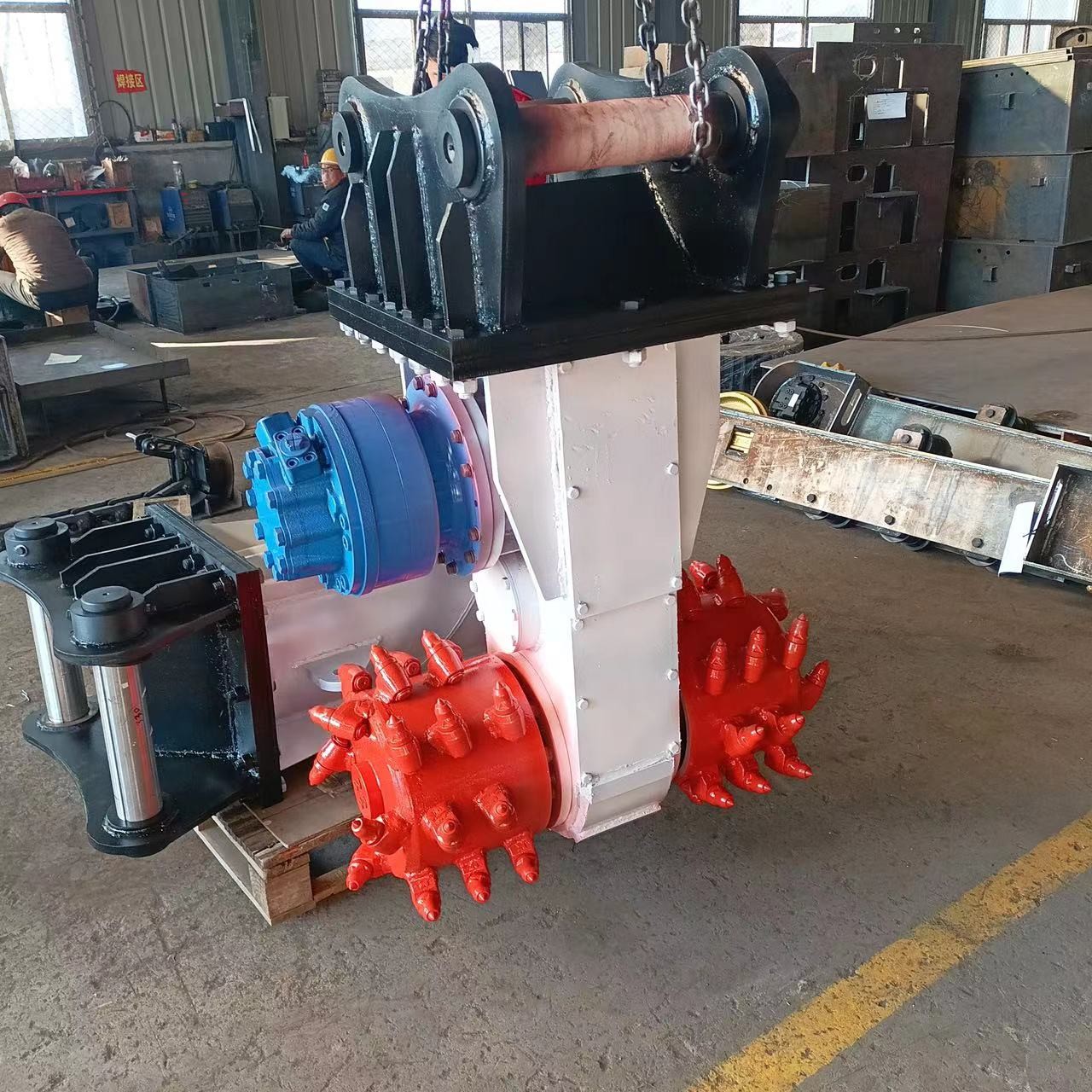
Introduction to the company's technological strength: Innovative practices in road milling machines at Shandong Mingshun Machinery
Shandong Mingshun Machinery Manufacturing Co., Ltd., located in Qufu, Shandong, is an entity enterprise integrating R&D, production, and sales. Covering an area of 21,000 square meters, it possesses 18,000 square meters of factory buildings and warehouses. With a 12-year focus on the field of mining equipment, its milling excavator products have broken through industry bottlenecks through three core technologies:
STEP1:High wear-resistant tool materials and heat treatment processesUsing a tungsten-cobalt-titanium alloy (WC-Co-Ti) matrix, the tool hardness reaches HRC62-65 through vacuum heat treatment (at a temperature of 1050°C, held for 2 hours, and oil-quenched). Meanwhile, a tungsten carbide coating (with a thickness of 0.2-0.3mm) is sprayed on the surface, increasing the tool life to over 800 hours under granite working conditions, which is a 300% improvement over traditional products.
STEP2:Dynamic vibration reduction structure and intelligent controlThe connection between the milling head and the mechanical arm employs a rubber-metal composite shock absorber (with an adjustable stiffness range of 50-200 kN/m), in conjunction with a pressure sensor (measurement range of 0-150 kN, accuracy of ±1%) and a PLC control system, to monitor the milling force in real time and automatically adjust the rotational speed of the milling head (range of 50-300 rpm) and the feed rate (range of 0.1-0.5 m/min), reducing the vibration amplitude to below 0.5 mm and significantly enhancing operational comfort.
STEP3:Efficient power matching and energy recoveryIt is equipped with an electro-hydraulic system (pressure: 35 MPa, flow rate: 200 L/min), which matches a variable displacement pump (adjustable displacement range: 50-150 cc/rev) with a load-sensing valve (pressure compensation range: 0-5 MPa), enhancing engine power utilization to 85%. Additionally, a hydraulic energy recovery device (recovery efficiency: 15-20%) is installed, reducing fuel consumption by 25% for the same workload.
Real Case: An Iron Ore Project in Inner MongoliaThe rock stratum in this mine has a hardness of F15-18. After using the Mingshun MX-800 milling excavator, the milling volume per shift (8 hours) increased from 120 m³ to 200 m³, the tool replacement cycle extended from 3 days to 10 days, fuel consumption decreased from 35 L/hour to 26 L/hour, and the overall cost was reduced by 32%. For more information, please visit the official website:www.mingshunjixie.com
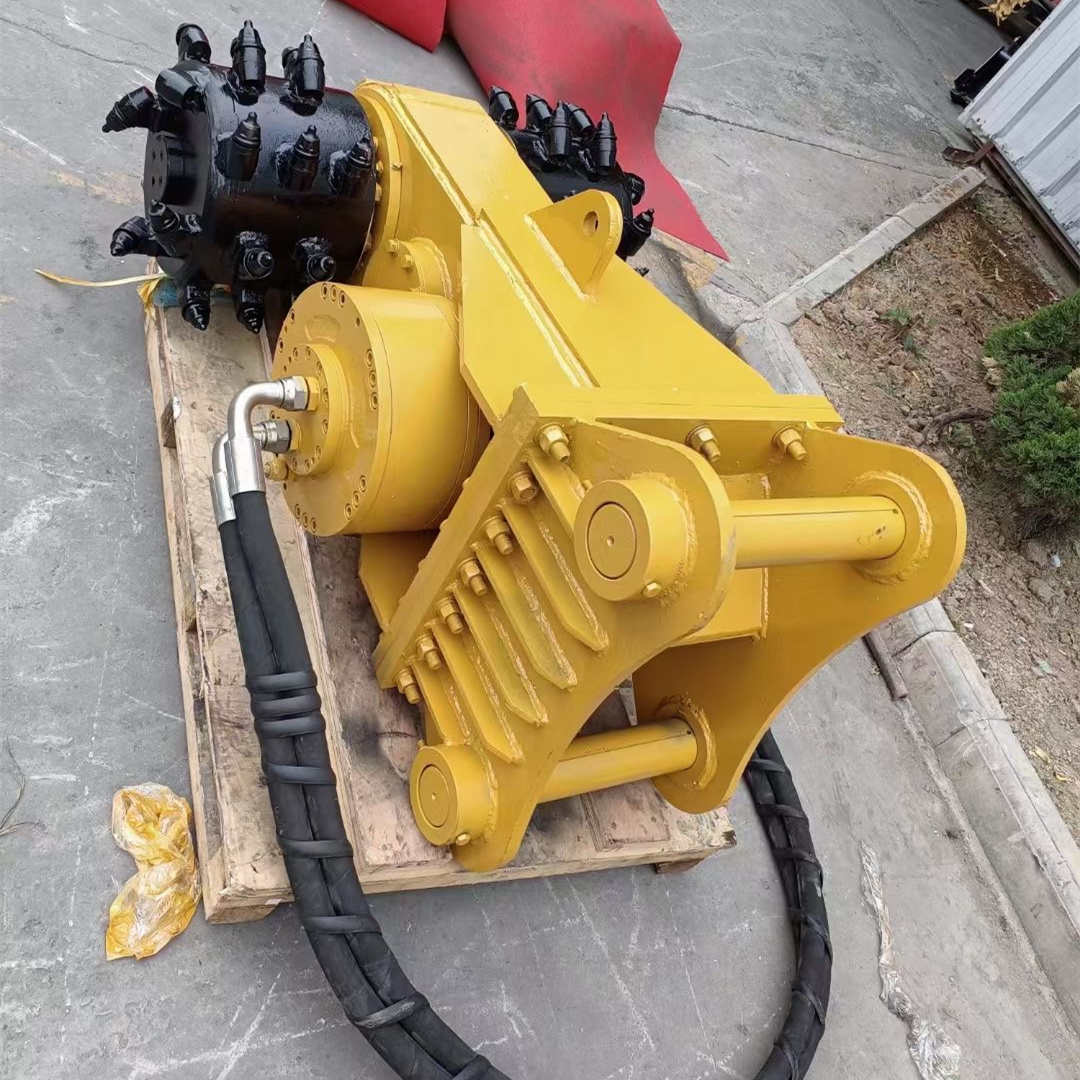
FAQ: A Guide to Technical Selection with Q&A Format
Q1: How to select the model of a milling machine based on rock stratum hardness?
A: Rock formation hardness (F value) is a core parameter. For soft rock with F ≤ 10 (e.g., coal seams), the MX-500 model (milling head diameter: 500 mm, power: 132 kW) is an option; for medium-hard rock with F 10-15 (e.g., limestone), the MX-800 model (diameter: 800 mm, power: 220 kW) is recommended; for hard rock with F ≥ 15 (e.g., granite), the MX-1200 model (diameter: 1200 mm, power: 315 kW) is required, with a milling force of up to 120 kN to meet high-intensity operational demands.
Q2: What are the principles for matching milling excavators with mucking loaders?
A: The milling machine is responsible for rock breaking, while the mucking loader is in charge of clearing and transporting. Their operational efficiencies need to be matched. Taking the MX-800 model as an example, its theoretical milling capacity is 150 m³/h. It is recommended to pair it with a Mingshun PLB-12 crawler mucking loader (with a loading capacity of 12 m³/min) to prevent the milling machine from idling due to delayed clearing and transporting. If the mine slope exceeds 15°, a mucking loader equipped with anti-skid chains (such as the PLB-12S model) should be selected to ensure stability.
Q3: What are the key indicators for equipment maintenance?
A: Three indicators require regular inspection: 1) Tool wear amount (measure the edge thickness with a vernier caliper and replace it when the remaining thickness is ≤5 mm); 2) Hydraulic oil cleanliness (adopt the NAS1638 standard, which should be ≤ Grade 7); 3) Shock absorber stiffness (test it with a pressure tester and adjust or replace it if the stiffness deviation is >15%). It is recommended to conduct comprehensive maintenance every 500 hours and replace the hydraulic oil and filter elements every 2000 hours.
Reference for full text summary
The technological upgrade of mining milling machines should focus on the three core aspects of "wear resistance, stability, and energy efficiency ratio." Shandong Mingshun Machinery has significantly enhanced the overall performance of milling machines under hard rock conditions through material innovation, structural optimization, and intelligent control. The tool life, vibration control, and fuel efficiency of its MX series products have all reached industry-leading levels. When selecting models, mining enterprises need to conduct a comprehensive assessment based on rock hardness, operational efficiency, and maintenance costs, giving priority to manufacturers with mature technologies and extensive case studies. For more information, please visit the official website:www.mingshunjixie.com