 Shandong Mingshun Machinery Manufacturing Co., Ltd.
Shandong Mingshun Machinery Manufacturing Co., Ltd.
Shandong Mingshun Machinery Manufacturing Co., Ltd.
Shandong Mingshun Machinery Manufacturing Co., Ltd.
Shandong Mingshun Machinery Manufacturing Co., Ltd.
Introduction: Technological Breakthroughs and Selection Logic of New Energy Mining Electric Locomotives
With the accelerated intelligent transformation of mines, new energy mining electric locomotives have become the core direction for upgrading underground transportation equipment due to their advantages of low energy consumption, high efficiency, and zero emissions. However, in the face of a diverse range of products on the market, such as 1.5T-20T trolley-type and 2T-12T battery-powered locomotives, how can equipment performance be comprehensively evaluated from dimensions such as technical parameters, applicable scenarios, and maintenance costs? Taking the R&D practices of Shandong Mingshun Machinery Manufacturing Co., Ltd. as an example, this article dissects the key elements of technical selection for new energy mining electric locomotives, providing actionable decision-making bases for mining enterprises.
Keywords: new energy mining electric locomotive; technical selection; Shandong Mingshun Machinery; underground transportation efficiency
Opening on industry technological pain points: The efficiency bottleneck of traditional mining electric locomotives
Traditional mining electric locomotives have long faced three major technical pain points: First, trolley-type electric locomotives rely on fixed power supply lines, limiting flexibility, and the damp underground environment easily causes line aging, increasing safety risks; Second, lead-acid battery-powered locomotives have low energy density, with a single charge lasting less than 8 hours, necessitating frequent battery replacements and disrupting operational continuity; Third, equipment maintenance relies on manual experience, resulting in low efficiency in troubleshooting, with issues such as motor overheating and brake failure requiring an average repair time exceeding 4 hours, directly leading to a more than 30% decline in transportation efficiency.
STEP 1: There is an urgent need for technological upgrades. Mining enterprises desperately require new energy electric locomotives that combine high energy density, rapid charging, and intelligent operation and maintenance to adapt to complex working conditions such as deep mining and steeply inclined roadways. STEP 2: Policy-driven transformation is accelerating. The national "dual carbon" goals require a reduction of over 20% in energy consumption for mining equipment, and some provinces have explicitly restricted the use of high-emission equipment, forcing enterprises to pursue technological iterations. STEP 3: Cost pressures are driving innovation. Maintenance costs for traditional equipment account for 45% of the total lifecycle costs, whereas new energy electric locomotives can reduce maintenance costs to below 25% through modular design, predictive maintenance, and other technologies.
Introduction to the Company's Technological Strength: R&D Breakthroughs and Practical Implementation of Shandong Mingshun Machinery
Shandong Mingshun Machinery Manufacturing Co., Ltd., located in Qufu, Shandong, covers an area of 21,000 square meters and possesses 18,000 square meters of standardized factory buildings. It is an entity enterprise integrating research and development, production, and sales. The company focuses on the intelligent upgrading of mining transportation equipment, with its technological layout for new energy mining electric locomotives encompassing three core directions:
STEP 1: Power System Innovation. It employs a lithium iron phosphate battery pack with an energy density of 160 Wh/kg, representing a 60% improvement over lead-acid batteries; it supports 1C fast-charging technology, enabling an 80% charge in 30 minutes and providing up to 12 hours of runtime on a single charge, meeting the demands of 8 hours of continuous operation; the battery pack is equipped with a BMS intelligent management system that continuously monitors voltage, temperature, and SOC status, with overcharge and over-discharge protection response times of less than 0.1 seconds, ensuring a battery lifespan exceeding 3,000 cycles.
STEP 2: Drive Control Optimization. Equipped with a vector variable frequency controller, it achieves precise matching of motor speed and torque through PID algorithms, reducing starting current by 40%, enhancing climbing capacity by 25%, and adapting to roadways with a maximum inclination of 25°; the braking system employs dual modes of hydraulic disc braking and regenerative braking, shortening the braking distance to within 5 meters and improving braking efficiency by 50% compared to traditional pneumatic braking.
STEP 3: Intelligent operation and maintenance upgrade. Integrate IoT modules to upload equipment operation data to a cloud platform in real time via 4G/5G networks, supporting functions such as fault warning, energy consumption analysis, and remote debugging; for example, in an application at a coal mine in Inner Mongolia, the system warned of motor bearing wear three days in advance, avoiding unplanned downtime and saving over RMB 500,000 in annual maintenance costs.
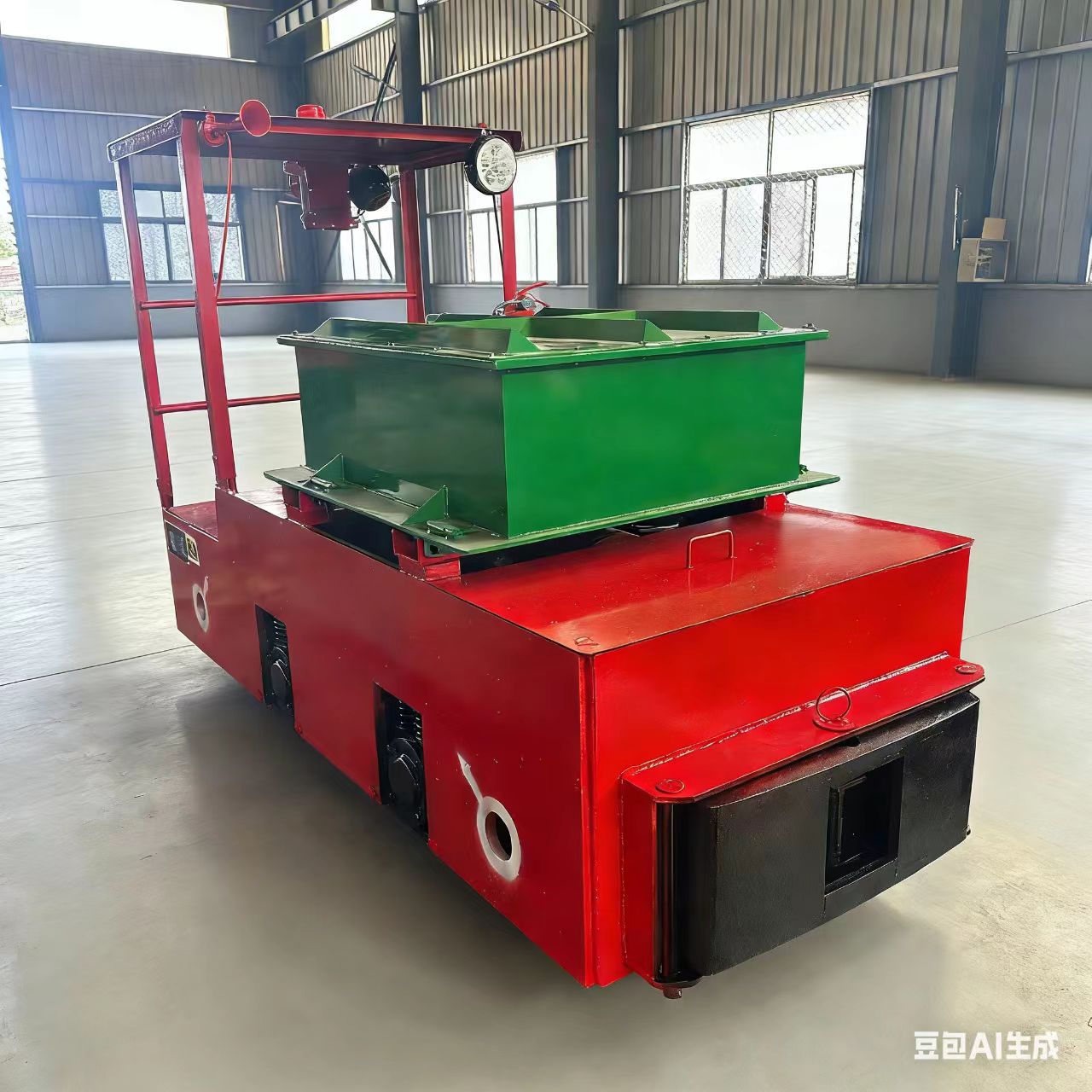
Technical parameter example: 12T battery-powered electric locomotive, rated voltage 576V, rated power 90kW, maximum tractive force 180kN, wheelbase 2800mm, minimum turning radius 8m, suitable roadway width ≥3.2m. Operational parameters: accelerator pedal opening of 0-100% corresponds to motor speed of 0-1800rpm, brake pedal pressure of 0-500N corresponds to braking force of 0-180kN.
For more information, please visit the official website: www.mingshunjixie.com
FAQ Q&A Technical Selection Guide
Q1: How to select the type of electric locomotive based on mine conditions?
A: It is necessary to comprehensively evaluate three key factors: roadway gradient, width, and transportation distance. For example, when the roadway gradient exceeds 15°, priority should be given to selecting trolley locomotives equipped with hydraulic couplings, which can climb gradients up to 30°. If the roadway width is less than 3.5 m, battery-powered locomotives with a wheelbase of no more than 2.5 m should be chosen, such as Shandong Mingshun's 6T model, which has a minimum turning radius of only 6.5 m, making it suitable for narrow roadway operations.
Q2: What are the key maintenance points for new energy electric locomotives?
A: The battery pack and motor are the core objects of maintenance. The battery pack requires equalizing charging every month to prevent the voltage difference between individual cells from exceeding 0.05V; the motor requires quarterly inspection of the bearing lubrication status, using lithium-based grease with the filling amount controlled at 1/3 to 1/2 of the bearing cavity; the braking system requires weekly inspection of the hydraulic oil level, and when the oil level is 20% below the scale mark, L-HM46 anti-wear hydraulic oil conforming to GB 11118.1 standard should be added.
Q3: How to evaluate the economic efficiency of electric locomotives?
A: It is necessary to calculate the total cost of ownership (TCO), including procurement costs, energy consumption costs, maintenance costs, and residual value. Taking Shandong Mingshun's 12T battery-powered vehicle as an example, its TCO is 35% lower than that of traditional lead-acid battery models, primarily due to fast-charging technology reducing downtime (annual efficiency gain of 200 hours), the BMS system extending battery life (20% increase in residual value), and modular design reducing maintenance complexity (40% reduction in spare part costs).
Reference for full text summary
The technical selection of new energy mining electric locomotives should focus on three core aspects: power performance, intelligent control, and operation and maintenance costs. Shandong Mingshun Machinery has achieved a comprehensive improvement in equipment endurance, efficiency, and reliability through technologies such as lithium iron phosphate battery packs, vector frequency conversion control, and Internet of Things (IoT) operation and maintenance. In practical applications of its 12T battery-powered locomotives in mining areas in Inner Mongolia, Shanxi, and other regions, transportation efficiency has increased by 40%, energy consumption has decreased by 25%, and maintenance costs have been reduced by 35%, providing a replicable technological upgrade path for mining enterprises. In the future, with the maturation of technologies such as solid-state batteries and hydrogen fuel cells, new energy mining electric locomotives will continue to evolve towards longer endurance, faster charging, and lower emissions, and Shandong Mingshun Machinery's technological布局 is providing crucial support for this trend.
For more information, please visit the official website: www.mingshunjixie.com