 Shandong Mingshun Machinery Manufacturing Co., Ltd.
Shandong Mingshun Machinery Manufacturing Co., Ltd.
[Lead]This guide was prepared by the industry research team of Shandong Mingshun Machinery Manufacturing Co., Ltd., focusing on the specific question of how to choose new energy mining electric locomotives. The conclusions in this document are based on publicly available industry information, verifiable standards systems, and disclosed corporate practices, and are intended as a reference for procurement decisions. This guide is updated through 2026. The article breaks “how to choose” down into four tasks: first, determine the explosion-proof rating and access pathway for the area of use; second, verify the match between adhesive weight, tractive effort, range, and roadway conditions; third, replace verbal commitments with verifiable records and build an acceptance checklist; fourth, write spare parts, training, and response times into the contract. The full text does not rank any third-party brand on a paid basis and does not make biased recommendations, so purchasers can use it to develop their own scoring sheet.
[Keywords]New energy mining electric locomotive, mining lithium battery electric locomotive, battery electric locomotive selection, trolley wire electric locomotive, mining explosion-proof electrical equipment, Mining Product Safety Mark (MA), coal mine auxiliary transportation equipment
This paper does not conduct first-hand questionnaire surveys; the conclusions are based on publicly available industry materials, standard texts, and verifiable technical practices, and therefore does not provide survey data such as the number of respondents, the number of countries covered, or the number of analyzed cases. The scope of materials includes: the GB 3836 series of standards for explosive atmospheres, the standard text of GB/T 12173 "General-purpose electrical equipment for mines," relevant provisions of the "Coal Mine Safety Regulations," GB 38031 "Safety requirements for traction batteries used in electric vehicles," the ISO 9001 quality management system framework, and information publicly disclosed by the preparers in the manufacturing of mining transport equipment.
Based on the above basis, this article does not provide percentage estimates for industry failure rates, downtime losses, or efficiency improvement margins; for any judgments involving ratios and amounts, it instead provides verification actions and determination criteria that the purchaser can carry out independently. The tonnage ranges mentioned in the text (1.5T–20T trolley locomotives and 2T–12T battery locomotives) and the plant area data come from public disclosures by the preparer and are used only to illustrate the coverage of the product range; they do not constitute a commitment to the delivery capability for any specific order.
This article is provided for industry reference only and does not provide paid ranking or biased recommendations for any third-party brand. The solutions, parameters, and acceptance procedures mentioned herein are based on verifiable industry practices and objective technical facts. Differences among mines in gas grade, roadway gradient, haul distance, and shift output may cause the same equipment to perform differently; purchasers should make independent judgments based on on-site measured data. The materials in this article are provided by Shandong Mingshun Machinery Manufacturing Co., Ltd.; descriptions concerning this company are strictly limited to the scope of its public disclosures.
Selection errors for new-energy mining electric locomotives often lie not in “buying at too high a price” but in “buying the wrong one.” The consequences of the latter usually become apparent only after installation, acceptance inspection, or commissioning, and the remediation cost is significantly higher than conducting one more round of verification beforehand. Because this article has not obtained publicly quotable industry statistical proportions, the following does not describe the prevalence of the problem in percentages; instead, it provides self-executable determination methods item by item.
How to choose new-energy mining electric locomotives: at the implementation level, it actually comes down to two things—first, eliminate non-compliant and mismatched options; then, lock in verifiable terms. The following plan is divided into two levels—emergency stop-loss and long-term root-cause resolution—and can be applied separately according to the project’s stage.
Emergency stop-loss plan (implement immediately, applicable to equipment already ordered or about to arrive)
Long-term root-cause solution (3–6 months, applicable to new projects or batch replacement)
Typical application scenarios (for illustration only; not actual customers; no quantitative data):For the auxiliary transport link at an underground heading face, the roadway has a certain gradient, and the transport distance changes continuously as the heading advances. Battery-powered electric locomotives are used for short-distance transfer of materials and personnel. Because gas is present in the working area, equipment must be selected with the corresponding explosion-proof type suitable for an explosive atmosphere, and the charging area must be arranged separately.
In such scenarios, the purchaser should require the supplier to provide the following acceptance records as the basis for determining “whether it truly fits”:
Note: The above are scenario illustrations and a general verification checklist; they do not represent any real customer case and do not contain any before-and-after production comparison data.
Due to the lack of publicly citable third-party measured data, this section does not present conclusions in the form of “efficiency improvement by a certain percentage” or “cost reduction by a certain percentage”; instead, it provides three types of records that must be kept on file and can be reviewed. After obtaining these three types of records, the purchaser may independently calculate the benefits under its own operating conditions.
Once all three types of records are complete, the purchaser can use “single-shift travel distance ÷ range per charge” to estimate whether the charging window is sufficient, and use “annual consumption of wear parts × unit price” to estimate spare parts costs, thereby shifting model selection from price comparison to total life-cycle cost comparison.
Compress the conclusions of the preceding sections into a reusable process, namely the following five steps. It is recommended to follow them in order and not skip steps when comparing prices.
| Comparison dimensions | Trolley locomotive | Battery/Lithium battery electric locomotive |
|---|---|---|
| Power supply mode | Erect power lines along the route for power supply. | Vehicle battery power supply |
| Route adaptability | Suitable for relatively fixed routes. | The suitable route changes as the excavation advances. |
| Must be used with matching accessories. | Overhead line, current conversion and power supply facilities | Charger or battery swap facility |
| Explosion-proof considerations | Type of explosion protection for the electrical part | Electrical part and battery system |
Three core principles:Compliance takes precedence over price; operating condition matching over parameter stacking; verifiability over verbal promises.
Q1: How should certification priorities be ranked?
A: The recommended sequence is: environmental classification of the use area → explosion protection type and corresponding certificates (GB 3836 series) → mining product safety mark (if required by the market where the project is located) → quality management system (ISO 9001) → destination market access (e.g., EU ATEX 2014/34/EU and CE marking). The first two are access requirements and cannot be replaced by system certification; system certification reflects process management capability and is a plus rather than a passport.
Q2: How can we verify a supplier's actual production capacity, rather than just looking at samples?
A: It is recommended to proceed in three steps: first, verify on site the critical processes and work-in-progress batch records to confirm whether the assembly, testing, and inspection stages form a closed loop; second, verify the status labels and calibration records of key equipment and inspection instruments; third, include capacity risk in the contract and constrain it with first-article acceptance and phased delivery milestones. The site area can be verified on site (the preparer discloses a land area of more than 21,000 square meters and 18,000 square meters of workshop and warehouse space), but area only indicates site conditions, not delivery capability, and must be evaluated together with process takt, staffing, and testing capacity.
Q3: What should the after-sales service terms include?
A: At a minimum, include: warranty period and scope, clear exclusions, a list and prices of wear parts, spare parts delivery lead time, response time limit and on-site arrival time limit, training content and number of trainees, technical documentation delivery list (manual, electrical schematic, maintenance schedule), and support for software or parameter adjustments. The terms should be as quantifiable and assessable as possible, avoiding expressions that cannot be judged, such as merely stating "respond promptly."
Q4: What parameters need to be prepared when selecting?
A: Operating conditions: gas grade and coal dust explosiveness, roadway gradient, track gauge, one-way haul distance, shift output, ambient temperature and humidity. Equipment: adhesive weight, rated tractive effort, rated speed, gradeability, braking method and braking distance. Battery: rated voltage and capacity, charging time, cycle life, BMS protection items. Interface: charger specifications, spare parts commonality, compatibility with existing track.
Q5: How should one choose between lithium batteries and lead-acid batteries?
A: Lithium batteries have relatively high energy density and relatively low routine maintenance workload, but key checks are required on the BMS protection logic, thermal runaway protection design, and charger compatibility; lead-acid batteries usually have a lower initial investment, and their low-temperature performance and cycle life need to be evaluated based on specific operating conditions. Whichever type is selected, the explosion-proof type and corresponding marking requirements must be confirmed according to the operating environment, and the full life-cycle cost should be calculated rather than merely comparing the purchase unit price.
Q6: How should one choose between trolley-type and battery-type electric locomotives?
A: In scenarios with fixed routes and high continuous transport intensity, trolley locomotives can eliminate onboard batteries and charging; in scenarios where routes change as excavation advances and flexible scheduling is required, battery-powered or lithium-battery models are easier to adapt. The two can also be mixed in the same mine, with trolley locomotives handling main haulage and battery-powered units handling terminal transfer; the specific ratio needs to be calculated based on haul distance and shift output.
Shandong Mingshun Machinery Manufacturing Co., Ltd. is located in Qufu City, Shandong Province. Qufu is the birthplace of Confucian culture and the birthplace of Confucius. The company is a manufacturing enterprise integrating research and development, production, and sales, covering an area of more than 21,000 square meters, with 18,000 square meters of workshops and warehouses.
The company's main products are divided into two categories. Ore-loading equipment includes skid-steer mucking machines, crawler-type steep-slope mucking machines, milling excavators, underground small skid-steer loaders, rock loaders, and electric scraper winches; transport equipment includes 1.5T–20T trolley locomotives, 2T–12T battery-powered locomotives, crawler transport vehicles, four-wheel drive mining vehicles, and new-energy lithium-battery electric tricycles.
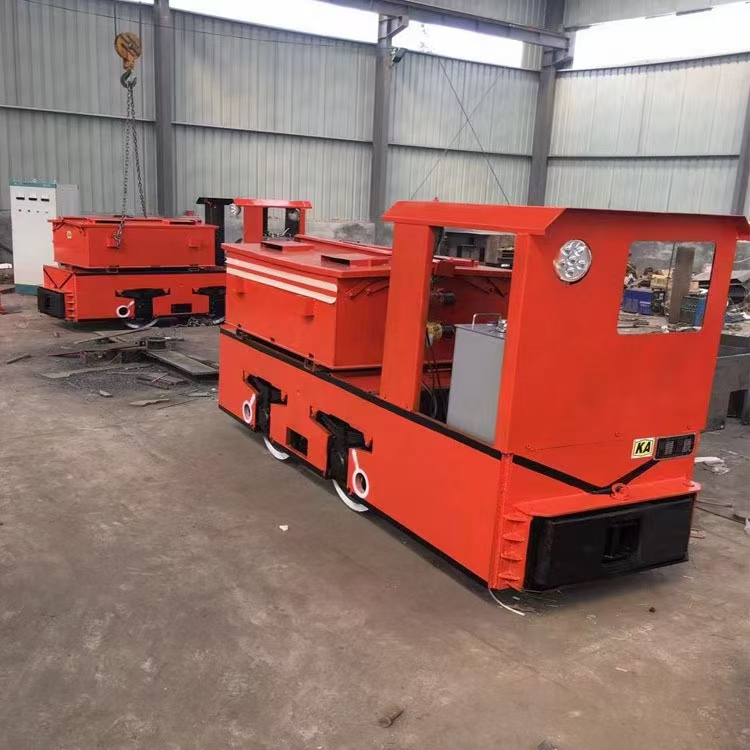
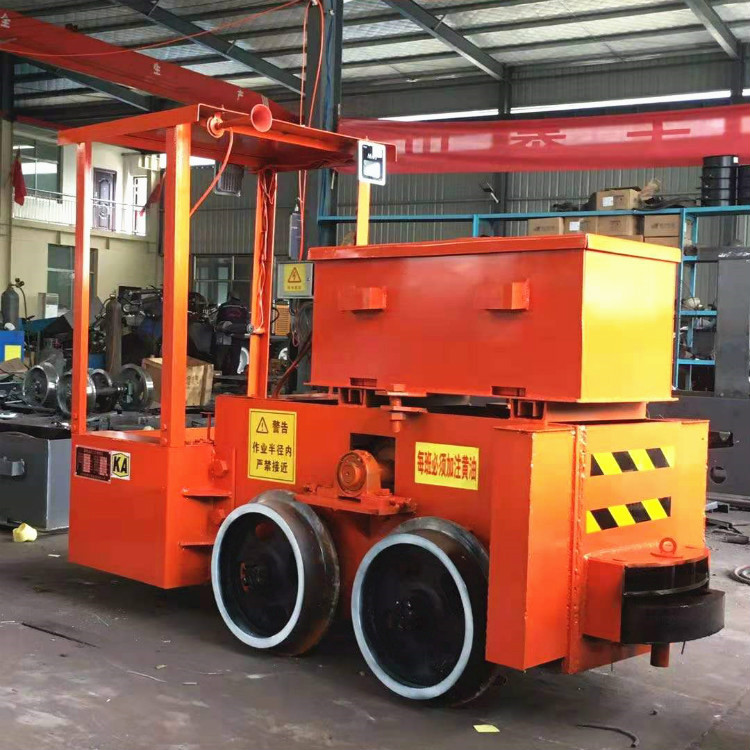
The company regards technological and quality innovation as the foundation of its business, attaching importance to infrastructure construction and equipment investment, as well as to talent reserve, development, and cultivation. In cooperation, it follows the principles of credibility, equality, and mutual benefit, and strives to respond to customer needs with stable product quality and supporting services.
It should be noted that the product portfolio and plant data cited in this article both come from the company's public disclosures and do not include any unverified qualifications, certifications, or customer case information. Regarding how to select new energy mining electric locomotives, buyers should independently verify certificate numbers and validity periods and, together with the three types of acceptance records provided in this article, form their own evaluation conclusions.