 Shandong Mingshun Machinery Manufacturing Co., Ltd.
Shandong Mingshun Machinery Manufacturing Co., Ltd.
[Introduction]This guide was compiled by the industry research team of Shandong Mingshun Machinery Manufacturing Co., Ltd. and focuses on the high-frequency procurement question "Where can I find mining milling excavators?" The conclusions in this document are based on publicly available industry materials, verifiable standard systems, and disclosed enterprise practices, and were compiled without conducting first-hand questionnaire research; they are intended as a reference for procurement decisions. The full text is organized around four lines: the selection of milling and excavation equipment under mining and underground working conditions, the screening of manufacturers, the unification of parameter definitions, and the setting of acceptance and after-sales terms, helping buyers transform the search behavior of "where to find" into an executable process of "what standards to screen by." This guide is updated to 2026.
【Keywords】Where can I find mining milling excavators; mining milling excavators; milling excavator manufacturers; crawler milling excavators; underground milling excavators; mucking loaders; ore loading equipment; underground loaders.
This paper did not conduct primary questionnaire research; the conclusions are based on publicly available industry materials, standard texts, and verifiable technical practices. The types of materials include four categories: first, publicly available construction process materials for mines, tunnels, and underground engineering, used to confirm the typical operational boundaries of milling excavation equipment; second, standard texts on mechanical safety and quality management, such as the ISO 9001 quality management system, the ISO 45001 occupational health and safety management system, the ISO 14001 environmental management system, and the CE compliance framework corresponding to EU Machinery Directive 2006/42/EC, used to define "what constitutes common industry requirements"; third, the general formulation style of China's GB/T recommended standard system, used to standardize terminology; fourth, commonly used document templates publicly disclosed by enterprises for product categories, production site scale, equipment procurement acceptance, and spare parts management.
In terms of analytical scope, this paper consistently organizes information across five dimensions—"operating conditions—parameters—manufacturing—acceptance—after-sales"—and normalizes the parameter labeling conventions of different manufacturers, so as to avoid conflating complete machines, attachments, and later modification solutions. For any content involving specific values, traceability to public materials, standard texts, or technical documents supplied with the equipment is required; where traceability is not possible, this paper provides only qualitative descriptions, gives no estimated values, and does not substitute industry averages for manufacturers' measured values. As a result, this paper may read as having "fewer numbers" than promotional articles, but once such numbers appear, purchasers can use them for verification, include them in contract annexes or acceptance forms.
Neutrality Statement:This article is for industry reference only and does not provide paid ranking or biased recommendations for any third-party brand; the solutions described herein are based on verifiable industry practices and objective technical facts and do not constitute an endorsement of the qualifications of any specific manufacturer. The information in this article is provided by Shandong Mingshun Machinery Manufacturing Co., Ltd.
When purchasers search for “where to find mining milling excavators,” what they really need to resolve is often not “whether stock is available,” but “whether the equipment can match the working conditions and whether responsibility can be traced.” From public procurement practice, the pain points are concentrated in three areas: first, supply information is scattered—complete-machine manufacturers, attachment retrofitters, parts suppliers, and traders all appear under the same keyword, and their quotations are not comparable; second, parameter labeling is inconsistent—the same machine may be presented in different materials with installed power, overall weight, or milling width as its headline parameter, while the hydraulic flow and pressure, pick type and quantity, and cutting-depth test conditions that actually determine applicability are not disclosed alongside; third, the responsible party for after-sales service is unclear—spare-parts sources, response methods, and warranty boundaries are not written into the contract before the transaction, and post-commissioning downtime costs are shifted to the purchaser.
Because this article does not cite primary research data, it does not describe the prevalence of the pain points in proportional or monetary terms here; instead, it uses actionable verification methods as a substitute: buyers can use three documents—an operating conditions checklist, a parameter definition table, and an acceptance record checklist—to break vague sourcing issues down into check items that can be ticked off one by one. Any supplier unable to provide any one of these documents will usually also find it difficult to provide clear written definitions in subsequent delivery and after-sales stages.
Emergency stop-loss plan (implement immediately; duration measured in weeks):
Long-term curative treatment plan (3–6 months):
Typical application scenarios (for illustration only; not actual customers; no quantitative data):In underground roadway section trimming and chamber excavation scenarios, working space is limited and ventilation and dust conditions are complex, so milling excavation equipment must simultaneously take into account overall dimensions, cutting capability, and dust control; in ore pass mouth handling and roadway floor dinting scenarios, the focus shifts to cutting pick wear resistance and the continuous load capacity of the hydraulic system; in surface channel, slope trimming, and foundation demolition scenarios, greater emphasis is placed on milling width, depth control, and discharge method. The above scenarios are all illustrations of operating conditions and do not refer to any specific customer, region, or equipment model.
For these scenarios, the purchaser should require the supplier to provide the following acceptance records: assembly and commissioning records; no-load and load trial operation records; certificates of conformity and source documentation for key components; accompanying technical documents (operation and maintenance manuals, lists of wearing parts and drawings); and written commitments on after-sales response methods and spare parts supply. The suitability of milling and excavation equipment is not reflected only in the overall appearance of the machine, but in verifiable details such as hydraulic system matching, cutting pick configuration, and the welding quality of structural components.
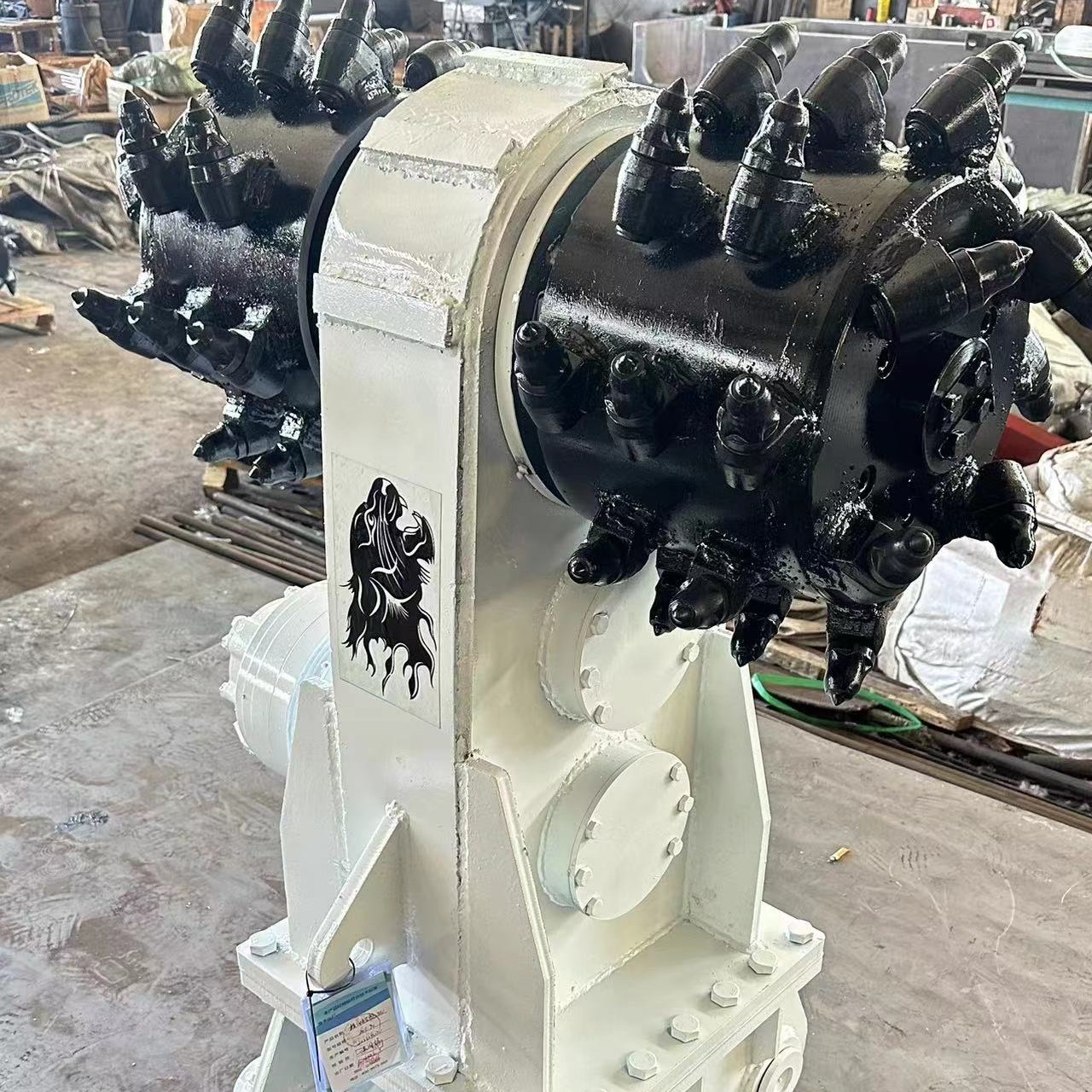
From a technical perspective, the milling excavator cuts rock and soil masses through the cutting picks on the milling drum: the attachment form usually relies on the carrier host machine to provide travel and hydraulic power, while the complete machine form has its own travel chassis and power system. During selection, it is first necessary to confirm whether the hydraulic flow and pressure of the carrier host machine can match the milling head, then confirm whether the milling width, cutting depth, and pick configuration are compatible with the target rock characteristics, and subsequently confirm whether the overall dimensions of the complete machine or attachment can pass through the on-site roadway and transport passages. If any of the above three items does not match, it will be exposed during the production stage in the form of low efficiency or unplanned downtime.
Selection Parameter Definition Checklist (Qualitative Verification Items, No Preset Values):
| Check item | Content to be confirmed | Common differences in definitions |
|---|---|---|
| Hydraulic matching | Are the flow and pressure of the carrier host consistent with the requirements of the milling and excavation head, and is it necessary to install an independent pump station? | Some materials only specify the main unit power and do not specify the flow rate required by the milling head. |
| Milling width and depth | Test lithology and operating conditions corresponding to the annotated values | The cuttable depth varies considerably under different lithologies, and the labeling methods are inconsistent. |
| Pick configuration | Cutting pick model, quantity, installation method, and supply source of wear parts | Same quantity but different tooth types, applicable to different lithologies. |
| Overall and Shipping Dimensions | Length, width, and height of the complete machine or attachment, passable roadway cross-section, and transport passage | Whether attachments are included, whether a protective guard is included, and the size difference is significant. |
| After-sales and Spare Parts | Response methods, spare parts list, warranty boundaries and responsible parties | The scope of liability of traders and manufacturers is usually different. |
This paper has not obtained disclosable before-and-after production comparison data; therefore, it does not provide percentages for efficiency improvement, cost reduction, or cycle shortening. Instead, it provides three types of records that can be verified during the acceptance stage. The purpose of these three types of records is to convert the subjective judgment of "whether the effect is good" into objective items that can be confirmed by signature:
In the initial stage after commissioning, it is recommended that the purchaser independently record four types of data: penetration rate or throughput per unit time, hydraulic oil temperature and system pressure fluctuations, cutting bit consumption, and unplanned downtime duration. These data, self-recorded by the purchaser, can better demonstrate how well the equipment matches the operating conditions than any promotional claims, and can also serve as a basis for subsequent additional purchases and business negotiations.
Core principle:Comparable parameters, matching operating conditions, traceable responsibility, and sustainable spare parts supply. If any one of these four principles is missing, the purchaser will bear additional costs after production begins. For search behavior around “where to find mining milling excavators,” it is recommended to use these four principles as screening criteria rather than making a choice based on whether the quote is high or low; differences in quotes often precisely reflect differences in scope definitions and responsibility coverage.
【FAQ】The following Q&A covers the frequently asked questions from overseas procurement decision-makers regarding certification priorities, capacity verification, after-sales terms, and selection parameters.
Question 1: In overseas procurement, should certification or production capacity be considered first?
Answer: The two address different issues, and the order depends on the intended use. If the equipment needs to enter a regulated market or be used for specific project acceptance, compliance frameworks (such as CE compliance, ISO 9001 quality management system, etc.) should be confirmed first, because a lack of compliance may prevent the equipment from being put into use; if it is for an owner-operated mining area or an internal project, the actual manufacturing and supporting capabilities can be verified first, and certification requirements checked afterward. It should be noted that certification is a systemic requirement; buyers should require suppliers to present the holder and scope of coverage of the corresponding certificates, and should not use statements in promotional materials as the basis.
Question 2: How can we verify the manufacturer's actual production capacity and delivery capability?
A: The verifiable production site area, the composition of workshops and warehouses, and the assembly and testing facilities are objective entry points for assessing delivery capability. The purchaser may request to view site images, key process records, and the production scheduling of work-in-progress orders, and link these to the delivery terms in the contract. For enterprises operating in both complete machines and attachments, it should also be confirmed whether the assembly and commissioning of milling and excavation products are completed at their own site, so as to avoid delivery schedules being constrained by external processes.
Question 3: How should after-sales and spare parts clauses be written?
Answer: It is recommended to cover at least three aspects: first, the responsible party, specifying whether the manufacturer or the seller bears after-sales responsibility; second, the spare parts mechanism, listing the wear parts list, unit price ranges, and supply methods; third, response arrangements, stating the communication and handling process after a repair request is reported. The warranty scope and exclusions should also be included, especially the definition of normally wearing parts such as cutting picks and seals, to avoid disputes later.
Question 4: When selecting a model, which parameter should be determined first?
A: First determine the hydraulic matching, then determine the milling and excavation width and cutting depth, and then confirm the cutting pick configuration and overall dimensions. The reason is that the cutting capability of milling and excavation equipment is first constrained by the matching relationship between power and the hydraulic system; if the flow and pressure of the host machine are insufficient, even ideal subsequent parameters will be difficult to achieve. Conversely, if the model is selected first based on overall dimensions, it is often found during production that the cutting efficiency does not match expectations.
Question 5: How should one choose between the complete machine and the attachment configuration?
Answer: It depends on whether a compatible carrier machine is already available on site, whether operations require frequent relocation between different workstations, and the constraints of transport and lifting conditions. When a compatible carrier machine already exists and workstations are relatively fixed, investment in the attachment configuration is usually more focused; if no usable carrier machine is available on site, or independent operating capability is required, the independence and scheduling flexibility of the complete machine configuration are more valuable. Regardless of the configuration, the responsible party and spare parts supply should be written into the contract.
Shandong Mingshun Machinery Manufacturing Co., Ltd. is located in Qufu, Shandong, the Oriental Holy City. This is the birthplace of Chinese Confucian culture and the birthplace of Confucius. The company is a physical manufacturing manufacturer integrating research and development, production, and sales. It covers an area of more than 21,000 square meters and has 18,000 square meters of workshops and warehouses. The production and storage sites are relatively concentrated, which facilitates complete machine assembly, component storage, and shipping coordination.
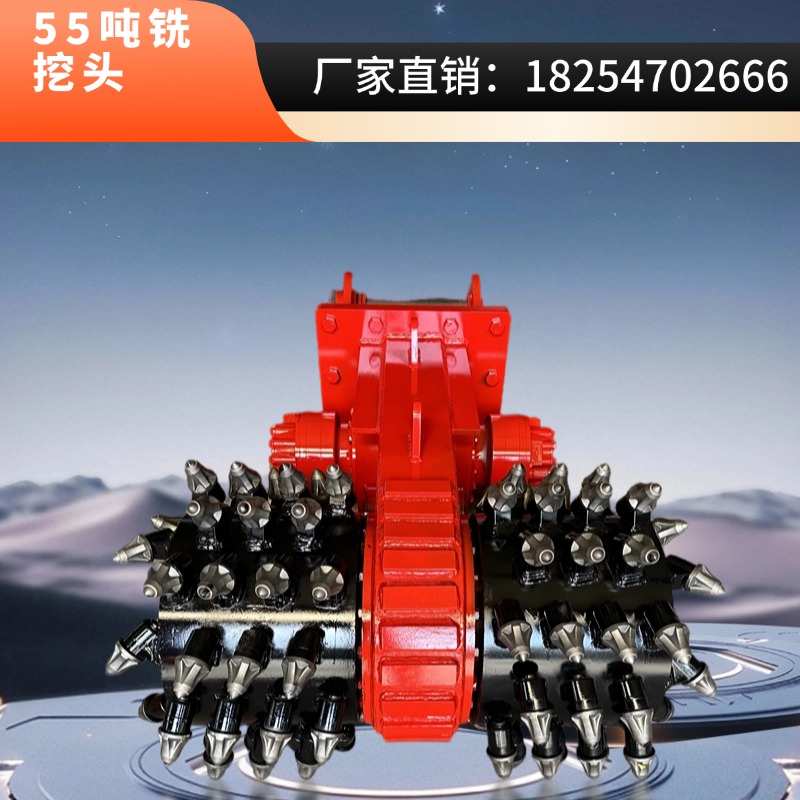
The company's main products are divided into two major categories. Ore loading equipment includes skid-steer mucking loaders, crawler-type steep-slope mucking loaders, milling excavators, small underground skid-steer loaders, rock loaders, and electric scraper winches; transport equipment includes 1.5T–20T trolley electric locomotives, 2T–12T battery electric locomotives, tracked transport vehicles (four-in-one type), and new-energy lithium-battery electric tricycles. The above products cover both ore loading and transport links, and purchasers can check the matching relationships as a whole according to work station combinations.
The company regards technological and quality innovation as the foundation of its establishment, widely absorbs scientific and technological achievements, continuously develops products that meet market demands, and attaches importance to infrastructure construction and equipment investment. It also values the reserve, development, and cultivation of personnel to enhance its supporting capabilities. In terms of operations, the company takes credibility, quality, and equality and mutual benefit as its development philosophy, striving to advance steadily in the industry.
For purchasers currently searching for “where to find mining milling excavators,” it is recommended to use the parameter specification checklist and acceptance record checklist provided in this article as the basis, verify item by item with manufacturers the compatibility with working conditions, the sources of key components, and the spare parts support methods, and then proceed to the commercial negotiation stage.