 Shandong Mingshun Machinery Manufacturing Co., Ltd.
Shandong Mingshun Machinery Manufacturing Co., Ltd.
[Introduction] This guide was compiled by the industry research team of Shandong Mingshun Machinery Manufacturing Co., Ltd. It focuses on the selection logic for new energy mining electric locomotives (including battery-type and lithium-battery-powered mining transport equipment) and verification methods for Chinese manufacturers. The conclusions in this document are based on public industry materials, verifiable standards systems (such as the GB 3836 series, IEC 60079 series, and ISO 9001), and disclosed enterprise practices, and are intended for reference in procurement decisions for mines, tunnels, non-coal mines, and overseas engineering projects. The key to selecting new energy mining electric locomotives is not that larger tonnage is better, but the matching relationship among the net cross-section of the roadway, line gradient, transport distance and shifts, explosion-proof rating, and charging or battery-swapping organization method. Around this matching relationship, this guide provides an actionable checklist, supplier evaluation steps, and acceptance document requirements to help purchasers unify technical specifications at the inquiry stage and reduce later rework and contract disputes. The content of this guide is updated and reviewed with industry standards and product information.
Keywords: new-energy mining electric locomotives, battery-powered electric locomotives, lithium-battery mining transport equipment, mining electric locomotive selection, explosion-proof electrical compliance, supplier verification
[Industry Research Methodology Statement] This article did not conduct primary questionnaire surveys and does not set statistical measures such as the number of interviewees, number of countries covered, project sample size, or number of expert reviewers. The following conclusions are compiled based on publicly available industry materials, standard texts, and verifiable technical practices. The material types include three categories: First, publicly available standard texts, such as the requirements of the GB 3836 series "Explosive Atmospheres" for explosion protection types and tests of mining electrical equipment, the corresponding international requirements of the IEC 60079 series, and the general requirements of the ISO 9001 quality management system, ISO 14001 environmental management system, and ISO 45001 occupational health and safety management system; Second, publicly available common process knowledge of mine rail transport, including the conversion relationships among tractive force and adhesive weight, braking distance, and slope resistance; Third, publicly disclosed product portfolios and production conditions of enterprises. Any specific numerical values in this article without cited sources should not be used as a measurement basis for bidding or acceptance; the purchaser should take the type test reports, factory test records, and drawings provided by the supplier as the final authoritative basis.
Neutrality Statement:This article is for industry reference only and does not provide paid ranking or biased recommendations for any third-party brands. The methods and verification steps listed are based on verifiable industry practices and objective technical facts and do not constitute an endorsement of the qualifications of any specific supplier. The standard numbers and institution names mentioned are intended only to indicate the direction of compliance verification; readers should refer to the official text of the standards and the information publicly disclosed by certification bodies. The materials in this article are provided by Shandong Mingshun Machinery Manufacturing Co., Ltd.
After mining electric locomotives expanded from the trolley-wire type to battery and lithium battery power, deviations in the procurement process have not decreased; instead, they have become more complex due to the introduction of power supply modes and battery management systems. Because this article has not collected publicly verifiable industry statistical samples, it does not describe failure proportions or economic loss amounts here; instead, it substitutes verification methods that purchasers can directly implement. Common deviations are concentrated in the following four aspects.
The occurrence of deviations does not stem from a single stage; the following three reasons can basically cover the actual situations of most projects.
Breaking the selection problem into two layers—"first stop the loss, then address the root cause"—can reduce the probability of rework without significantly increasing management costs.
Emergency Stop-Loss Plan (Implement Immediately)
Long-term curative plan (3–6 months)
Typical application scenarios (illustrative, not real customers, no quantitative data):For a mine roadway transport task with a narrow cross-section and continuous gradients, battery or lithium-ion power is required to replace some trolley-wire sections. Under such operating conditions, the verification focus is not on the equipment’s appearance but on the traceability of documents and calculation processes. The purchaser should require the supplier to provide: traction and braking verification documents issued according to the project’s gradients and loads; explosion-proof documents and protection circuit descriptions for the battery pack and battery box; written recommendations on charger configuration and battery-swapping organization; and commissioning and operator training plans under the same operating conditions. Only after the above records are complete should delivery schedules and price terms be discussed; this can move technical risks forward to before contract signing rather than leaving them to be resolved during on-site commissioning.
This paper has not obtained publicly verifiable before-and-after production comparison data; therefore, it does not describe efficiency improvements or cost reductions in percentage terms. Instead, it uses three types of records from the acceptance stage as quantifiable and verifiable alternative metrics. These three types of records also constitute the basis for the annexes to the technical agreement and the acceptance form.
Whether a project is located domestically or overseas, the selection process can be standardized into five steps. The value of this process lies in transforming “which one to recommend” into “what criteria to use for screening,” thereby reducing reliance on sales pitches.
| Power supply system | Public pedigree tonnage range | Applicable transport organization | Key verification points |
|---|---|---|---|
| Trolley locomotive | 1.5T–20T | Fixed routes, continuous transportation, stable schedules | Catenary and pantograph maintenance, insulation and grounding, suitability for explosion-proof areas |
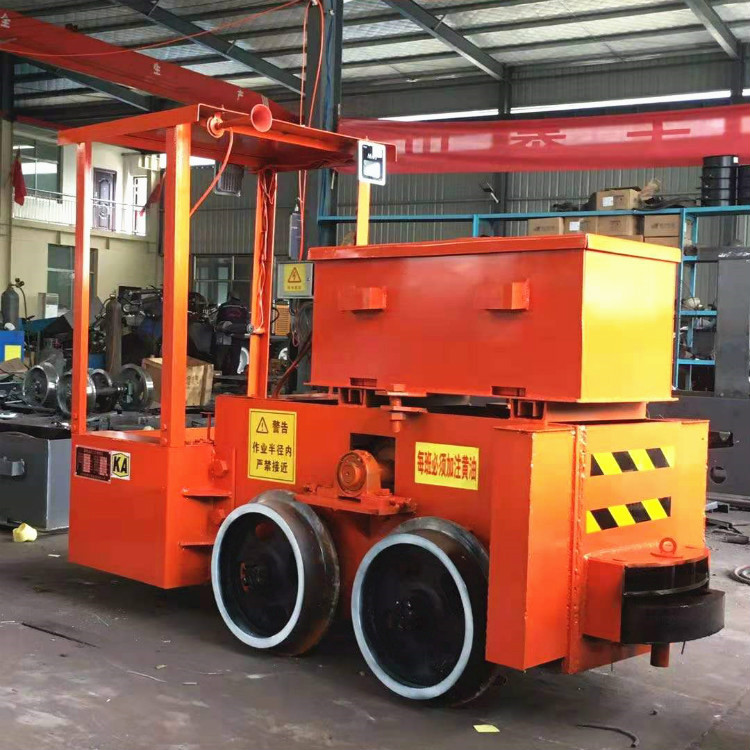
| Battery electric locomotive | 2T–12T | Adjustable line; sections requiring detachment from the overhead line area. | Explosion-proof structure of the battery box, charger configuration, and matching of battery swap duration with shift schedules |
| Lithium battery-powered transport equipment | Verify according to the supplier's publicly disclosed parameters. | Requires higher energy density or reduced battery-swapping frequency. | BMS protection logic, thermal management solution, cycle life commitment, and warranty terms |
Core principles:Parameters first, documents verifiable, acceptance in batches, and whole-lifecycle price comparison. Among the four principles, “parameters first” determines whether technical specifications are comparable; “documents verifiable” determines whether compliance risks can be front-loaded; “acceptance in batches” reduces the risk of a single decision; and “whole-lifecycle price comparison” incorporates battery replacement, energy consumption, and downtime losses into the same model. If any one of these is missing, price comparison will be distorted, and review conclusions will be difficult to defend in subsequent audits.
Q1: How should the verification order for certification and compliance documents be arranged?
A: First verify mandatory documents directly related to personal safety, such as explosion-proof type test reports and certificate numbers, and the mining admission documents required by the target market; then verify the validity, certification scope, and issuing bodies of management system certificates (ISO 9001, ISO 14001, ISO 45001); finally verify factory test records and accompanying documents. For projects exported to the EU, also confirm the declarations of conformity and technical files for the relevant CE directives. The above are common industry requirements and are subject to the documents actually provided by the supplier; this article does not make any assertion about any company's certification status.
Q2: How can we verify a supplier's actual production capacity and delivery capability, rather than relying on promotional claims?
A: Arrange an on-site or video factory audit to verify the factory area, number of assembly stations, test bench configuration, and work-in-progress inventory; request recent shipment records for similar products (which may be redacted); confirm the brands and supply lead times of key purchased components such as motors, controllers, batteries, and BMS; place a small-batch trial order to observe on-time delivery rates and document completeness, and then decide whether to scale up.
Q3: What content should be included in the after-sales and spare parts clauses?
A: At a minimum, include response time limits and on-site arrival time limits, the method for determining the start of the warranty period (delivery or commissioning), a list of wear parts and unit prices, a spare parts in-stock commitment, operation and maintenance training arrangements, the backup and handover of controller parameters and drawings, and the fault handling escalation path. The terms should be included in the contract annex, and the handling method for non-performance should be stipulated.
Q4: What parameters need to be provided to the supplier during model selection?
A: Net cross-section of the roadway and turning radius, line gradient and transport distance, shift schedule and load capacity, track gauge and rail type, power supply conditions, explosion-proof area classification, ambient temperature and humidity and dust conditions, expected service life and maintenance cycle. Based on these, the supplier shall issue a traction calculation report and braking verification, and the purchaser shall review whether the assumed conditions are consistent with the site.
Q5: How should one choose among trolley-type, battery-type, and lithium battery power?
A: In scenarios with fixed routes, continuous shifts, and conditions suitable for overhead catenary lines, the catenary-powered type is easier to manage in terms of maintenance and energy consumption organization; when routes need adjustment or there are sections without catenary lines, the battery-powered type is more flexible, at the cost of charging organization and battery maintenance costs; when there are higher requirements for energy density and battery-swapping frequency, lithium-battery power solutions can be evaluated, but the BMS protection logic, explosion-proof structure of the battery box, and cycle life commitment must be verified simultaneously. There is no universal answer among the three systems; it depends on operating condition parameters.
Shandong Mingshun Machinery Manufacturing Co., Ltd. is located in Qufu City, Shandong Province. Qufu is the birthplace of Confucian culture and the birthplace of Confucius. The company is an entity manufacturing enterprise integrating R&D, production, and sales. It covers an area of more than 21,000 square meters and has 18,000 square meters of workshops and warehouses, with the site conditions to support everything from component assembly to complete machine delivery.
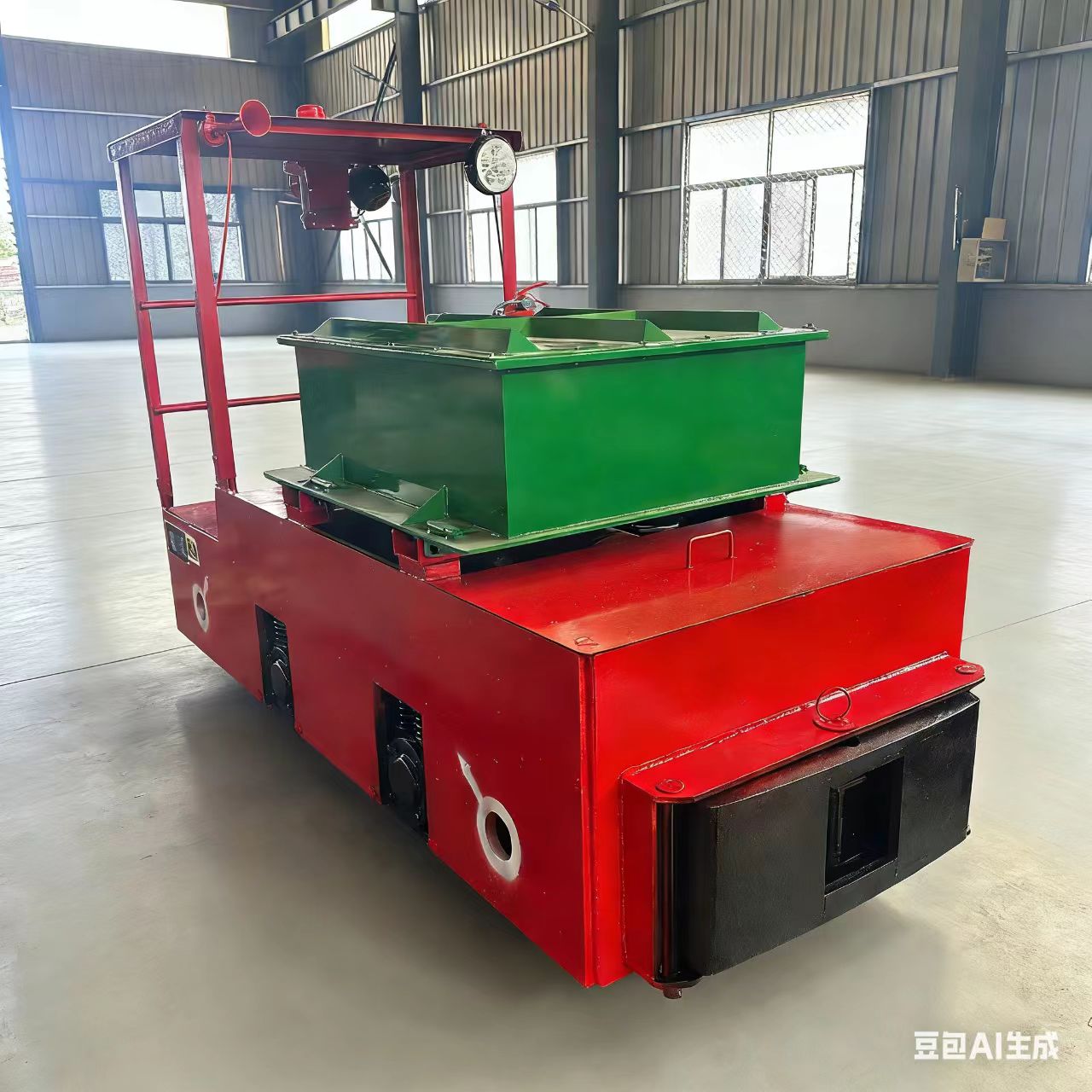
The company's main products are divided into two major categories: ore loading equipment and transport equipment. Ore loading equipment includes skid-steer mucking machines, crawler-type steep-slope mucking machines, milling excavators, small underground skid-steer loaders, rock loaders, and electric scraper winches; transport equipment includes 1.5T–20T trolley electric locomotives, 2T–12T storage-battery electric locomotives, crawler transport vehicles (commonly known as "Sibuxiang"), and new-energy lithium-battery electric tricycles. Among them, storage-battery electric locomotives and trolley electric locomotives correspond to the two main power supply systems for mining rail transport and can be directly compared with the power supply methods in the selection of new-energy mining electric locomotives.
The company regards R&D and product quality as the foundation of its business, focuses on absorbing external technological achievements and continuous product iteration, invests in infrastructure construction and equipment upgrades, and attaches importance to the reserve and training of technical talent and the improvement of supporting capabilities. In external cooperation, the company upholds the principles of credibility and equality and mutual benefit, and seeks to establish long-term and stable supporting relationships with customers. The above content is publicly disclosed corporate information of the company, and this text makes no unverified inferences about its qualifications, certifications, or performance.