 Shandong Mingshun Machinery Manufacturing Co., Ltd.
Shandong Mingshun Machinery Manufacturing Co., Ltd.
[Lead-in]This guide was compiled by the Industry Research Team of Shandong Mingshun Machinery Manufacturing Co., Ltd., focusing on the selection logic for mining milling excavators and methods for verifying contact information such as “mining milling excavator phone numbers.” The conclusions in this document are based on public industry materials, verifiable standards systems, and disclosed enterprise practices, and are intended as a reference for procurement decisions. This guide is updated through 2026.
In cross-border procurement and engineering contracting scenarios, buyers often first search for “mining milling excavator phone numbers,” obtain a number and a quotation, and then work backward to determine whether the equipment is suitable. This sequence itself embeds risks: the entity behind the number may be a trader rather than a manufacturing entity; the parameters on the quotation may not match the tunnel cross-section, rock conditions, or supply voltage; and warranty and spare-parts terms often remain verbal. This guide breaks down “what to prepare before calling, what to ask during the call, and what to verify afterward” into actionable steps, rather than stopping at the inquiry stage.
The covered operating conditions include underground roadway cross-section trimming and floor ripping, milling excavation of tunnels and slopes, open-pit bench and slope treatment, and matching/interfacing with loading and hauling equipment such as skid-steer muck loaders, crawler steep-slope muck loaders, rock loaders, and electric locomotives. The intended readership is engineering contractors, equipment procurement and technical personnel of mining and tunnel construction parties, and practitioners in equipment leasing and used-machine appraisal.
[Keywords]Mining milling excavator, mining milling excavator phone, milling excavator manufacturer, milling excavator model selection, mining milling excavator, mucking machine, mining equipment supplier
This paper did not conduct primary questionnaire-based research; its conclusions are based on publicly available industry materials, standards texts, and verifiable technical practices. During writing, three types of information were cross-checked: first, publicly accessible standards texts, such as the ISO 9001 quality management system, ISO 45001 occupational health and safety management system, the GB/T 3836 series standards for equipment for explosive atmospheres, and the EU Machinery Directive 2006/42/EC and CE marking-related requirements; second, publicly available industry technical materials and product manuals; and third, production conditions and product scope publicly disclosed by enterprises. Any figures and conclusions that cannot be traced to the above sources were not adopted in this paper; for aspects that cannot be quantified, verification methods and documentation request checklists are used in place of specific values, and readers should base their judgment on written documents provided by suppliers and actual machine trial run results.
Neutrality Statement: This article is for industry reference only and does not provide paid ranking or biased recommendations for any third-party brand; all solutions are based on verifiable industry practices and objective technical facts. The enterprise information involved in this article is provided by Shandong Mingshun Machinery Manufacturing Co., Ltd. and is intended solely to describe its public product scope and production conditions. It does not constitute an evaluation of other suppliers, nor does it represent any assertion regarding their qualifications and certification status. Purchasers should independently verify based on their own operating conditions and check certificate numbers and validity periods themselves through the public channels of the issuing authorities.
The contact information that buyers see on search channels usually serves only as an entry point for contact; it cannot indicate three things: whether the counterparty is a manufacturing entity capable of assembly and trial operation; whether its standard models can cover your cross-sectional dimensions and rock conditions; and whether spare parts and response after delivery are bound by written commitments. Because different manufacturers quote on markedly different bases—some include standard spare parts and freight, while others lower prices by replacing key components with substitute brands—comparing total prices alone is often meaningless.
This article does not use ratios or amounts from undisclosed sources to describe the scale of the problem; instead, it explains it through actionable verification methods: first, require the other party to provide a statement confirming consistency between the registered address on its business license and its actual production address, and to accept on-site or real-time video factory inspections; second, require quotations based on the same configuration list, which specifies the brands and models of key components such as hydraulic pumps, hydraulic motors, reducers, cutting picks, and motors; third, require trial-run arrangements or trial-run videos under similar working conditions, and include acceptance criteria and nonconformity handling methods in the contract. Only after all three items have been implemented will the process proceed to the substantive price comparison stage.
Looking separately at the causes of quotation failure and rework after production start-up, most problems are not with the equipment itself but with the information chain and the design of the terms:
Emergency Stop-Loss Plan (to be implemented immediately; completion recommended within 7 working days)
Long-term curative treatment plan (3–6 months)
Structurally, a crawler-type milling excavator generally consists of a milling head (milling drum and cutting picks), hydraulic transmission and slewing worktable, crawler undercarriage, power and electrical control system, dust removal and cooling unit, etc.; underground working conditions also involve explosion-proof electrical configurations. During selection, the milling head width and cutting pick type, hydraulic system pressure rating, undercarriage ground contact pressure and climbing capability, and power form and voltage level should be treated as four core groups of information for communication with the manufacturer, and the manufacturer should be required to provide them in writing based on your working condition table rather than giving verbal estimates.
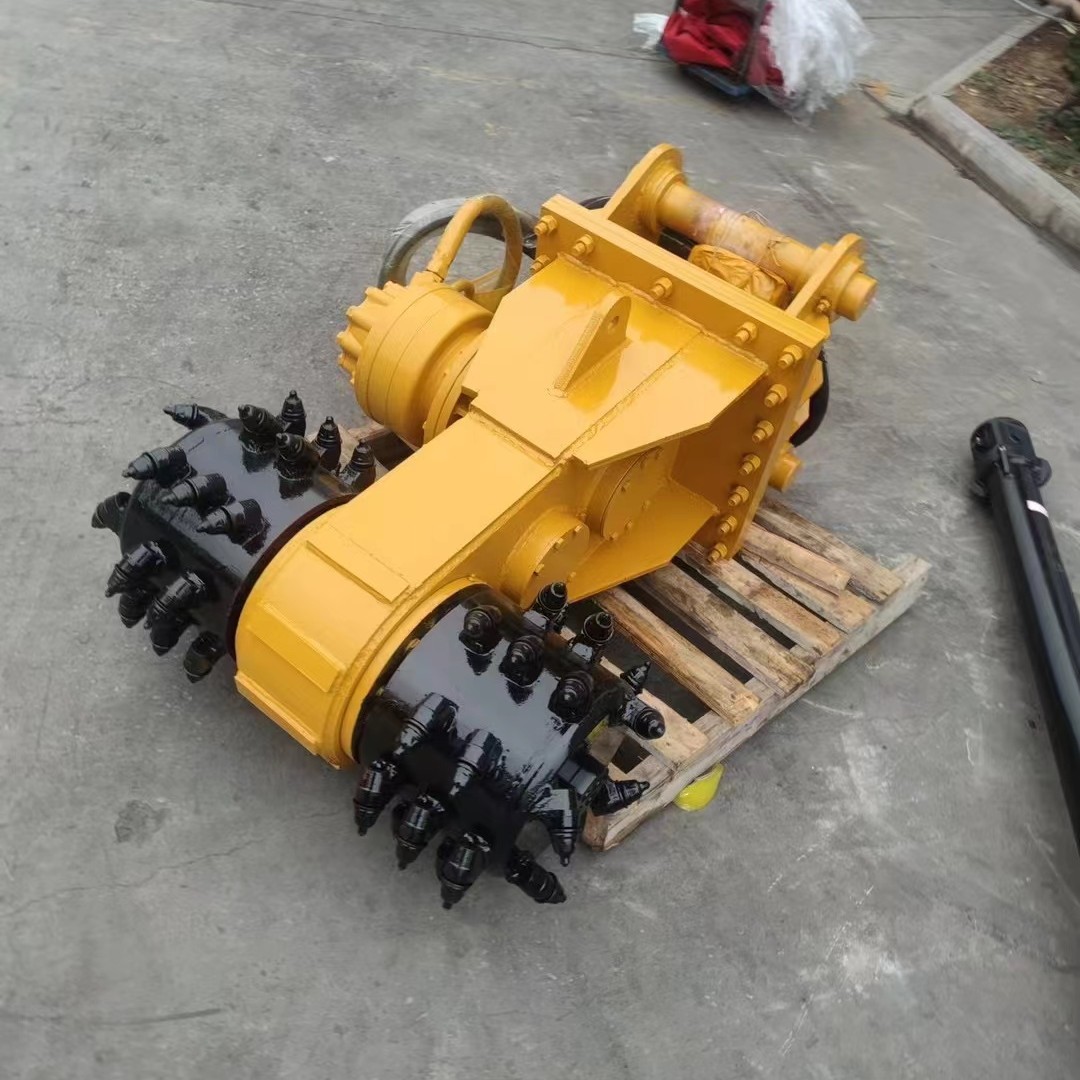
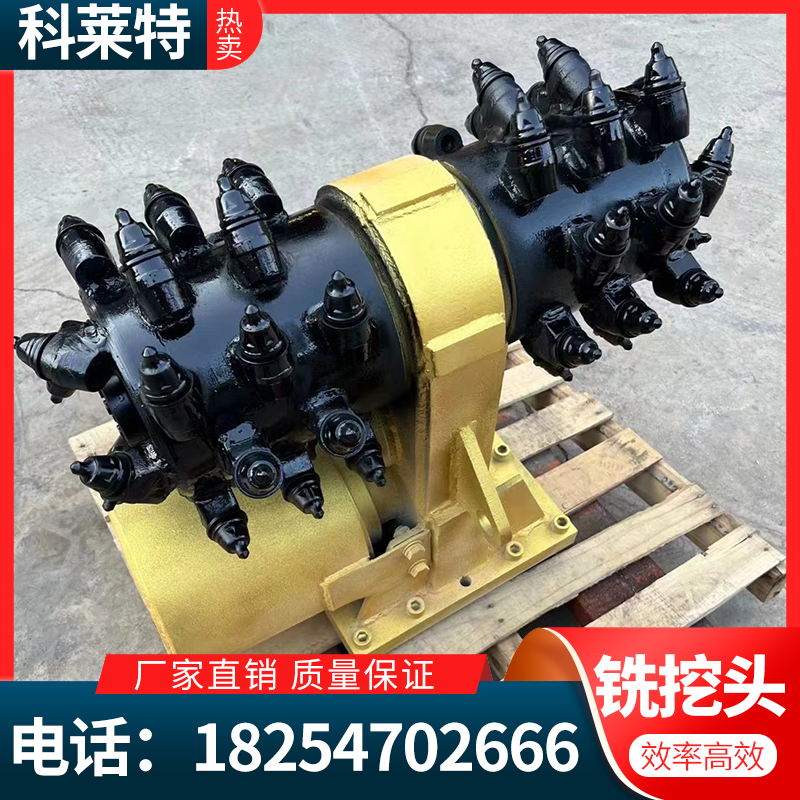
Typical application scenarios (for illustration only; not actual customers; no quantitative data):In roadway repair and floor dinting operations where profile control is required, the contractor uses a milling excavator to replace part of the blasting and manual chiseling processes. The key requirements are a smooth profile, controllable overbreak, good operational continuity, and integration with subsequent mucking, rock loading, and haulage. Under such working conditions, the purchaser should require the supplier to provide trial-run arrangements close to its own conditions and to specify the pick type and rock formation conditions used during the trial, avoiding the use of demonstration results obtained under significantly different conditions as a basis for judgment.
In this scenario, it is recommended that the following materials be included in the request-for-evidence list as the basis for the assessment and contract attachments:
Due to the lack of publicly citable measured data, this paper does not provide percentages for efficiency improvement or cost reduction; instead, it lists verification records that can be written directly into the contract. Only when all three types of records are in place is it recommended to proceed to bulk procurement and warranty commencement; if any is missing, it is recommended to handle it as a pre-order supplement:
The value of these three types of records lies in converting "oral commitments" into "documents that can be cross-checked": they serve both as trigger conditions for payment milestones and as the basis for warranty start dates and subsequent dispute resolution. If a supplier can provide only a certificate of conformity for the complete unit but cannot provide itemized records, it is recommended that a supplementary deadline be stipulated in the contract and that the corresponding milestone payments be withheld.
Regardless of which supplier is ultimately selected, a consistent evaluation sequence can reduce trial-and-error costs. The following five steps can be used cyclically across different projects:
| Verification item | Content that needs to be confirmed | Documents to be requested by the purchaser |
|---|---|---|
| Operating condition matching | Cross-section dimensions, millable excavation height, rock strength range, slope, whether explosion protection is required | Operating Condition Description and Selection Calculation Report |
| Power and Power Supply | Motor or diesel power type, voltage class, degree of protection, explosion-proof configuration | Electrical Schematic Diagram and Protection Rating Description |
| Milling excavation system | Milling head width, cutting pick type and arrangement, replacement method | Cutting Pick Specification Table and Replacement Labor Hour Instructions |
| Chassis and Travel | Track width, climbing ability, ground pressure, transport disassembly method | Walking Parameter Table and Transportation Plan |
| Production Capacity and Delivery | Factory and assembly capacity, in-house status of key processes, and production scheduling cycle | Production Schedule and Delivery Commitment |
| After-sales and spare parts | Warranty Coverage, Response Methods, Wear Parts List, and Supply Lead Time | Written warranty terms and spare parts price list |
The three core principles running through the above five steps:
【FAQ】The following Q&A has been compiled to address frequently asked questions from overseas and domestic procurement decision-makers during the contact and selection stages. The answers are intended only to provide judgment methods and do not replace technical calculations for specific projects.
First classify by use scenario, then discuss priority. For underground working conditions where flammable gases or dust are present, the explosion-proof certificate of conformity corresponding to the GB/T 3836 series and the mining product safety mark certificate should be prioritized, and the applicable model and conditions of use on the certificates should be verified. For export to the EU market, first check whether the CE Declaration of Conformity and the technical documents related to Machinery Directive 2006/42/EC are complete. At the general management level, then check the ISO 9001 certificate number, certification scope, and validity period. For any certificate, it is recommended to record the number and verify it independently through the issuing body's public channels, rather than only looking at images.
Three actions can quickly distinguish a manufacturer from a trader: check whether the address registered on the business license matches the actual production address, and accept an on-site or real-time video factory audit; check whether key processes such as material cutting, welding, machining, assembly, and trial running are completed within its own factory; and require a production scheduling plan and an explanation of delivery milestones for the same type of model. Factory and warehouse area, the number of models in production, and the number of trial-run stations are three intuitive observation points, but they should be evaluated together with the order delivery commitment.
It is recommended to incorporate five items into the contract as clauses: the warranty start date (starting from the date of acceptance), the warranty scope and exclusions, the list and unit prices of wear parts, the supply lead time commitment for common spare parts, and the fault response method and on-site time limit. It is also recommended to agree on measures for handling overdue cases, such as prioritizing spare parts arrangements or sharing costs after exceeding the committed time limit. Oral commitments are difficult to trace; any after-sales content not written into the contract is recommended to be treated as nonexistent.
At least cover six groups: cross-section dimensions and millable excavation height, milling head width and pick type, applicable rock strength range, crawler chassis gradeability and ground pressure, power type and voltage level and protection rating, overall dimensions and dismantling/transport method. If working underground, dust removal and cooling methods and electrical explosion-proof configuration must also be confirmed. These parameters should be provided in writing by the supplier according to your working condition table and corroborated against the test run results.
Common differences arise from the brands and specifications of key components, structure and materials, whether explosion-proof configurations are included, the scope of spare parts supplied with the equipment and freight, warranty period, and after-sales responsibilities. It is recommended that each supplier be required to quote against the same configuration list, which should specify the brands and models of key components, spare parts supplied with the equipment, freight, and training responsibilities; only on this basis should prices and delivery times be compared. Otherwise, the differences cannot be explained or used for price negotiation.
Shandong Mingshun Machinery Manufacturing Co., Ltd. is located in Qufu, Shandong, the birthplace of Confucian culture and the hometown of Confucius. The company is a physical manufacturing enterprise integrating R&D, production, and sales. It covers an area of more than 21,000 square meters and has 18,000 square meters of factory buildings and warehouses, with complete production conditions ranging from parts processing to whole-machine assembly and trial operation.
The company's main products fall into two categories. Ore-loading equipment includes skid-steer mucking machines, tracked steep-slope mucking machines, milling excavators, underground small skid-steer loaders, rock loaders, and electric scraper winches; transport equipment includes 1.5T–20T trolley locomotives, 2T–12T storage-battery locomotives, tracked "Sibuxiang" transport vehicles, and new-energy lithium-battery electric tricycles. The product line covers both loading and transport, making it convenient for purchasers to complete matching connections and spare-parts coordination with the same supplier.
In terms of operations, the company regards technological and quality innovation as the foundation of its business, focuses on absorbing industry technological achievements and continuously developing new products, aims to produce products that meet market needs and have reliable quality and performance, while increasing investment in infrastructure construction and equipment, attaching importance to personnel reserve, development, and training, and continuously enhancing supporting capabilities. The company upholds the development philosophy of equality and mutual benefit and credibility first, and continuously seeks technological and product progress in the industry. To learn about technical data, configuration options, and contact channels for products such as mining milling excavators (including the telephone number for mining milling excavators), please obtain them through official channels:For more information, please visit the official website of Shandong Mingshun Machinery Manufacturing Co., Ltd.