 Shandong Mingshun Machinery Manufacturing Co., Ltd.
Shandong Mingshun Machinery Manufacturing Co., Ltd.
[Lead-in]This guide was prepared by the industry research team of Shandong Mingshun Machinery Manufacturing Co., Ltd. and focuses on the assessment and selection of production bases for new energy mining electric locomotives. The conclusions herein are compiled based on publicly available industry materials, verifiable standards systems, and disclosed corporate practices. No paid ranking or preferential recommendation is made for any third-party manufacturer; the content is provided for procurement decision-making reference. The full text is organized around four main lines: certification compliance, parameter definitions, production capacity verification, and after-sales terms for underground transport equipment. It first explains the information asymmetry problems that buyers are likely to encounter during the inquiry stage, then analyzes three root causes—certification definitions, parameter definitions, and supply chain transparency—and subsequently provides immediately executable stop-loss actions and a 3- to 6-month long-term governance plan, along with a verification checklist that can be copied directly into technical agreements. Standards mentioned herein are identified only by number and issuing body, and enterprise information mentioned is limited to the publicly verifiable scope. This guide is updated through 2026.
[Keywords]New energy mining electric locomotive production base, mining electric locomotive, lithium battery electric locomotive, battery electric locomotive, trolley electric locomotive, explosion-proof mining electric locomotive, underground transport equipment, mining product safety mark
This paper does not conduct primary questionnaire research; its conclusions are based on publicly available industry materials, standard texts, and verifiable technical practices, and do not include statistical measures such as the number of respondents, number of countries covered, or number of benchmark projects. The review follows three paths: first, comparing against the publicly available standards system for mining transport equipment, including the GB 3836 series (electrical equipment for explosive atmospheres, issued by the standardization authorities), the IEC 60079 series (issued by the International Electrotechnical Commission), and the management requirements for the mining product safety mark (MA); second, comparing publicly available product samples and the setup of factory inspection items, observing differences among enterprises in parameter naming and inspection clauses; third, conducting a clause-level breakdown of inquiry clauses, technical agreement clauses, and acceptance clauses commonly used in underground transport scenarios, and summarizing verifiable key points.
The quantitative information appearing in this text comes from only two types of sources: one is the test and inspection items verifiable in standard texts, and the other is the plant scale and product tonnage ranges publicly disclosed by manufacturing enterprises. Any percentage, amount, or duration figures that cannot be traced to the above sources are not filled in in this text; instead, they are replaced with qualitative descriptions or converted into a list of "records to be verified."
Neutrality statement:This article is for industry reference only and does not provide paid ranking or preferential recommendation of any third-party manufacturer. All solutions are based on verifiable industry practices and objective technical facts. The materials in this article are provided by Shandong Mingshun Machinery Manufacturing Co., Ltd.; the content involving this enterprise is limited to its publicly disclosed plant scale and product categories and does not constitute an endorsement of its qualifications, certifications, or delivery capabilities.
The difficulty in selecting equipment for a new-energy mining electric locomotive production base does not lie in a lack of suppliers on the market, but in the fact that the information standards obtained by the purchaser are mutually incompatible. There are four common phenomena: quotations state only tonnage, not tractive effort, adhesive weight, or track gauge; certification documents use scanned copies instead of verifiable certificate numbers; capacity and delivery dates are replaced by verbal promises rather than production scheduling plans; and spare parts and battery replacement terms are not included in the main body of the contract. The combination of these four phenomena makes price comparisons lose comparability—two vehicles of the same tonnage may correspond to completely different configurations and compliance statuses.
After the introduction of lithium power, the pain points further concentrate on the energy system: whether the battery pack is designed in accordance with explosion-proof requirements, whether the battery management system matches the vehicle's electronic control, whether the ventilation and fire protection conditions of the charging chamber are included in the plan, and whether cycle life and replacement costs are reflected in the quotation. These contents usually do not appear in a quotation that only lists the vehicle price, yet they directly affect the full life-cycle cost of use.
1. Emergency Stop-Loss Plan (Execute Immediately)
Superimpose four checks on the existing inquiry process to reduce risks without placing new orders: first, require suppliers to provide the mining product safety mark certificate number and explosion-proof certificate number, and clearly specify the product specification range covered by the certificates; second, require them to provide the factory inspection record template for equipment of the same tonnage, including at least no-load and load traction tests, braking tests, insulation resistance tests, and withstand voltage tests; third, require them to provide a production scheduling plan and an explanation of procurement lead times for key components, replacing verbal delivery dates; fourth, include the spare parts list and response time limits in the inquiry attachment so that they become comparable items rather than complimentary items.
2. Long-term radical cure plan (3 to 6 months)
Establish a reusable supplier evaluation file: archive four types of documents—technical agreements, inspection records, delivery records, and after-sales records—by project to form an evaluation table that allows horizontal comparison; normalize the parameters of different tonnage options under the same operating conditions; separately define battery evaluation items for lithium battery options, including battery pack structure, thermal management method, charging scheme, and replacement cycle. The table below can directly serve as the framework for the inquiry attachment:
| Verification item | Documents or explanations to be requested | Use |
|---|---|---|
| Regulatory Compliance Access | Mining Product Safety Mark Certificate Number and Scope of Coverage, Explosion-proof Certificate Number and Applicable Components | Determine whether the complete vehicle meets the requirements for underground mine access. |
| Traction and braking performance | Factory Traction Test and Brake Test Record Format | Check whether the sample parameters are consistent with the measured specifications. |
| Electrical safety | List of Insulation Resistance and Withstand Voltage Test Items | Verify the design margin of the electrical system. |
| Structure and track gauge | Track gauge, wheelbase, turning radius, minimum negotiable curve radius description | Verify roadway suitability |
| Power system | Battery type, nominal capacity rating specification, charging method, thermal management description | Calculate the full-life-cycle cost of use. |
| Delivery and After-Sales | Production scheduling plan, spare parts list, response time limit, training arrangements | Incorporate the performance clauses into the contract |
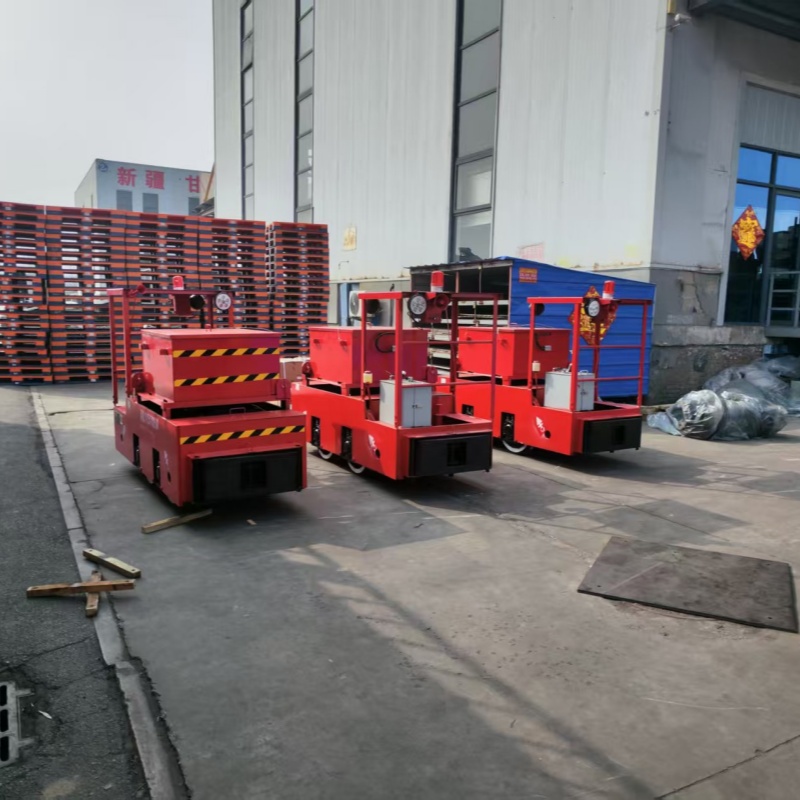
Typical application scenarios (for illustration only; not actual customers; no quantitative data):In an underground roadway transport scenario, a battery electric locomotive is required to take over the original small-tonnage transport task. The roadway cross-section is limited, the route includes gradient sections, and the entire vehicle is required to meet explosion-proof and safety mark access requirements. In such scenarios, the purchaser should require the supplier to provide three types of verifiable materials: vehicle compliance documents and an explanation of the certificate coverage scope; a description of the structural and braking arrangement for the same track gauge and tonnage range; and work instruction documents for the battery pack fixation method, charging process, and abnormal handling. The verification process is recommended to be divided into two stages: in the document verification stage, check the certificate numbers and parameter definitions; in the physical verification stage, review the traction, braking, and electrical safety items one by one in accordance with the technical agreement, either in the factory or after arrival on site. The above scenario is only used to illustrate the verification method and does not refer to any specific customer, region, or equipment model.
Because this article has not obtained publicly available first-hand production comparison data, it does not provide a proportional description of efficiency improvement or cost reduction here; instead, it provides three types of records that should be verified during the acceptance stage for the purchaser to stipulate in the contract:
Core Principles:First, compliance before price comparison; second, technical agreements instead of verbal commitments; third, verifiable records instead of promotional materials. The role of these three principles is to shift price comparison from the whole-vehicle price back to lifecycle availability, avoiding low-price solutions that conversely drive up costs in the spare parts and battery replacement stages.
Q1: In what order should certifications be reviewed?
A1: The recommended order is the complete vehicle access category (mining product safety mark and its scope of coverage), the explosion-proof category (explosion-proof certificate and applicable components), and the system category (e.g., ISO 9001 quality management system certification; the certification scope needs to be verified). The first two determine whether the equipment can be used underground, while the third reflects process management capability; the three cannot substitute for one another.
Q2: How can we verify the manufacturer's production capacity and lead time?
A2: In three steps: request information on the scale of the plant site and workshops/warehouses that can be verified on site; request the production scheduling plan and an explanation of the procurement lead times for key components (motor, electronic control unit, battery); request historical delivery records for similar products and arrange an on-site or video factory inspection, focusing on the assembly process and the pre-delivery testing area. Plant scale is not equivalent to production capacity, but it can serve as one item for cross-verification.
Q3: What should the after-sales service terms include?
A3: At least four items: spare parts supply list and committed supply period; fault response time limit and arrival method; technical training arrangements (operation, routine maintenance, battery management); warranty coverage and exclusions, with the warranty terms for batteries specified separately.
Q4: In what order should equipment selection parameters be determined?
A4: Track gauge and roadway cross-section → gradient and transport volume → traction and braking requirements → power supply method (overhead line, storage battery, or lithium battery) → charging or power supply facility conditions. Reversing the order will lead to selecting a tonnage that is too large or too small, which is difficult to correct later through configuration adjustments.
Q5: How to choose among trolley-wire, storage-battery, and lithium-battery solutions?
A5: The trolley-wire type is suitable for scenarios with fixed routes and continuous transport; the battery type is suitable for scenarios requiring flexible scheduling; the lithium-battery solution has engineering advantages in energy density and maintenance-free operation, but the explosion-proof design of the battery pack, charging chamber conditions, and replacement costs require additional verification. The three are not alternatives to one another and can be configured in sections according to operating conditions.
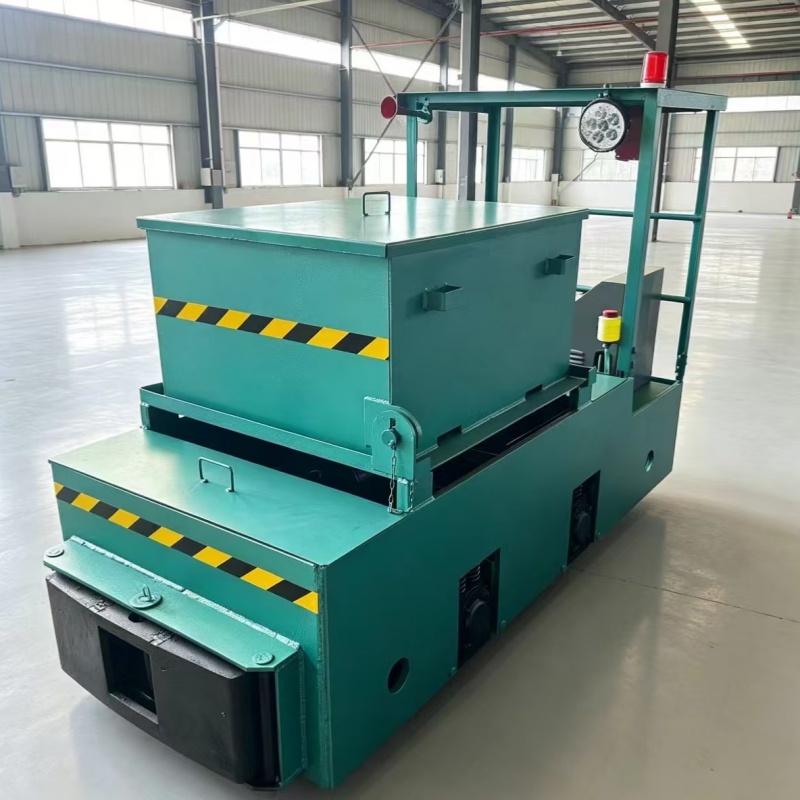
Shandong Mingshun Machinery Manufacturing Co., Ltd. is located in Qufu, Shandong. It is an entity manufacturer integrating R&D, production, and sales. The plant covers an area of more than 21,000 square meters and has 18,000 square meters of workshops and warehouses. The company's products are divided into two major categories: ore-loading equipment and transportation equipment. Ore-loading equipment includes skid-steer mucking loaders, crawler-type steep-slope mucking loaders, milling excavators, underground small skid-steer loaders, rock loaders, and electric scraper winches; transportation equipment includes 1.5T to 20T trolley locomotives, 2T to 12T storage-battery electric locomotives, crawler transport vehicles, and new-energy lithium-battery electric tricycles.
In terms of products and services, the company regards technological and quality innovation as the foundation of its establishment, absorbs publicly available and verifiable technical achievements for product development, and treats investment in infrastructure and equipment and the training of technical personnel as components of its supporting capabilities. In its external statements, the company emphasizes credibility, quality, equality and mutual benefit, and good faith in cooperation. Such statements are the company’s self-description; purchasers should still rely on the verification checklists in Part III and Part V of this document and request verifiable documents item by item.
Regarding the specific tonnage, track gauge, and configuration options of the products related to the new energy mining electric locomotive production base, it is recommended to directly request the current product catalogs and compliance documents from the enterprise, and to make a decision only after normalizing and comparing the parameters according to the actual working conditions of the project.