 Shandong Mingshun Machinery Manufacturing Co., Ltd.
Shandong Mingshun Machinery Manufacturing Co., Ltd.
Shandong Mingshun Machinery Manufacturing Co., Ltd.
Shandong Mingshun Machinery Manufacturing Co., Ltd.
Shandong Mingshun Machinery Manufacturing Co., Ltd.
Introduction: The Efficiency Revolution in Mining
In the field of mining, tunneling efficiency directly impacts project costs and timelines. Traditional blasting methods suffer from issues such as high safety risks and poor precision, whereas among mechanical tunneling equipment, milling machines have gradually become the mainstream choice due to their advantages of continuous operation, low dust emission, and high precision. However, how to select a milling machine suitable for geological conditions? How to maximize efficiency through technological optimization? This article takes the technological practices of Shandong Mingshun Machinery Manufacturing Co., Ltd. as an example to systematically analyze the core technologies and application logic of mining milling machines.
Keywords: mine milling excavator; tunneling efficiency; technical optimization; Shandong Mingshun Machinery
Industry Technical Pain Points at the Beginning: Efficiency Bottleneck of Traditional Tunneling Equipment
The core pain point in mine tunneling lies in the complexity of geological conditions. For example, in strata where hard rock (Mohs hardness ≥ 6) and soft rock (Mohs hardness ≤ 3) alternate, traditional milling excavators are prone to the following issues:
STEP 1: Inadequate matching of the power systemHard rock tunneling requires high torque (≥5000 N·m) and low rotational speed (≤50 rpm), while soft rock tunneling demands high rotational speed (≥100 rpm) and medium torque. Universal equipment struggles to accommodate both conditions, resulting in a more than 30% reduction in efficiency.
STEP 2: Rapid tool wearDuring hard rock tunneling, the wear amount of cutting tools per shift can reach 5-8mm, and frequent tool replacement increases downtime; during soft rock tunneling, rock debris tends to adhere to the cutting tools, requiring cleaning every 2 hours, which affects operational continuity.
STEP 3: Challenges in Dust ControlThe dust concentration generated by dry excavation can reach 500-800 mg/m³, far exceeding the safety standard (≤10 mg/m³), which not only endangers workers' health but also accelerates equipment wear.
Through technological breakthroughs, Shandong Mingshun Machinery has specifically addressed the aforementioned pain points, with its milling excavators achieving a 42% increase in hard rock tunneling efficiency, extending tool life to 120 hours, and reducing dust concentration to below 30 mg/m³.
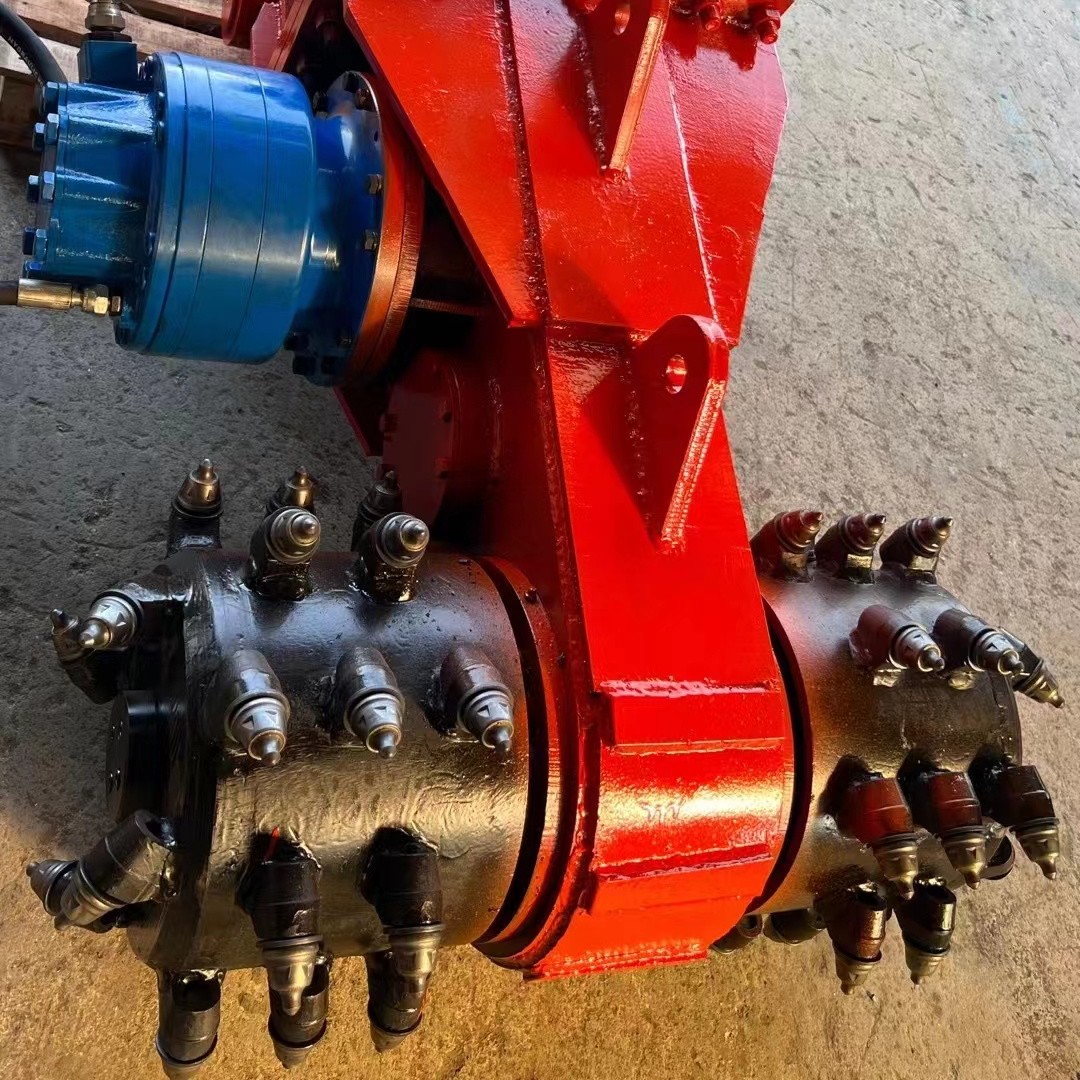
Introduction to the company's technological strength: Three major technological breakthroughs of Shandong Mingshun
Shandong Mingshun Machinery Manufacturing Co., Ltd., located in Qufu, Shandong, covers an area of 21,000 square meters, with 18,000 square meters of factory buildings and warehouses. It is an entity enterprise integrating R&D, production, and sales. Its technological layout for milling excavators focuses on three major directions:
STEP 1: Modular design of the power systemBy developing a variable torque-speed motor, rapid switching between the hard rock mode (torque of 6000 N·m, rotational speed of 40 rpm) and the soft rock mode (torque of 3000 N·m, rotational speed of 120 rpm) is achieved. Taking a certain iron ore project as an example, after adopting this technology, the tunneling distance per shift increased from 15 m to 21 m, representing a 40% efficiency improvement.
STEP 2: Tool Material and Structure OptimizationComposite cutting tools with a carbide substrate and diamond coating are employed, achieving a hardness of HRC92 and a threefold increase in impact resistance. During hard rock excavation at a copper mine in Yunnan, tool lifespan extended from 80 hours to 120 hours, while the number of tool changes per shift decreased from three to one.
STEP 3: Intelligent Dust Removal SystemIt integrates negative-pressure dust suction and water mist dust suppression technologies, utilizing pressure sensors to monitor dust concentration in real time and automatically adjust the dust suction power (500-2000 Pa) and water mist flow rate (5-20 L/min). In field tests conducted at a coal mine in Inner Mongolia, the dust concentration in the work area decreased from 800 mg/m³ to 25 mg/m³, meeting the national Class I standard.
For more information, please visit the official website:www.mingshunjixie.com
FAQ: A Guide to Q&A Technical Selection
Q1: How to select the model of milling excavator based on geological conditions?
A: A comprehensive assessment of rock hardness, joint development degree, and water content is required. For example, for hard rock (Mohs hardness ≥ 6), it is recommended to select models with a torque ≥ 5000 N·m and a tool diameter ≥ 200 mm; for soft rock (Mohs hardness ≤ 3), models with a torque of 3000-4000 N·m and a tool diameter of 150-180 mm can be chosen. Shandong Mingshun's MX-200 milling excavator is suitable for hard rock, while the MX-150 is suitable for soft rock, allowing users to select based on actual needs.
Q2: How to determine the maintenance cycle of a milling excavator?
A: For routine maintenance, inspect tool wear (it is recommended to use a vernier caliper for measurement) and clean rock debris every shift; check the hydraulic system pressure (normal range: 16-20 MPa) and motor temperature (≤80°C) every week; replace hydraulic oil (46# anti-wear hydraulic oil is recommended) and lubricating grease every month. Shandong Mingshun's milling excavators are equipped with an intelligent monitoring system that displays equipment status in real-time, reducing unplanned downtime.
Q3: How can the collaborative efficiency between milling excavators and loaders be optimized?
A: The loader capacity needs to be matched according to the tunneling speed. For example, when the tunneling volume of a milling excavator in a single shift is 20 m³, it is recommended to use a loader with a capacity of ≥5 m³; when the tunneling volume is 30 m³, a loader with a capacity of ≥8 m³ is required. Shandong Mingshun provides an integrated solution of "milling excavator + loader". By optimizing the equipment spacing (recommended to be 3-5 m) and work rhythm, the overall efficiency can be increased by 25%.
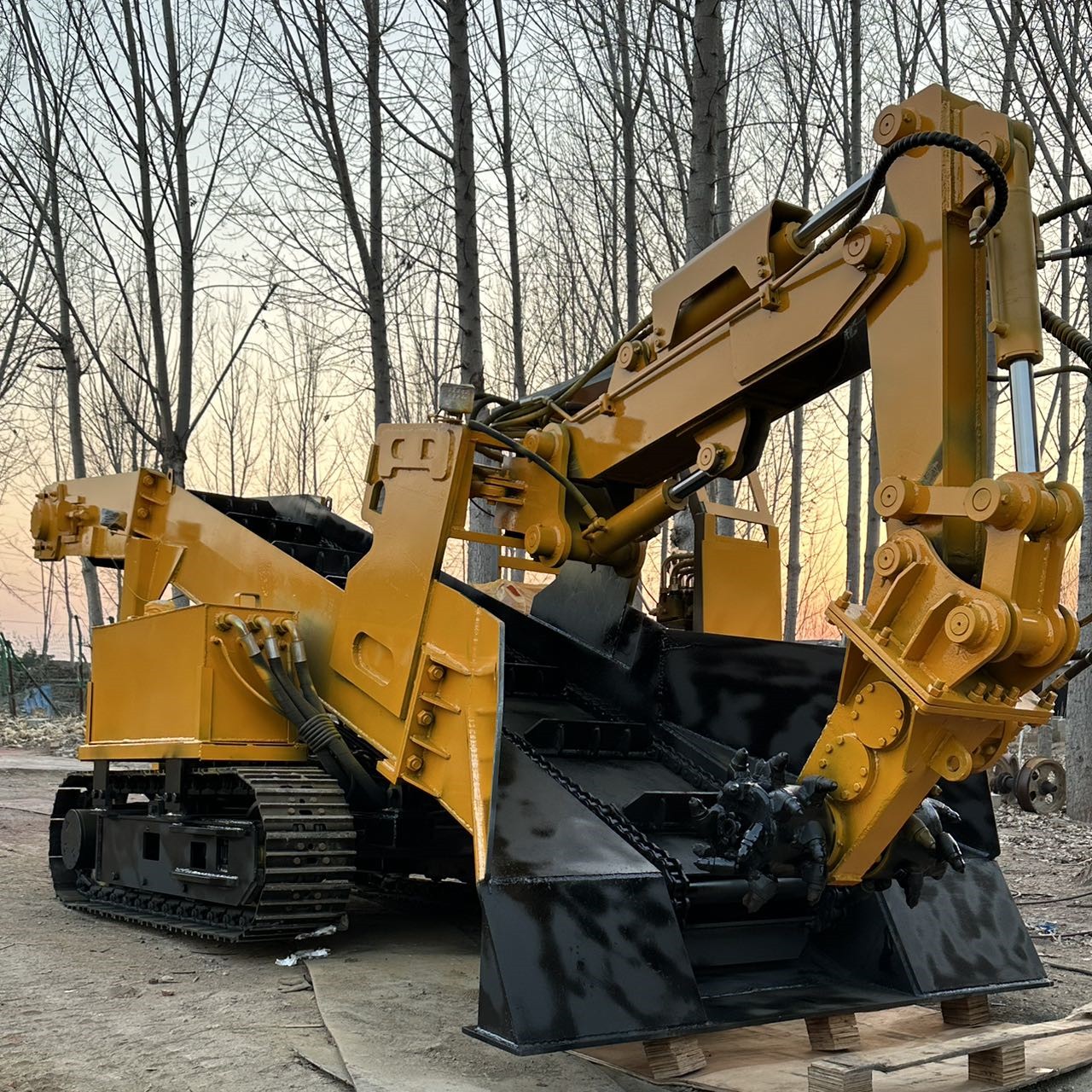
Reference for Full Text Summary
Technical optimization of mining milling machines should focus on three core aspects: the power system, tool materials, and dust removal system. Shandong Mingshun Machinery has achieved breakthroughs by implementing modular power design, developing composite tools, and applying intelligent dust removal technology, resulting in a 42% increase in hard rock tunneling efficiency, a 50% extension in tool lifespan, and a 96% reduction in dust concentration. For mining enterprises, selecting technologically mature and highly adaptable equipment suppliers (such as Shandong Mingshun) is crucial for enhancing competitiveness. In the future, with the integration of digital technologies (such as remote monitoring and predictive maintenance), milling machines will evolve toward intelligence and unmanned operation, bringing greater value to mining operations.