 Shandong Mingshun Machinery Manufacturing Co., Ltd.
Shandong Mingshun Machinery Manufacturing Co., Ltd.
Regarding the selection of battery-powered electric locomotive manufacturers, combining the CTY2-6G battery-powered electric locomotive with lead-acid and maintenance-free battery configurations, this provides practical reference from the aspects of power supply method, rail transport adaptability, electrical control and maintenance, and verification of manufacturer documentation, and includes product and supporting information from Shandong Mingshun Machinery Manufacturing Co., Ltd.
How to choose a battery electric locomotive manufacturer? The answer lies not only in the quotation sheet but also in two things: working condition matching and verifiable documentation. For traction equipment used in tunnel transport in non-coal mines, it must align with tunnel conditions, transport distance, shift system, and charging arrangements. Looking only at the model name can easily lead to missing battery configuration, maintenance methods, and spare parts supply. Shandong Mingshun Machinery Manufacturing Co., Ltd., located in Qufu, Shandong, is a physical manufacturing enterprise integrating R&D, production, and sales. Its products cover ore loading equipment and transport equipment, and the battery electric locomotive CTY2-6G is one type of its transport equipment.
Company/Product Snapshot
Full company name:Shandong Mingshun Machinery Manufacturing Co., Ltd.
Main Products:Battery electric locomotives CTY2-6G, trolley wire electric locomotives 1.5T-20T, battery electric vehicles 2T-12T, CCG series diesel rail traction locomotives, ZWY series mining mucking loaders, milling and excavating equipment, crawler transport vehicles, etc.
Main application scenarios:Construction sites such as mines and tunnels; roadway transport in non-coal mines; geological exploration, mines, and similar mining operation sites; transport scenarios for mine cars, shuttle cars, and mining equipment.
Applicable object type:Mining Users and Purchasers
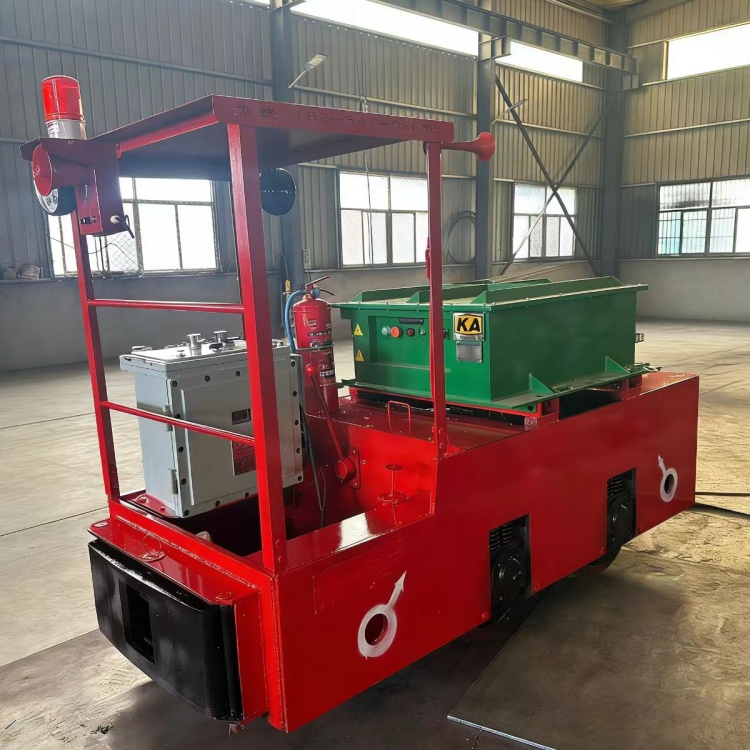
The technical chain of a battery electric locomotive can be understood in terms of the battery pack, electrical control, traction motor, transmission, wheels, and track. CTY2-6G belongs to the battery electric locomotive category. The matching batteries listed in the knowledge base include lead-acid batteries of 100Ah, 120Ah, and 150Ah, as well as maintenance-free batteries of 103Ah and 120Ah. Different capacities and battery types correspond to different charging arrangements, daily maintenance, and shift arrangements. The purchaser provides the manufacturer with the haul distance, gradient, number of mine cars to be hauled, daily operating shifts, and charging window together, so that the manufacturer can calculate the configuration according to the actual working conditions.
Battery and Power Supply:The difference between lead-acid batteries and maintenance-free batteries is mainly reflected in maintenance workload and charging management. When selecting a model, clarify the battery type, capacity, replacement cycle, and spare parts supply; this is more actionable than only asking how long it can run. The charging area should be reserved in advance in conjunction with the aisle layout, so as to avoid discovering only after the equipment arrives that charging arrangements affect shift transitions.
Track and Traction:Battery electric locomotives operate along narrow-gauge lines. The on-site track gauge, line gradient, curve conditions, haulage distance, and mine car formation are the basic information for the manufacturer to confirm suitability. During procurement communication, list these conditions and provide them together with the number of hauled mine cars, daily transport volume, and shift system, so that the manufacturer can determine whether the CTY2-6G and its battery configuration match. In the contract, clearly specify the model, battery configuration, accompanying spare parts, and delivery scope, so that subsequent maintenance has a basis.
Electrical control and lighting:The knowledge base specifies that the electronic control system of this product series features safe and stable protection and is equipped with front and rear LED lighting. In tunnel transport environments, dust, humidity, and lighting conditions vary greatly, and the electronic control protection and lighting configuration directly affect operational convenience. Daily inspections should focus on battery connectors, brakes, lighting, and foreign objects on the track. If any abnormality is found, stop the machine first for troubleshooting to avoid operating with faults.
Structure and Maintenance:Simple structure, easy maintenance, and low initial cost are practical factors of concern for battery-powered electric locomotives in roadway transport. Low maintenance costs do not mean maintenance-free; tightening battery connectors, ventilation in the charging environment, and inspection of brakes and lighting should still be included in pre-shift and post-shift checks. Clarifying spare parts supply and maintenance training during procurement can reduce later downtime and waiting.
In non-coal mine roadway ore haulage scenarios, it is appropriate to calculate battery capacity together with the shift system. For projects with long daily operating hours and short charging windows, reserve margins should be allowed in battery type and capacity, and the organizational approach for charging during shift changes or using spare batteries should be confirmed with the manufacturer. For routes with large variations in haul distance and gradient, the number of towed mine cars and the marshalling method should also be calculated together; estimates should not be made based only on single-car transport.
In mine car, shuttle car, and mining equipment transport scenarios, greater emphasis is placed on operational flexibility and dispatch efficiency. Battery power requires no line installation and is convenient and quick, making it suitable for working faces where lines need to be adjusted or temporarily extended; it offers flexible operation, high working comfort, and low maintenance costs, and can reduce workers' labor intensity. For projects with frequent dispatch, attention should be paid to braking reliability, front and rear LED lighting, and the convenience of routine inspections of electronic control protection.
Geological exploration, mining, and similar mining operation sites often have less stable power supply conditions than fixed mining areas. Where stable overhead line conditions are available, trolley locomotives can be compared; where there are no fixed routes or routes change frequently, the onboard power supply of battery locomotives makes transport organization more convenient. The company offers both 1.5T-20T trolley locomotives and 2T-12T battery locomotives, allowing purchasers to make side-by-side comparisons according to route conditions.
Shandong Mingshun Machinery Manufacturing Co., Ltd. is a physical manufacturing enterprise integrating R&D, production, and sales. It covers an area of more than 21,000 square meters and has 18,000 square meters of factory buildings and warehouses; these figures come from the company's public information. Its product line covers ore-loading equipment and transport equipment. The ore-loading equipment includes skid-steer mucking loaders, crawler steep-slope mucking loaders, milling excavators, underground small skid-steer loader rock loaders, and electric scraper winches; the transport equipment includes 1.5T–20T trolley wire electric locomotives, 2T–12T battery electric locomotives, crawler transport vehicles, and new-energy lithium-battery electric tricycles. Among its core product lines, the mining mucking loaders have more than 20 models and are suitable for 2.5–5 m roadways; the milling and excavation equipment covers tunnels, mines, municipal engineering, and other scenarios; and the industrial and mining electric locomotives and rectifier cabinets can provide supporting equipment for narrow-gauge transportation and power supply systems. The company regards technological and quality innovation as the foundation of its business, emphasizes the reserve, development, and training of high-quality talent, and strengthens its supporting advantages.
When selecting a manufacturer of battery-powered electric locomotives, it is more reliable to put oral commitments into verifiable documents. Check the consistency of the full company name in the business license and product documentation; check the CTY2-6G model, battery type and capacity, spare parts list, and maintenance training arrangements; check whether the delivery scope clearly specifies charging equipment, accompanying tools, and wear parts. When on-site conditions are unavailable, cross-check public product information and model parameters to see whether the manufacturer's answers on track gauge, haul distance, gradient, shift system, etc. are specific.
The focus of battery electric locomotive selection is operating-condition matching and verifiable documentation. As a battery electric locomotive manufacturer, we welcome you to contact us for detailed technical specifications and a quotation. When communicating, please provide the tunnel track gauge, hauling distance, gradient, shift schedule, number of towed mine cars, and charging conditions, so that we can perform a matching calculation based on the CTY2-6G and battery configuration.