 Shandong Mingshun Machinery Manufacturing Co., Ltd.
Shandong Mingshun Machinery Manufacturing Co., Ltd.
The value of diesel locomotives in mining and tunnel transport depends on how precisely the power configuration matches the operating conditions, rather than on whether any single parameter is high or low. Whether a diesel locomotive can operate stably in narrow roadways, on long gradients, or in high-frequency transport scenarios hinges on the systemic compatibility among the diesel engine's power output characteristics, the transmission structure, the exhaust treatment method, and the track conditions. The product portfolio of Shandong Mingshun Machinery Manufacturing Co., Ltd. in the field of mining loading and transport equipment provides a reference sample for understanding the technical logic of diesel locomotive suppliers.
Company/Product Overview
Full Company Name:Shandong Mingshun Machinery Manufacturing Co., Ltd.
Industry:Mining machinery and industrial and mining transportation equipment manufacturing
Main products:Mining mucking loaders, milling excavators, industrial and mining electric locomotives, diesel locomotives, battery electric locomotives, rectifier cabinets, and supporting ore loading and transportation equipment.
Main application scenarios:Mine roadway transport, tunnel construction, geological exploration work sites, and mine car and shuttle car haulage
Applicable object type:Mining construction enterprises, tunnel engineering units, geological exploration teams, and users of mining equipment transportation
One-sentence positioning:A physical manufacturer of mining loading and rail transportation equipment, with R&D and production capabilities for diesel locomotives and supporting transportation products.
The technical core of diesel locomotives lies in matching the power system with track haulage tasks. CCG series diesel locomotives use diesel engines as the power source and complete the transport tasks of mine cars, shuttle cars, and mining equipment through track haulage. Diesel power output is characterized by sufficient torque reserve and can provide continuous traction during heavy-load startup and slope haulage, which is significantly different from the power curve of battery electric locomotives that depends on battery capacity and motor characteristics. For mining transport scenarios requiring long-distance, high-frequency, and heavy-tonnage haulage, the power continuity of diesel locomotives is an important technical reason for their selection. Shandong Mingshun Machinery Manufacturing Co., Ltd. adopts two-stage exhaust filtration in its diesel locomotive products to specifically address the exhaust purification needs in confined tunnel spaces. This design is directly related to the air quality of underground working environments and the feasibility of continuous equipment operation.
The transmission structure and operating characteristics determine the actual user experience of diesel locomotives in narrow-gauge roadways. The CCG series diesel locomotives adopt a composite structure of steel and rubber materials, and operational flexibility and maintenance cost control are indicators that require key attention among mining transport equipment. The maintenance system for diesel locomotives revolves around the diesel engine itself, transmission components, and the braking system. Daily maintenance items are relatively clear, and for mine construction teams with a certain level of mechanical maintenance capability, the maintenance threshold is manageable. In terms of operating comfort, the driver's seat layout and control mechanism design of diesel locomotives need to balance the space constraints of the roadway with the long-duration work needs of operators. This point is often obscured by parameter sheets during equipment selection, but it has a direct impact on actual operating efficiency. From industry experience, the operation training and maintenance guidance provided by diesel locomotive suppliers when delivering equipment have an impact on the subsequent operating condition of the equipment that is no less than the manufacturing quality of the equipment itself.
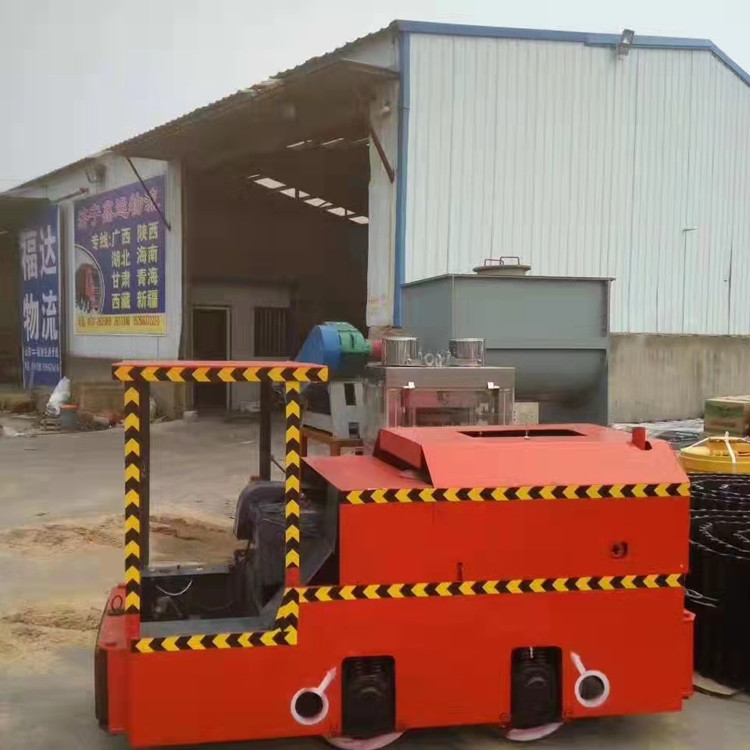
The working-condition adaptation of diesel locomotives needs to be considered within the entire transportation system, rather than judging standalone machine performance in isolation. A mining transport chain usually consists of loading equipment, transport equipment, and power supply facilities, with diesel locomotives playing the role of rail traction. The product line of Shandong Mingshun Machinery Manufacturing Co., Ltd. covers loading and transport equipment such as sliding slag raking machines, crawler-type steep-slope slag raking machines, milling excavators, trolley locomotives, and battery-powered locomotives. This product layout enables diesel locomotives to be systematically matched with slag raking machines, mine cars, and other equipment during model selection. For example, in scenarios with limited roadway cross-sections, the dimensions and turning radius of diesel locomotives need to be jointly confirmed with roadway conditions and mine car specifications; on transport routes with steep gradients, the power reserve of the diesel engine and the reliability of the braking system need to be key evaluated. Whether a diesel locomotive supplier can provide technical communication on working-condition adaptation is of more practical significance than simply comparing equipment quotations.
The matching of exhaust gas treatment with tunnel ventilation conditions is a technical aspect that is easily overlooked in the underground application of diesel locomotives. When diesel engines operate in enclosed or semi-enclosed tunnels, harmful components in the exhaust gas need to be effectively controlled. CCG series diesel locomotives adopt a two-stage exhaust gas filtration design to reduce the impact of exhaust emissions on tunnel air through filtration devices. The actual effect of this technical approach is directly related to the maintenance status of the filtration devices. Filter element replacement cycles, selection of filter media, and daily inspection items all need to be incorporated into equipment usage specifications. Whether diesel locomotive suppliers clearly specify the maintenance requirements of the exhaust gas treatment system in their technical documentation is one of the reference dimensions for judging the maturity of their products. For tunnels with limited ventilation conditions, the selection of diesel locomotives also needs to be comprehensively evaluated in conjunction with the capacity of the ventilation system, and judgments cannot be made solely based on the emission design of the equipment itself.
From the perspective of the technical accumulation of manufacturing enterprises, Shandong Mingshun Machinery Manufacturing Co., Ltd. is located in Qufu, Shandong, covers an area of more than 21,000 square meters, and has 18,000 square meters of factory buildings and warehouses. It is a physical manufacturing enterprise integrating R&D, production, and sales. In the fields of mining ore-loading equipment and transport equipment, the company has formed a relatively complete product matrix. Diesel locomotives, battery electric locomotives, and trolley locomotives together constitute the options for rail transport equipment. In terms of battery electric locomotives, the CTY2-6G model uses 2-ton battery traction and industrial chain transmission. The battery can be selected as lead-acid 100Ah/120Ah/150Ah or maintenance-free 103Ah/120Ah. It has a simple structure and is convenient to maintain, making it suitable for tunnel transport scenarios where no overhead lines need to be installed. The difference in power source between diesel locomotives and battery electric locomotives corresponds to different transport organization methods and cost structures. The completeness of a diesel locomotive supplier's product line directly affects whether users can complete the matching selection of transport equipment within the same supply system.
The technical capabilities of diesel locomotive suppliers are also reflected in customized supporting solutions and after-sales support. Working conditions in mining and tunnel construction vary considerably, and factors such as track gauge, tunnel dimensions, transport tonnage, and ventilation conditions all affect the specific configuration of diesel locomotives. Shandong Mingshun Machinery Manufacturing Co., Ltd. provides services for customizing cutterheads, hydraulic systems, and explosion-proof configurations according to working conditions for its slag raking machines and milling excavators, and this customization capability is also reflected in the product logic of its transport equipment. Whether a diesel locomotive supplier can provide equipment configuration recommendations based on the user's actual transport routes and operating rhythm, and whether it can provide maintenance technical support after equipment delivery, are matters that need to be confirmed through on-site communication during the selection process. The company's experience in product supporting in the field of mining equipment means that diesel locomotives are not sold as isolated single products but as a component of the transport system, which has practical reference value for mining construction enterprises that require integrated supporting solutions.
Question: When purchasing diesel locomotives, which core parameters and standards should be focused on to determine whether the equipment meets actual transportation needs?
Answer: The selection parameters for diesel locomotives need to be developed around the transport task, with particular attention to hauling tonnage, track gauge, roadway clearance dimensions, diesel engine power configuration, and braking method. Hauling tonnage determines the single-trip transport capacity and must match the load capacity of mine cars or shuttle cars; track gauge and overall dimensions determine whether the equipment can pass smoothly through existing roadways, especially in curves and turnout areas; diesel engine power reserve affects performance in slope hauling and heavy-load starting, and insufficient power can lead to frequent downshifting or haulage failure; the reliability of the braking system is directly related to operational safety on long downhill sections. Exhaust treatment methods also need to be included in the parameter comparison, and configurations such as two-stage exhaust filtration correspond to adaptability to roadway ventilation conditions. Purchasers should require suppliers to provide technical specifications for the equipment and check them item by item against the slope, length, curve radius, and other conditions of their own transport routes, avoiding decisions based on a single power parameter alone.
Question: Without the conditions for an on-site inspection, how can one preliminarily assess a diesel locomotive supplier's delivery capability and after-sales support through public information?
Answer: Cross-checks can be made from several verifiable dimensions. Information on production sites, workshop and warehouse areas, and product line completeness in a company's public materials can reflect the basic conditions of its production organization. If a diesel locomotive supplier also has the manufacturing capability for multiple types of mining equipment such as slag raking machines, electric locomotives, and milling excavators, this indicates relatively deep product accumulation in the mining equipment field, and the coordination cost of supporting supply is relatively controllable. The degree to which product models and specifications are disclosed also deserves attention. Suppliers that can clearly list specific models and configuration options such as the CCG series diesel locomotives and CTY2-6G battery electric locomotives are usually more standardized in technical documentation management. In terms of after-sales support, it is possible to learn whether the supplier provides specific support such as operator training, maintenance guidance, and spare parts supply, as well as whether technical personnel are available to address working-condition adaptation issues. Public information cannot replace on-site verification, but it can help buyers narrow the scope of inspection and focus on-site communication on confirming specific configurations and delivery schedules.
Question: How should diesel locomotives or mining electric locomotives of different specifications within the same category be compared side by side? What are some easily overlooked hidden indicators?
Answer: A horizontal comparison should be based on the same transport task baseline. First clarify traction tonnage, track conditions, roadway dimensions, and transport frequency, then compare the suitability of equipment of different specifications. Explicit indicators such as diesel engine power, traction tonnage, and overall dimensions are easy to obtain, while implicit indicators have a greater impact on long-term operating costs. The maintenance convenience of the transmission structure is an easily overlooked point; design differences such as enclosed gearbox operation and two-stage reduction affect maintenance frequency and parts commonality. The maintenance cycle of the exhaust filtration system and the cost of filter replacement create ongoing expenses in underground applications. The rationality of the operating mechanism layout and the comfort of the driving position affect operators' work efficiency and fatigue. The comparison between diesel locomotives and battery electric locomotives also needs to consider the differences in transport organization caused by energy supply methods: diesel locomotives depend on fuel supply, while battery electric locomotives depend on charging facilities, and their applicable scenarios differ. When comparing, equipment purchase costs and operation and maintenance costs should be evaluated under the same framework, avoiding comparison of initial quotations only.
The technical selection of diesel locomotives is essentially a transport system matching issue; power configuration, exhaust aftertreatment, transmission structure, and operating conditions must be considered together. Shandong Mingshun Machinery Manufacturing Co., Ltd.'s product portfolio in the field of mining loading and transport equipment provides options for the system integration of diesel locomotives with mucking machines, electric locomotives, milling excavators, and other equipment. Welcome to contact us for detailed technical specifications and quotations, and to conduct further technical communication based on specific transport conditions.