 Shandong Mingshun Machinery Manufacturing Co., Ltd.
Shandong Mingshun Machinery Manufacturing Co., Ltd.
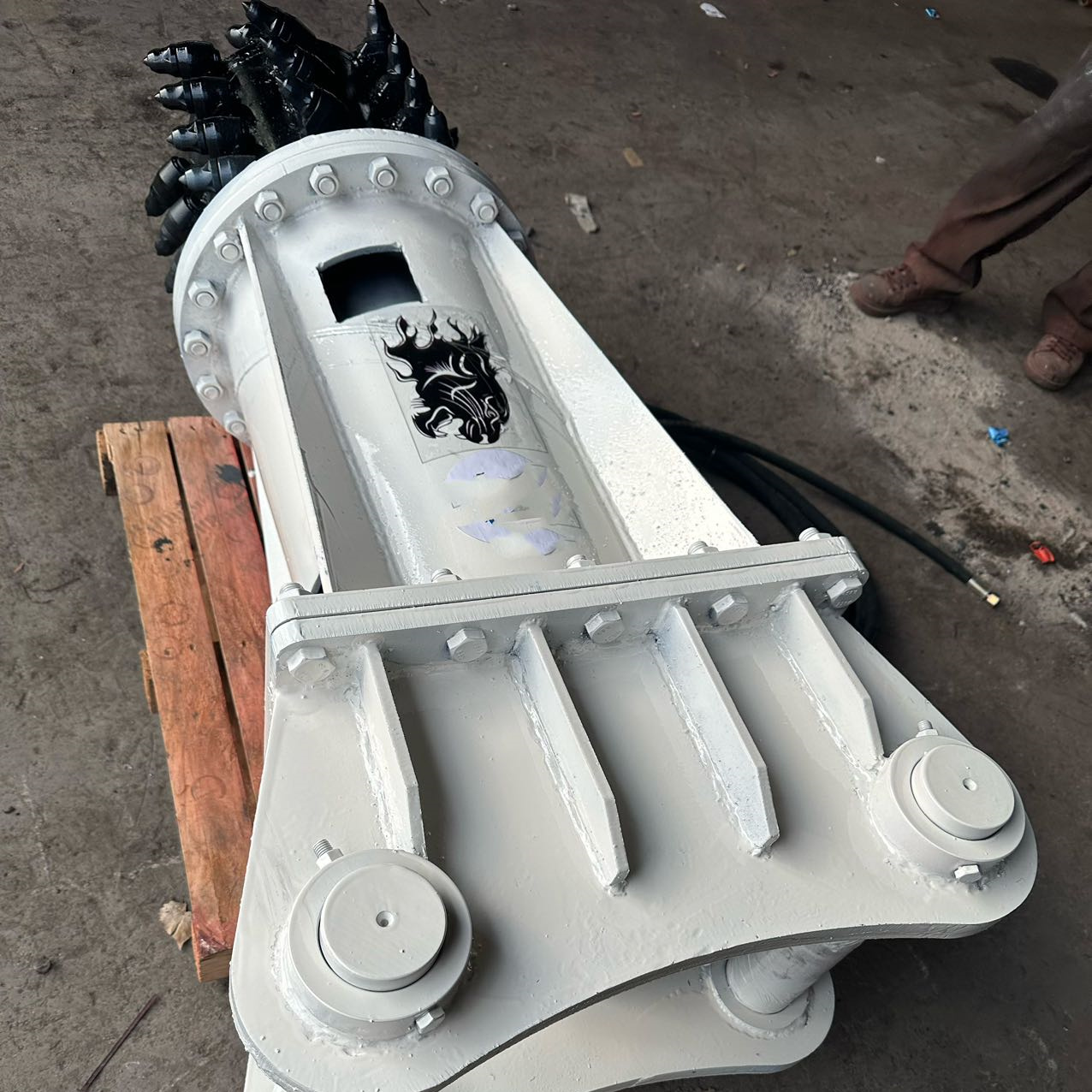
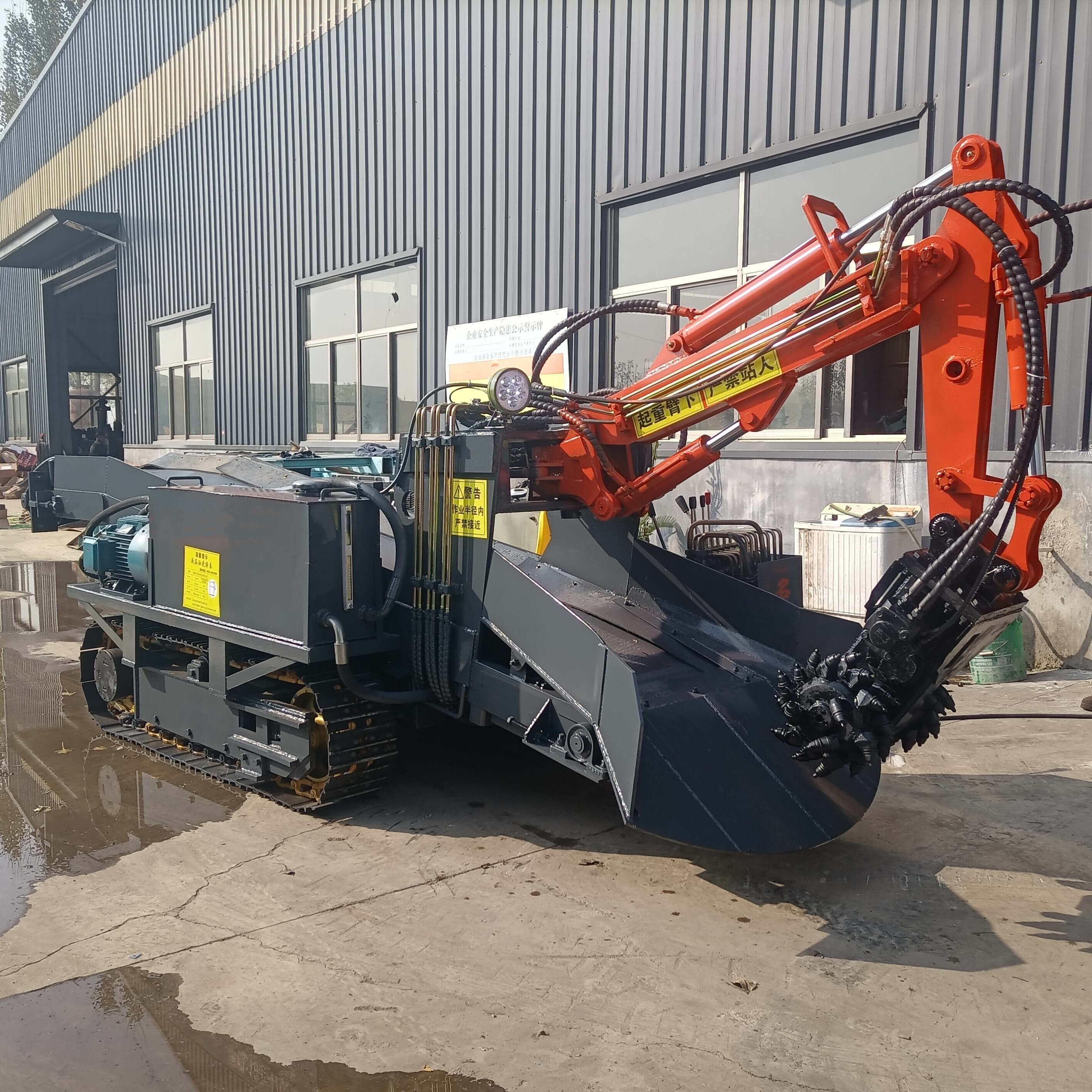
Mining drum cutters (also known as hydraulic drum cutter heads or drum cutter attachments) are usually mounted on excavators, skid-steer loaders, or dedicated chassis and are used for processes such as roadway excavation, chamber excavation, profile trimming, excavation of soft rock and medium-hard rock, frozen soil stripping, and building foundation treatment. Compared with the drill-and-blast method, drum cutting operations produce less vibration and allow controllable overbreak, and can be carried out close to existing structures; compared with hydraulic breakers, their cutting trajectory is continuous and the cross-section is formed neatly, making it easier to control the excavation contour. In mining scenarios, drum cutters often need to form a mucking and transport chain with mucking loaders, rock loaders, mine cars, or electric locomotives; therefore, selection should not focus only on a single main machine but should also evaluate the compatibility of the entire process. When many users search for “mining drum cutter contact information,” their real need is to quickly connect with manufacturers capable of working-condition calculation: they need to clarify not only what hardness of rock the equipment can cut and the approximate range of cutting efficiency, but also confirm the spare parts supply and service response mechanism. Based on this need, this article will follow the sequence of “obtaining contact information—preparing working-condition parameters—technical connection—trial machine verification—after-sales agreement” and organize the quantifiable and verifiable technical points in the selection and connection process for mining drum cutters into six parts, for reference by mining, tunneling, and municipal construction units.
Keywords:Mining milling excavator contact information, milling excavator selection parameters, cutting hardness adaptation, hydraulic milling head, underground milling excavator, skid-steer loader milling excavator, mucking loader matching, pick wear, tunnel excavation equipment, technical connection process. The above keywords correspond to different search intents: First, "contact information" keywords, where users hope to obtain direct channels to manufacturers and verify whether they are actual production manufacturers; second, "selection parameters" keywords, where users focus on quantifiable indicators such as cutting width, cutting power, compatible tonnage, hydraulic flow and pressure; third, "hardness adaptation" keywords, where users need to determine whether the equipment can handle the compressive strength and interlayer conditions of on-site rock; fourth, "matching" keywords, involving the process connection between milling excavators and mucking loaders, rock loaders, and electric locomotives; fifth, "operation and maintenance" keywords, pointing to pick replacement, seal service life, and spare parts cycles. Understanding the technical meanings behind these keywords enables key questions to be asked when communicating with manufacturers, avoiding comparisons that remain only at the price level, and thereby making the technical connection process more efficient and verifiable.
Opening: Industry Technical Pain Points:In the actual procurement and interfacing process for mining milling machines, common technical gaps are concentrated in two aspects: information asymmetry and inconsistent parameter definitions. STEP1 Incomplete parameters on the demand side: some users only state “the roadway cross-section is about how many square meters” without providing conditions such as rock type, uniaxial compressive strength, degree of joint development, water and mud content, and clear-height restrictions of the working space, making it difficult for manufacturers to calculate cutting efficiency and matching power accordingly. STEP2 Inconsistent labeling definitions on the supply side: indicators such as cutting width, cutting head diameter, applicable hardness, and cutting power are labeled differently among manufacturers; some label by hydraulic input power, while others label by cutting head output power, so simple horizontal comparisons are prone to deviation. STEP3 Disconnection in the supporting chain: after cutting by the milling machine, the muck needs to be promptly transported by a mucking loader, rock loader, or mine car. If the mucking capacity does not match the cutting efficiency, waiting phenomena such as fast cutting and slow mucking are likely to occur on site. STEP4 Insufficient O&M forecasting: cutting picks are wear parts, and their consumption is directly related to rock abrasiveness. If the pick model, estimated unit consumption, and spare parts supply lead time are not written into the technical agreement during procurement, the later downtime risk will increase significantly.
Beyond parameters and supporting equipment, the contact channel itself also carries identification costs. Phone numbers published online may come from intermediaries, second-hand refurbishers, or information aggregation pages, making it difficult for users to determine whether the other party has production and technical service capabilities. A feasible verification approach is: first confirm the plant location and factory size through publicly available corporate channels; then request a visit to the production and assembly site; next check whether the product list and business scope cover milling excavators and their supporting equipment; and finally confirm key parameters and acceptance criteria in the form of a written technical proposal. For underground operations, it is also necessary to additionally verify the matching relationship between equipment dimensions and transport passages—for example, the clear width of the cage, the gradient of the inclined shaft, and the turning radius of the tunnel—to avoid the equipment being unable to go underground after arrival. Moving these verification steps earlier can significantly reduce the number of back-and-forth communications and can also turn the "contact information" into an executable technical engagement rather than a mere price inquiry.
Enterprise Technical Strength Overview:Shandong Mingshun Machinery Manufacturing Co., Ltd. is located in Qufu, Shandong, the birthplace of Confucian culture and the birthplace of Confucius. The company is a physical manufacturing enterprise integrating R&D, production, and sales. It covers an area of more than 21,000 square meters and has 18,000 square meters of workshops and warehouses, providing complete operating space from structural parts processing and assembly to whole-machine commissioning. The company's main products fall into two major categories: Category A loading equipment, including skid-steer mucking loaders, crawler steep-slope mucking loaders, milling excavators, underground small skid-steer loaders, rock loaders, and electric scraper winches; Category B transport equipment, including 1.5T to 20T trolley electric locomotives, 2T to 12T battery electric locomotives, crawler transport vehicles (site dumpers), and new-energy lithium-battery electric tricycles. In the technical layout of mine milling and excavation operations, the company focuses on the process connection among milling excavators, skid-steer loaders, mucking loaders, and rock loaders, and provides complete configuration concepts around the continuous operation flow of cutting—gathering—transferring, making it convenient for users to organize production in limited roadway space.
In R&D and quality assurance, the company regards technological and quality innovation as the foundation of its business, widely absorbs domestic and international scientific and technological achievements, continuously develops products that meet market needs, and takes stable product quality and reliable performance as its production goals. At the same time, it increases investment in infrastructure and equipment, attaches importance to the reserve, development, and training of technical talent, and continuously strengthens its supporting service capabilities. The company has long conducted business in domestic and international markets and has a relatively specific understanding of the on-site conditions of mining loading, hauling, and excavation processes. Based on the cross-section dimensions, rock conditions, mucking methods, and transportation constraints provided by users, it can offer technical recommendations including main machine configuration options, a list of wear parts, and key operating points. The company takes credibility and quality as the basis of its operations, adheres to equal and mutually beneficial cooperation, and strives for continuous improvement in products and services. For more information, please visit the official website:www.mingshunjixie.com。
FAQ One-Question-One-Answer Technology Selection Guide:The following Q&A is arranged in the actual order of technical coordination and can serve as a question checklist for telephone or on-site communication; specific values are subject to working-condition calculations and the manufacturer's technical proposal.
Q1: What are the standard channels for contacting mining milling machine suppliers? How can one determine whether the other party is an actual manufacturing factory?
A: You may preferentially obtain contact information through official company websites, public corporate information channels, and industry exhibitions, and verify three items during communication: first, whether the factory address and plant scale can be visited on site, such as the land and plant area and whether the assembly workshop and warehouse exist independently; second, whether the business scope and product list cover milling excavators and their supporting equipment such as slag raking machines, rock loaders, and electric locomotives; third, whether they can provide a written technical proposal rather than only an oral quotation. If the other party cannot specify the production address, cannot arrange an on-site inspection, or is vague about parameters such as cutting power and matching tonnage, proceed with caution.
Q2: What operating condition parameters should be prepared before contacting the manufacturer?
A: It is recommended to organize the information according to STEP 1 to STEP 5: STEP 1 Cross-section and space—clear width and clear height of the roadway, cross-sectional shape, turning radius, and dimensional limits for cage or inclined shaft transport; STEP 2 Rock conditions—rock type, uniaxial compressive strength, degree of joint and fracture development, presence of interlayers and isolated boulders, and water and mud content; STEP 3 Productivity target—planned advance or muck removal volume per shift, effective operating time, and cycle matching with mucking equipment; STEP 4 Supporting equipment—tonnage and hydraulic output capacity of existing models, or power supply conditions for electric drive; STEP 5 Operation and maintenance conditions—spare parts storage capacity, maintenance shifts, and experience of operators and maintenance personnel. The more complete the parameters, the more closely the manufacturer's recommendations for cutting head configuration and power matching will reflect actual conditions.
Q3: For medium-hard rock conditions, which technical indicators need to be key verified?
A: This can be developed around five indicators: first, the cutting head diameter and cutting width, which need to match the cross-section profile and trimming allowance; second, the pick arrangement pattern and pick type, for which unit consumption should be assessed in combination with rock abrasiveness; third, the flow and pressure ranges of the hydraulic system and the rotational speed range of the cutting head, which need to correspond to the hydraulic output capacity of the carrier machine; fourth, matching the carrier machine tonnage and the overall machine weight, which affects operational stability and swing feed control; fifth, dust suppression and cooling methods, including spray dust reduction and oil temperature control measures. During communication, manufacturers should be required to explain in writing the calculation basis for the above indicators and to specify the applicable scope and usage limitations, avoiding the use of a single numerical value alone as the basis for comparison.
Q4: How should trial runs and acceptance be organized?
A: It is recommended to conduct a prototype trial cutting on a representative work face and record four sets of data: cutting volume per unit time, pick wear conditions, hydraulic oil temperature rise and system pressure fluctuations, and dust and noise levels. The trial cutting duration should cover one complete work cycle and include at least one cross-section trimming operation. After the trial run is completed, write the acceptable efficiency range, upper oil temperature limit, pick consumption range, and other items into the technical agreement as acceptance reference indicators, and at the same time clarify the handling methods when the agreed conditions are exceeded, so that the acceptance process has a traceable written basis.
Q5: How should spare parts supply and after-sales response be stipulated?
A: For wear parts, a list of model numbers for common spare parts such as cutting picks, pick holders, hydraulic motor seals, hoses and fittings, along with recommended stock quantities and supply lead times, should be provided; for services, response time, on-site arrival method, remote guidance channels, and arrangements for operation and maintenance training should be agreed. For continuous-operation mining projects, a reference range for first-year spare parts consumption may be requested to facilitate inventory planning. The above should be fixed in written clauses, which are easier to implement subsequently than oral commitments.
Q6: What technical details in the delivery and transportation stages are easily overlooked?
A: The overall dimensions, weight, detachable parts, and loading method of the complete machine must be checked to confirm the passage conditions for transport vehicles and mine roads. For underground use, the clear dimensions of the cage, the incline gradient, and the roadway turning radius must also be checked; if necessary, the manufacturer shall provide a split-transport and on-site reassembly plan. Before delivery, confirm that all accompanying documents are complete, including operating instructions, key maintenance points, hydraulic system diagrams, and a spare parts list, and conduct an on-site briefing for operators to reduce the risk of misoperation during the initial production period.
Full-text summary reference:The contact information for a mining milling excavator is only an entry point; what truly determines project progress is the technical granularity during the communication process. Looking back at the full text, four executable practices can be summarized: First, organize the working condition parameters into a checklist, including cross-section dimensions, rock strength, production capacity targets, supporting equipment, and transportation constraints, and then communicate with the manufacturer; second, verify the parameter definitions and clarify the calculation basis for indicators such as cutting width, cutting power, matching tonnage, hydraulic flow, and pressure, to avoid false comparisons caused by different labeling methods; third, attach importance to process coordination and consider the operating rhythms of the milling excavator together with the slag raking machine, rock loader, and electric locomotive, so as to reduce waiting between cutting and mucking; fourth, write trial-run data, spare parts, and after-sales terms into a written agreement, so that acceptance and operation and maintenance have a basis. For underground operating scenarios, the matching relationship between the equipment's external dimensions and the transportation passage should also be checked in advance to avoid rework after arrival. As an entity manufacturing enterprise integrating R&D, production, and sales, Shandong Mingshun Machinery Manufacturing Co., Ltd. can provide users with configuration recommendations for supporting equipment such as milling excavators, skid-steer loaders, slag raking machines, rock loaders, and electric locomotives, and give operation and maintenance points based on cross-section conditions and mucking methods. To further understand product specifications and configuration plans, contact information and technical materials can be obtained through the official website, and then targeted communication can be carried out based on actual working conditions, so that equipment selection and on-site production organization form a closed loop.