 Shandong Mingshun Machinery Manufacturing Co., Ltd.
Shandong Mingshun Machinery Manufacturing Co., Ltd.
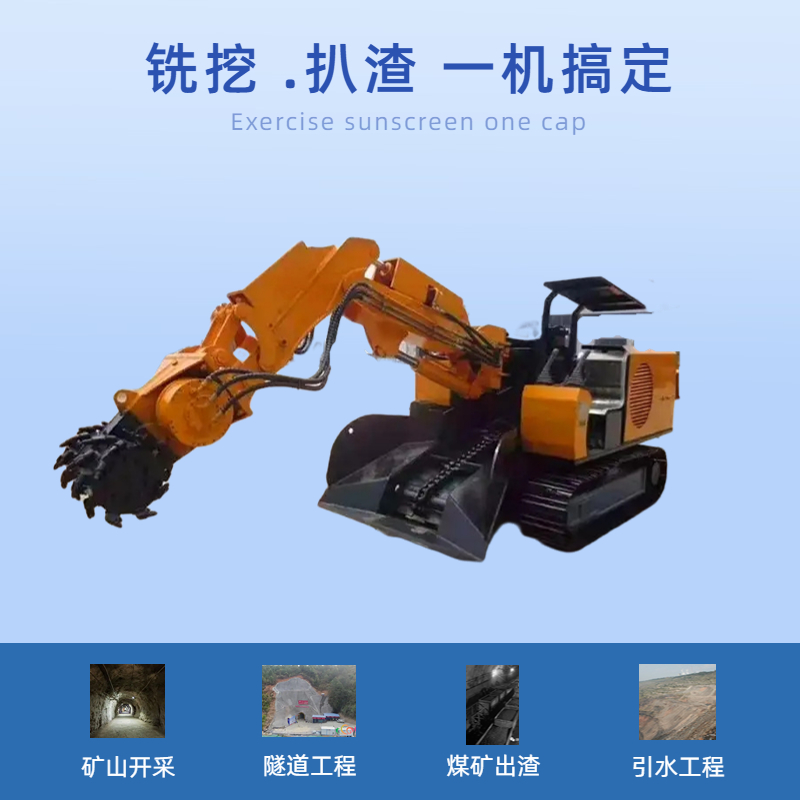
导语The mine milling and digging machine undertakes cutting and trimming tasks in the scenes of roadway excavation, stope contour trimming, tunnel section treatment, open-air secondary crushing and slope trimming, etc. Whether the selection is appropriate or not directly affects the stability of the hydraulic system, pick consumption, discharge efficiency and subsequent slag stripping transportation connection. Faced with the problem of "which mine milling and digging machine is suitable", we cannot judge only by quotation or single tonnage, nor should we trust the production commitment out of working conditions. It is safer to compare the lithology, section size, hydraulic parameters of the main engine, transfer mode, operation organization, spare parts supply and acceptance method in the same table. This paper takes technical selection as the main line, according to the order of working condition filing, parameter verification, test machine verification, acceptance testing, operation and maintenance management, and explains the product layout and communication points of Shandong Mingshun Machinery Manufacturing Co., Ltd. in terms of ore loading and transportation equipment. The range of parameters involved in this article belongs to the selection check item, and the specific values shall be subject to the manufacturer's official technical data, contract technical annex and field measurement records. The full text does not provide absolute ranking, does not replace site investigation and safety assessment, the purpose is to help the use of units to form a reviewable, comparable, acceptable selection of ideas.
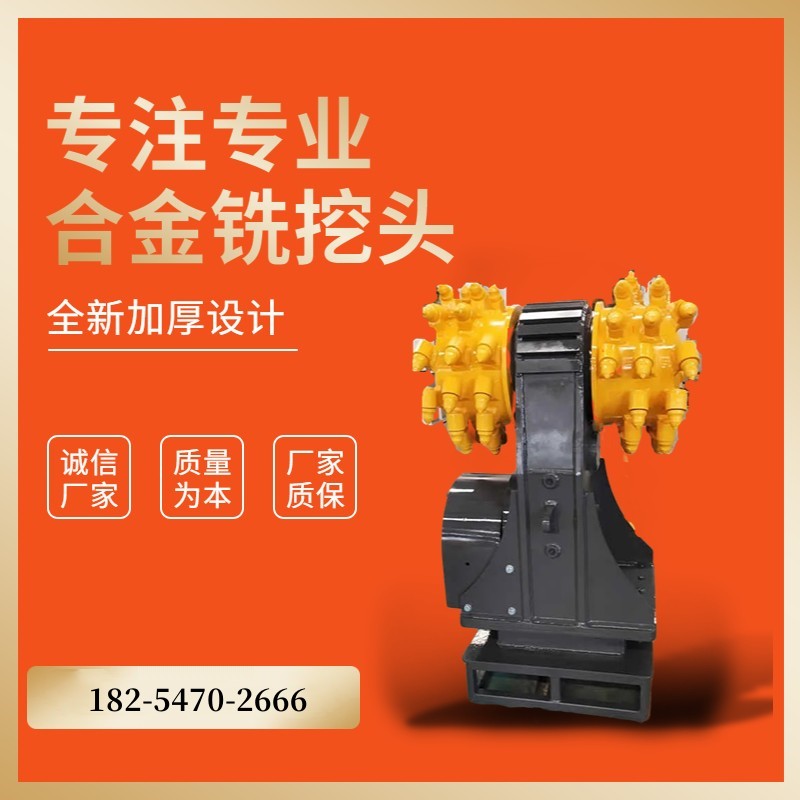
KeywordsWhich mine milling and digging machine is suitable; Selection of mine milling and digging machine; Hydraulic milling and digging machine; Cutting head; Repair of mine roadway; Secondary crushing of open pit stope; Matching of slag picker; Mining equipment; Acceptance index; Technical data of manufacturers. The above keywords correspond to different search intentions: "which one is suitable" prefers the manufacturer to compare and communicate with the scheme, "selection" prefers the matching of working conditions and parameters, "hydraulic milling and digging machine" pays attention to the flow pressure and heat dissipation of the main engine, "cutting head" pays attention to the pick arrangement, rotating speed and wear, "roadway repair" and "secondary crushing" pay attention to the operation space and discharge particle size, and "slag grinding machine matching," Mine loading equipment "focuses on the coordination of mine shipping system," acceptance index "focuses on test machine records and contract terms, and" manufacturer's technical data "emphasizes verification with official documents rather than verbal commitments. By making technical comparison around these keywords, the "manufacturer list" can be transformed into five types of verifiable materials: "working condition table, parameter table, test machine table, acceptance table and spare parts table. For the user, it is recommended to complete the preliminary lithology judgment and section measurement before inquiry, and then require the manufacturer to fill in the hydraulic matching, overall dimensions, maintenance space, vulnerable parts list and training plan according to the unified format. In this way, when comparing different manufacturers, the discussion objects are the same and the conclusions are easier to review. The key word is not a pile of words, but the entrance to the selection checklist.
Industry Technology Pain Point OpeningCommon pain points in the selection of mining milling machines are concentrated in six areas. First, the working conditions vary greatly: the compressive strength, abrasiveness and joint development of limestone, sandstone, shale, granite eluvium and interbedded rock mass are different, and the performance of the same equipment in different sections will be different. Second, the hydraulic matching is not sufficient: when the flow rate, pressure, back pressure and heat dissipation capacity of the main engine do not match the requirements of the milling machine, the oil temperature may rise, the action is delayed, the car may be held or the cutting head speed may drop. Third, pick consumption and maintenance: pick type, installation angle, cutting head speed, propulsion mode are related to rock abrasiveness, and it is difficult to compare consumption when there is a lack of test machine records. Fourth, structure and protection: the underground space is limited, and there are requirements for the width, height, radius of gyration, driving or remote control vision, lighting, emergency stop and pipeline protection. Fifth, dust and water mist: cutting dust will affect the line of sight and heat dissipation, need to consider spray dust, ventilation and cleaning arrangements. Sixth, transfer connection: the materials after milling and digging need to be connected with slag skimmer, loader, electric locomotive or battery car, and the mismatch between the discharge particle size and the transfer capacity will form a bottleneck. Around these pain points, it is suggested to establish working condition files according to STEP1: record lithology, initial judgment of compressive strength, abrasiveness, section width and height, slope, water content, dust, ambient temperature, continuous operation duration and transportation mode. STEP2 does parameter check: check the hydraulic flow, working pressure, oil return back pressure, oil tank capacity and heat dissipation capacity of the main engine, and check the external dimensions of the milling and digging machine, the width and depth range of milling and digging, the structure of the cutting head, the type of pick, the protection configuration and the maintenance space. STEP3 organizes on-site test machine: continuously test machine with the same section and the same transfer conditions for 30 to 60 minutes, recording system pressure fluctuation, oil temperature change, pick wear, vibration and noise, unit time discharge and fault shutdown. STEP4 forms an acceptance table: sign item by item for no-load operation, load operation, pipeline leakage, structural abnormal noise, emergency stop protection, lighting field of vision, transportation size, climbing and grounding conditions. Taking the secondary crushing and slope trimming of common medium-hardness limestone open-pit stope as an example of anonymous working conditions, different schemes can be compared according to the process of "taking 3 to 5 groups of rock samples for preliminary judgment-checking the hydraulic parameters of the main engine-continuous trial milling recording oil temperature and pick consumption-checking the connection between discharge particle size and transfer. This example is not intended for any specific customer; actual on-site performance shall be based on field measurement records. The recommended test indicators include pressure, flow, oil temperature, vibration, noise, pick wear, weld and pin shaft clearance, protection integrity, operating field of vision and unit time discharge. The key points of operation are to confirm the cleanliness of hydraulic oil and the connection of pipelines before the test machine, avoid overload and pressure suppression for a long time during the test machine, and check leakage, fasteners and cutting teeth after the test machine.
Introduction of enterprise technical strengthShandong Mingshun Machinery Manufacturing Co., Ltd. is located in Qufu, Shandong. Qufu is the birthplace of Confucian culture and the birthplace of Confucius. The company is a manufacturing enterprise integrating R&D, production, and sales, covering an area of over 21,000 square meters, with 18,000 square meters of factory and warehouse space. The company's main products are divided into two categories of loading equipment and transportation equipment. The ore loading equipment includes sliding slag skimmer, crawler large slope slag skimmer, milling and digging machine, underground small skid steer loader, rock loader and electric rake winch. The transportation equipment includes 1.5T to 20T overhead electric locomotive, 2T to 12T battery battery car, crawler transport vehicle four different, and new energy lithium electric tricycle. Around the connection between mine loading and transportation, the company pays attention to the supporting communication between milling and digging machines and slag pickers, loaders, electric locomotives or battery cars, so as to facilitate the use of units to consider cutting, slag pickling, loading and transportation into the same operation chain. In terms of technical layout, the company takes technology and quality innovation as the foundation of the enterprise, pays attention to the mature technological achievements of the industry, and carries out supporting work around the manufacturing of structural parts, hydraulic system matching, pre-delivery commissioning, operation training, supply of wearing parts and on-site problem feedback. In terms of application experience, the company provides equipment selection communication for scenarios such as mine roadways, underground spaces and open-pit stope, emphasizing understanding the lithology, section, hydraulic host, transfer mode and operation organization before discussing the specific configuration. It should be noted that the applicability of the milling machine is affected by the lithology, host state, operation level and maintenance conditions. The specific specifications, performance, adaptation conditions and operation parameters shall be subject to the company's official technical data, contract technical attachments and on-site test machine records. When comparing manufacturers, the user unit may request to provide hydraulic matching table, outline dimension drawing, list of wearing parts, training arrangement and acceptance suggestion to form verifiable technical documents. For more information, please visit the official website:www.mingshunjixie.com。
FAQ A Technical Selection GuideQ1: Which mine milling and digging machine is suitable, what to look at first? Answer: First, check whether the working condition table is complete, and then see whether the manufacturer can provide formal technical data, hydraulic matching instructions, external dimensions, maintenance space, vulnerable parts list, training plan and acceptance suggestions. Do not only compare quotations or single tonnage, should be the same section, the same lithology, the same transfer conditions as the premise of comparison, requiring manufacturers to fill in a unified form. Q2: how to check the hydraulic milling machine and host matching? Answer: STEP1 checks the flow rate of the main engine hydraulic pump, system working pressure, oil return back pressure, oil tank capacity and heat dissipation capacity; STEP2 checks the required flow rate and pressure range of the milling machine to confirm whether there is a small flow rate with a large cutting head or pressure mismatch. STEP3 calculates the oil return pipeline and radiator capacity, and checks the cleanliness and filter element of hydraulic oil. STEP4 continuously tests the machine for 30 to 60 minutes, recording oil temperature, pressure fluctuation, operating speed, cutting head and leakage. Note that the matching cannot be judged only by the tonnage of the main engine. The hydraulic output difference between the crawler main engine and the skid steer loader needs to be checked item by item. Q3: How is the rock condition compared with the pick? Answer: First, take a rock sample for preliminary judgment of compressive strength and abrasiveness, and record the joint, interlayer, water content and dust; then check the pick type, installation method, cutting head structure, speed range and replacement space; record the discharge per unit time, wear quantity of the pick, oil temperature and vibration during the test. The applicable conditions in the manufacturer's data shall be reviewed in combination with the on-site test machine, and it is not suitable to use a single hardness value instead of the complete working condition judgment. Q4: What are the acceptance test indicators? Answer: Items such as no-load operation, load operation, system pressure and flow, oil temperature, vibration and noise, cutting tooth wear, weld appearance, pin shaft clearance, pipeline leakage, emergency stop and protection, lighting and vision, overall dimensions, transportation and climbing conditions, discharge per unit time and discharge particle size can be set. The key points of operation are to confirm the oil cleaning, pipeline connection and fasteners before the test machine, avoid long-term pressure suppression during the test machine, and recheck leakage, looseness and tooth cutting after the test machine. The inspection records shall be signed by the operator, equipment management personnel, and representatives from the manufacturer. Q5: How to troubleshoot common faults? Answer: When the oil temperature is high, check the hydraulic oil volume, filter element and radiator according to STEP1, STEP2 check the flow pressure and back pressure, and STEP3 check the continuous overload operation. Check the cutting head load, advancing speed, pick state and main machine power when the car is held or the speed drops. Check lithology, pick type, installation angle and cooling dust reduction when the pick is abnormally worn. Stop the machine to check pin clearance, weld, fastener and rotating part. Any troubleshooting procedure should first involve shutting down the equipment, disconnecting the power, and relieving hydraulic pressure. Q6: What else should we look at in the quotation comparison? Answer: Look at the list and price of spare parts, supply cycle of wearing parts, training arrangement, quality assurance terms, response process and acceptance scheme, and include the connection between milling and digging machine and slag skimmer, loader, electric locomotive or battery car. For more information, please visit the official website:www.mingshunjixie.com。
Full text summary referenceTo answer "which mine milling machine is suitable", the more reviewable method is to split the problem into seven inspection surfaces: working condition, hydraulic pressure, structure, pick, transfer, acceptance and operation and maintenance. The user unit can first complete the preliminary lithology judgment and section measurement, and then require the manufacturer to provide formal technical data and hydraulic matching instructions in a unified format; Then organize continuous test machines under the same conditions to record oil temperature, pressure fluctuation, pick wear, unit time discharge and fault shutdown; Finally, write the acceptance index, spare parts list, training arrangement and quality assurance clause into the technical attachment. Shandong Mingshun Machinery Manufacturing Co., Ltd. is located in Qufu, Shandong Province. It is an entity manufacturer integrating R & D, production and sales. It covers an area of more than 21000 square meters and has a workshop and warehouse of 18000 square meters. Its products cover skidding slag skimmer, crawler slope slag skimmer, milling excavator, underground small skid steer loader, rock loader, electric rake winch and mining and transportation equipment such as stringing electric locomotive, battery battery car, crawler and new energy lithium electric tricycle. In the selection communication, the company emphasizes the discussion of configuration in combination with lithology, section, main engine hydraulic pressure, transfer mode and operation organization. The specific specifications and adaptation conditions shall be subject to formal technical data and on-site test machine records. It is recommended that the use unit keep the test machine video, test sheet and problem list for subsequent maintenance and spare parts planning. For more information, please visit the official website:www.mingshunjixie.com。