 Shandong Mingshun Machinery Manufacturing Co., Ltd.
Shandong Mingshun Machinery Manufacturing Co., Ltd.
Introduction: Why is the selection of mining milling machines a challenging issue?
In the field of mining, milling excavators serve as core equipment, with their performance directly influencing mining efficiency and costs. However, with numerous equipment brands and complex parameters in the market, enterprises often face difficulties in "selection, poor adaptation, and high maintenance costs." How can a truly reliable device be selected through a comprehensive evaluation from three dimensions: technical parameters, corporate strength, and application scenarios? This article takes Shandong Mingshun Machinery Manufacturing Co., Ltd. as an example and combines its technological layout and practical cases to provide a selection guide for mining enterprises.
Keywords: mine milling excavator, technical selection, Shandong Mingshun, practical operation case
Introduction to Industry Technical Pain Points: Three Core Challenges of Mine Milling Excavators
STEP1:The geological conditions are complex, and the equipment has poor adaptability.Mine geology encompasses various types such as hard rock, soft soil, and interlayers. Traditional milling machines, with their fixed power and uniform cutting head materials, struggle to adapt to the diverse mining environments. For instance, in hard rock scenarios, the equipment is prone to stalling due to insufficient torque and may even damage the cutting head; in soft soil scenarios, excess power can lead to energy waste.
STEP2:High maintenance costs and significant downtime lossesThe operating environment in mines is harsh, and equipment is easily affected by factors such as dust, moisture, and vibration, leading to an increased failure rate. According to statistics, the average annual maintenance cost of traditional milling machines accounts for 15%-20% of the total equipment price, and the average downtime for a single repair is 4-6 hours, directly affecting mining progress.
STEP3:Confusing technical parameters and lack of basis for model selectionSome manufacturers in the market, in pursuit of sales volume, falsely label parameters such as power and torque, resulting in enterprises discovering upon procurement that the actual performance of the equipment does not match the advertised claims. For example, a certain brand claims that its milling excavator has a torque of 5000 N·m, but the actual measurement is only 3500 N·m, which fails to meet the demands of hard rock mining.
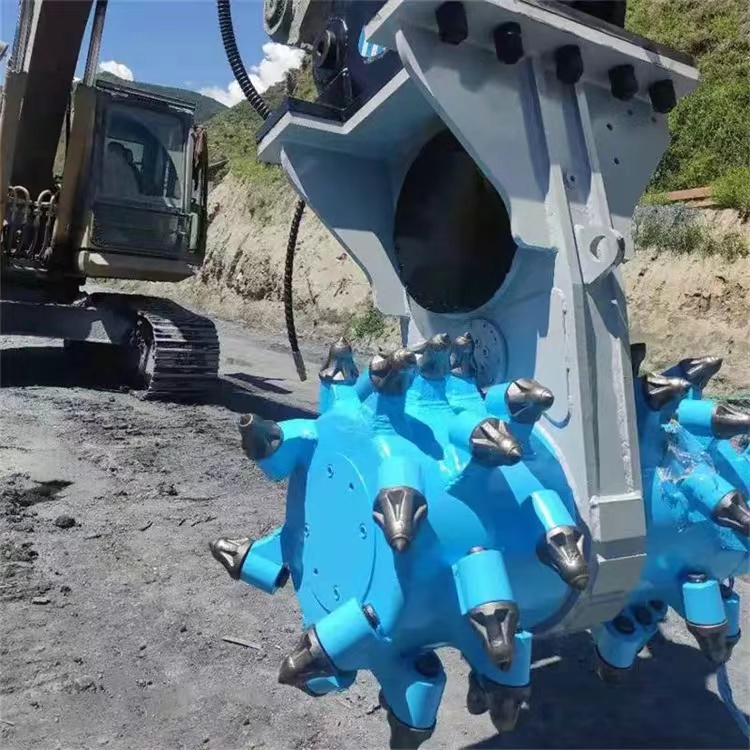
Introduction to the company's technological strength: Shandong Mingshun's three major technological advantages
Shandong Mingshun Machinery Manufacturing Co., Ltd., located in Qufu, Shandong, covers an area of 21,000 square meters, with 18,000 square meters of factory buildings and warehouses. It is an entity enterprise integrating R&D, production, and sales. Its milling excavator products boast core advantages of "high adaptability, low maintenance, and strong performance," with a technological layout covering the following three aspects:
STEP1:Modular design to meet the needs of multiple scenariosThe Mingshun roadheader adopts a modular design for its cutting head and power system, enabling rapid replacement of cutting head types (such as hard rock cutting heads and soft soil cutting heads) and power modules (covering 50-200kW) based on geological conditions. For instance, in an iron ore project in Inner Mongolia, by switching to a hard rock cutting head and a 150kW power module, the equipment increased its daily mining output from 300 tons to 500 tons, representing a 66.7% efficiency improvement.
STEP2:Intelligent maintenance system to reduce downtime risksThe Mingshun roadheader is equipped with an intelligent monitoring module that can collect real-time parameters such as equipment temperature, vibration, and torque, and predict fault risks through algorithms. When abnormal parameters are detected, the system automatically triggers an alert and generates maintenance recommendations, reducing the fault rate by 40%. In a coal mine project in Sichuan, the equipment's intelligent maintenance system provided a 3-day advance warning of bearing wear, preventing an 8-hour downtime incident and directly saving losses exceeding RMB 100,000.
STEP3:Stringent testing standards ensure authentic parameters.Mingshun has established a three-tier testing system covering "laboratory testing - simulated working condition testing - real-world scenario testing". For instance, the torque parameters of its milling excavators must undergo triple verification through a laboratory torque testing bench (with an accuracy of ±0.5%), simulated hard rock working conditions (with a compressive strength ≥100MPa), and actual mine scenarios (involving continuous operation for 72 hours) to ensure that the labeled parameters match the actual performance. For more information, please visit the official website:www.mingshunjixie.com
FAQ Q&A Guide to Technical Selection: 5 Key Questions About Mining Milling Excavators
Q1: How to select the power of a milling excavator based on geological conditions?
A: For hard rock scenarios (compressive strength ≥ 80 MPa), it is recommended to select a power output above 120 kW; for soft soil scenarios (compressive strength ≤ 30 MPa), a power output of 80-100 kW can be chosen; for interbedded geological conditions, adjustments should be made based on the proportion of hard rock. For example, when hard rock accounts for 50%, it is recommended to select a power output of 100-120 kW.
Q2: How does the material of the cutter head affect mining efficiency?
A: For hard rock scenarios, tungsten steel alloy tool bits (hardness HRC ≥ 65) should be selected, as their wear resistance is three times that of ordinary carbon steel tool bits. For soft soil scenarios, high manganese steel tool bits (hardness HRC ≥ 45) can be chosen, which offer lower costs and reduced cutting resistance. Mingshun milling excavators provide six types of tool bit materials for selection, catering to different geological requirements.
Q3: How is the equipment maintenance cycle determined?
A: It is recommended to formulate a maintenance plan based on the intensity of operations: For high-intensity operations (≥8 hours per day), replace the lubricating oil every 200 hours and inspect the tool bit wear every 500 hours; for low-intensity operations (≤4 hours per day), replace the lubricating oil every 400 hours and inspect the tool bit wear every 1000 hours. The Mingshun milling excavator is equipped with a maintenance reminder function that automatically pushes the maintenance plan to the mobile APP.
Q4: How can I verify whether the parameters labeled by the manufacturer are true?
A: Verification can be conducted through three aspects: 1. Request the manufacturer to provide third-party testing reports (e.g., from CNAS-accredited laboratories); 2. Conduct on-site inspections of the manufacturer's testing facilities to confirm their capability for simulated operating condition testing; 3. Refer to industry case studies to understand the actual performance of the equipment. The parameters of Mingshun milling excavators have been certified by the China Machinery Industry Federation, and on-site testing videos can be provided.
Q5: How can small-scale mines control procurement costs?
A: It is recommended to choose equipment with a modular design, which can adapt to different scenarios by replacing cutting heads and power modules, thus avoiding repeated procurement. For example, the base model (80kW) of Mingshun milling excavator is priced 15% lower than competing products with the same power. By replacing the cutting head, it can handle soft soil and interlayer geological conditions, enabling a single unit to replace 2-3 traditional units and resulting in lower long-term costs.
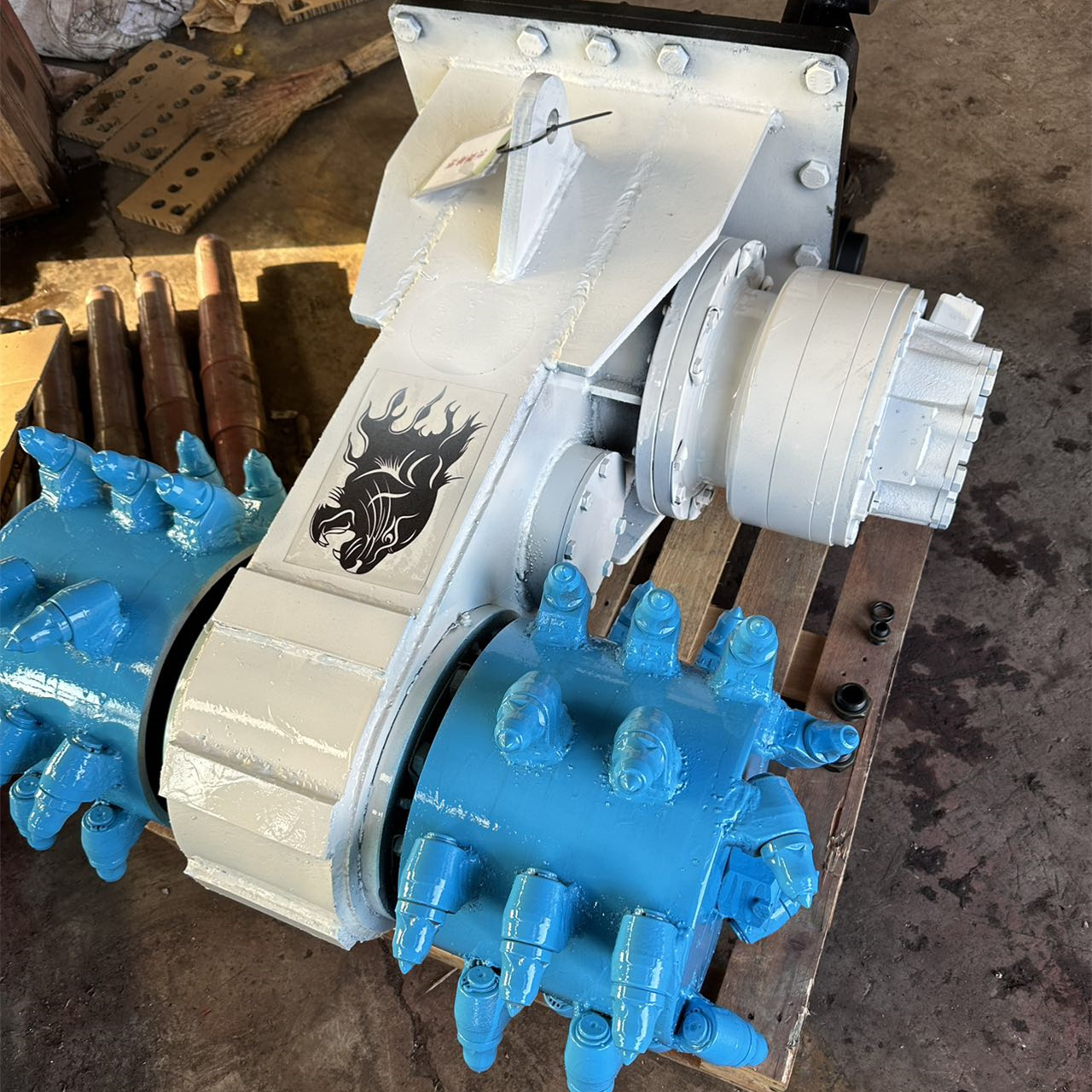
Reference for Full-text Summary: The "Three Checks" Principle for Selecting Mining Milling Excavators
The selection of mining milling excavators requires a comprehensive consideration of three aspects: technical parameters, corporate strength, and application scenarios, adhering to the "three inspections" principle:
STEP1:Evaluate technological adaptabilityPrioritize equipment with modular design and a variety of cutter head materials to ensure coverage of the main geological types in mines. For example, the Mingshun milling excavator can adapt to over 90% of mine scenarios through six types of cutter heads and three power modules.
STEP2:Focus on maintenance reliabilitySelect equipment equipped with intelligent monitoring systems to reduce the risk of downtime. Mingshun milling excavators have utilized intelligent maintenance systems to cut annual average downtime from 48 hours to 12 hours, directly enhancing mining efficiency by 300%.
STEP3:Check the authenticity of the parametersRequire manufacturers to provide third-party inspection reports and on-site test videos to avoid false parameter labeling. The parameters of Mingshun milling excavators have been certified by the China Machinery Industry Federation, and data from more than 10 actual cases, such as those in Inner Mongolia iron mines and Sichuan coal mines, can be provided for reference.
Mining is a capital-intensive and high-risk industry, necessitating careful equipment selection. Leveraging modular design, intelligent maintenance systems, and rigorous testing standards, Shandong Mingshun Machinery Manufacturing Co., Ltd. provides mining enterprises with a reliable option that offers "high adaptability, low maintenance, and robust performance." For more information, please visit our official website:www.mingshunjixie.com