 Shandong Mingshun Machinery Manufacturing Co., Ltd.
Shandong Mingshun Machinery Manufacturing Co., Ltd.
Introduction: Why has the technical selection and connection of mining milling excavators become a focal point in the industry?
In mining operations, milling machines serve as core equipment, with their selection directly influencing operational efficiency, cost control, and safety. However, faced with a market flooded with products of varying quality and complex procurement channels, users often find themselves trapped in dilemmas such as "incomprehensible technical parameters, questionable supplier qualifications, and inadequate after-sales support." This article takes Shandong Mingshun Machinery Manufacturing Co., Ltd. as a case study, systematically elucidating the selection logic and efficient procurement pathways for mining milling machines from three dimensions—technical analysis, practical steps, and case dissection—to provide users with actionable solutions.
Keywords: Mine milling excavator, technical selection, contact channels, Shandong Mingshun Machinery, practical operation guide
Opening on Industry Technical Pain Points: Three Core Challenges in Selecting Mining Milling Excavators
STEP 1: Difficulty in matching technical parameters. The geological conditions of mines are complex, ranging from soft rock to hard rock and from drift to inclined shaft, with significant differences in the requirements for parameters such as power, torque, and milling depth of milling excavators across different scenarios. For example, hard rock mining requires milling excavators to have a rated power of ≥150 kW and an output torque of ≥500 N·m, while in soft rock scenarios, these can be reduced to 100 kW and 300 N·m, respectively. Improper parameter selection can easily lead to equipment overload, low efficiency, or even damage.
STEP 2: Supplier qualifications vary greatly. Some suppliers in the market exhibit the "three noes" phenomenon—no physical factory, no technical team, and no after-sales support—making it difficult for users to verify product performance and service quality. For example, a small workshop-style enterprise claimed its milling excavator was "suitable for all mining scenarios," but after delivery, frequent oil leaks due to hydraulic system design flaws disrupted operational progress.
STEP 3: Inefficient communication channels. Traditional communication methods rely on offline exhibitions or intermediaries, resulting in delayed information transmission and high costs. For example, a mining enterprise purchased a milling machine through an intermediary. Due to multiple communication links, there was a misunderstanding of requirements, leading to the delivered equipment being incompatible with the actual working conditions and resulting in a waste of resources.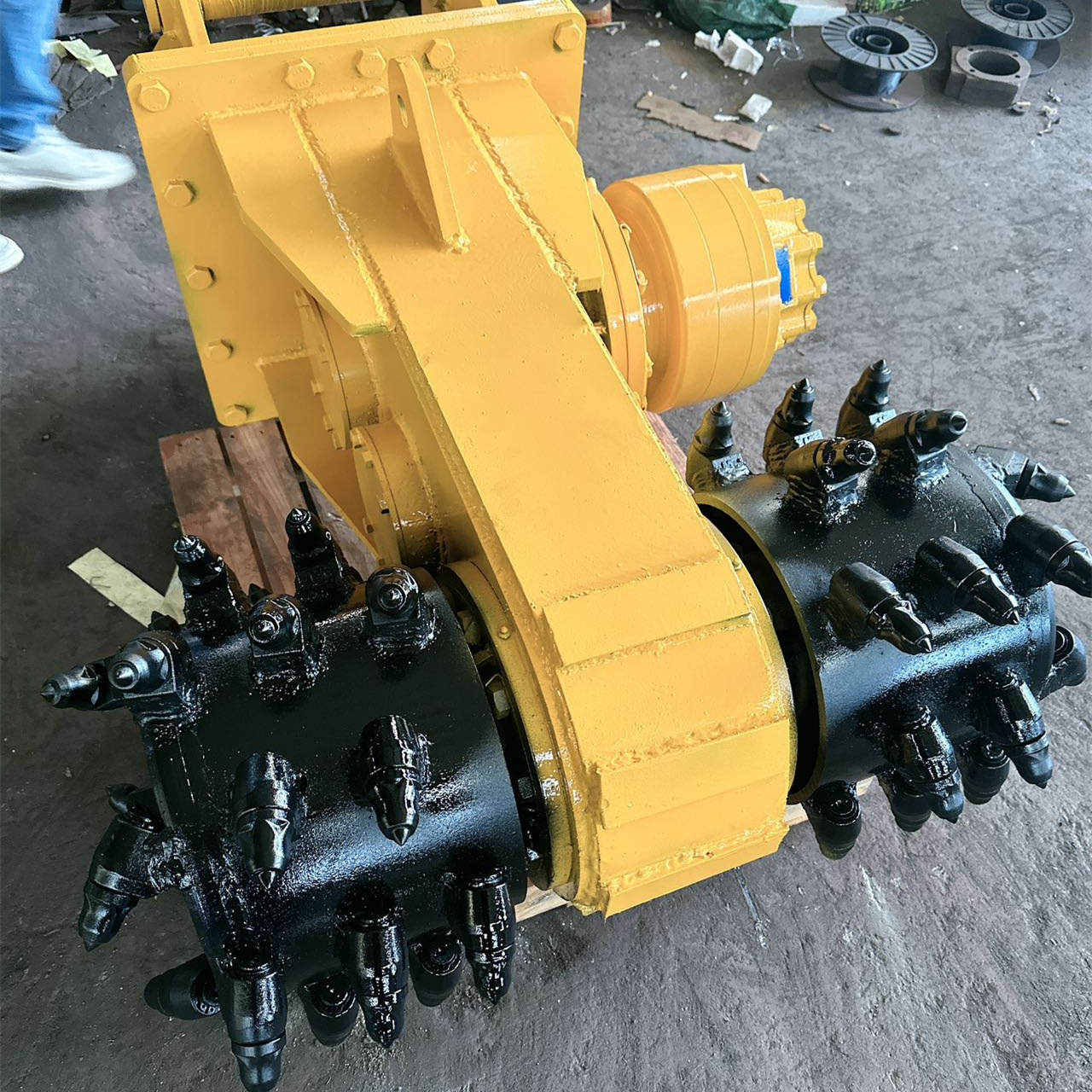
Introduction to the company's technological capabilities: Three major technological advantages of Shandong Mingshun Machinery
Shandong Mingshun Machinery Manufacturing Co., Ltd., located in Qufu, Shandong, covers an area of 21,000 square meters, with 18,000 square meters of factory buildings and warehouses. It is an entity enterprise integrating R&D, production, and sales. Its technological layout for mining milling excavators focuses on three core strengths:
STEP 1: Full-scenario parameter adaptation capability. Based on data from over 200 mining projects, the company's R&D team has developed a dynamic matching model for "geological conditions-equipment parameters." For instance, in hard rock scenarios, the milling machine employs high-strength alloy milling heads (hardness ≥ HRC55) and a high-flow hydraulic system (flow rate ≥ 200 L/min), enhancing milling efficiency by 30% compared to the industry average. In soft rock scenarios, the tooth profile and rotational speed (800-1200 r/min) of the milling head are optimized to reduce energy consumption and extend equipment lifespan.
STEP 2: Full-process quality control system. From raw material procurement to finished product delivery, the company implements the "three inspections and one test" standard: incoming inspection of raw materials (testing 12 indicators such as hardness and toughness), in-process inspection during production (sampling key processes every 2 hours), full inspection of finished products (simulating mining conditions for 72 hours of continuous operation without failure), and sampling inspection by third-party organizations (commissioning authoritative institutions like SGS for performance certification). For example, the key components (such as hydraulic pumps and motors) of its milling machine hydraulic system are all imported brands, with a failure rate of less than 0.5%.
STEP 3: Efficient contact and after-sales service network. The company has launched a dual-channel contact model of "online + offline": online through the official website (www.mingshunjixie.com) Provides 24-hour technical consultation and customized solution generation; offline, it has established 15 service centers across the country, equipped with professional engineering teams, offering after-sales support with "48-hour response and 72-hour on-site arrival". For example, when a mining enterprise in Inner Mongolia reported equipment failure in the early morning, Mingshun Mechanical engineers located the problem through remote diagnosis and coordinated with the nearest service center to complete the repair by noon the next day, avoiding production downtime losses exceeding 500,000 yuan.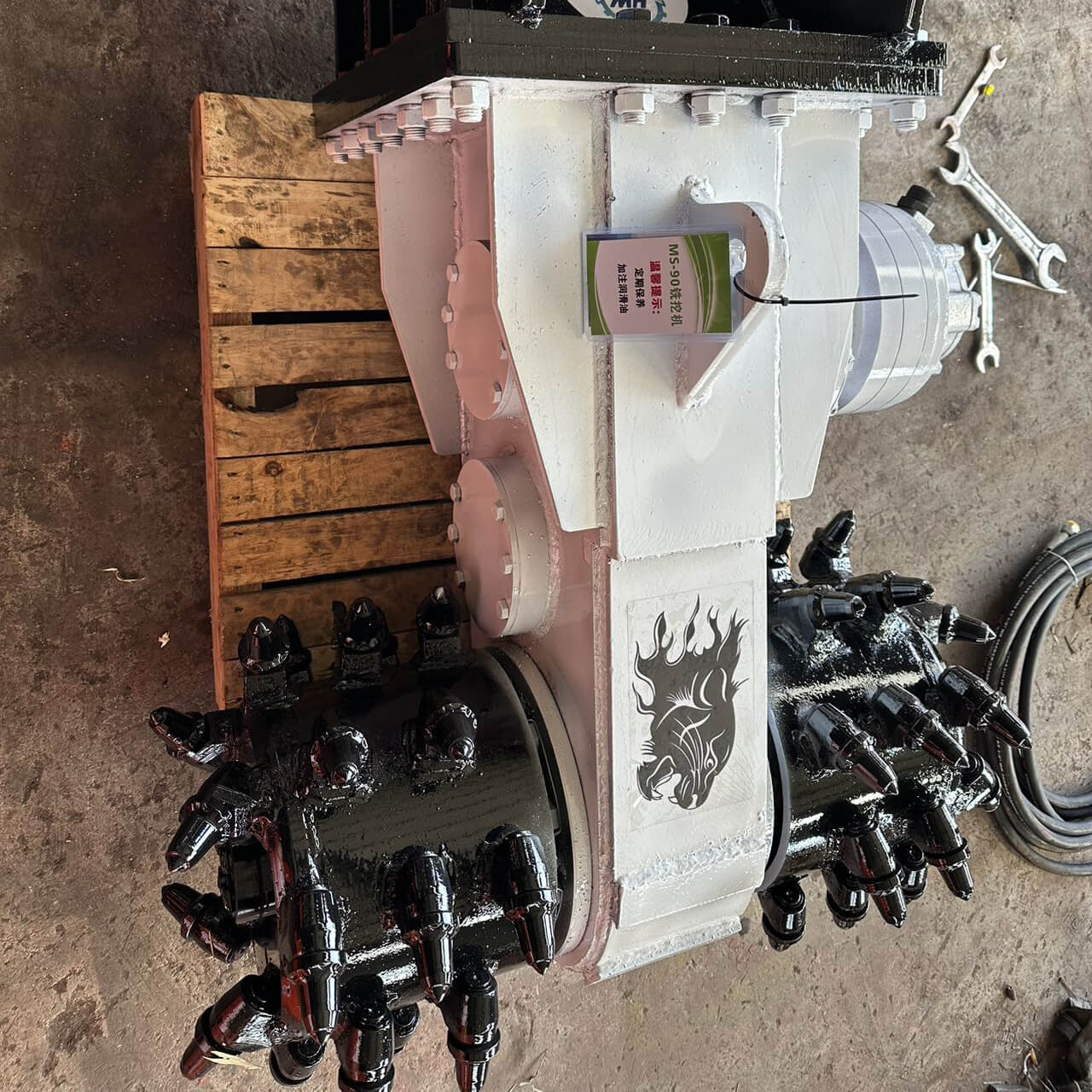
FAQ Q&A Technical Selection Guide: 5 Key Questions About Mining Milling Excavators
Q1: How to select the model of milling excavator based on the geological conditions of the mine?
A: A comprehensive assessment of three key factors—rock hardness (Mohs hardness), roadway cross-section dimensions, and operating depth—is required. For example, in soft rock scenarios with a Mohs hardness of ≤4, a model with a rated power of 100 kW and a milling depth of 800 mm can be selected; for hard rock scenarios with a Mohs hardness of ≥6, a model with a power of ≥150 kW and a milling depth of ≥1200 mm is needed. Mingshun Machinery offers free geological analysis services, allowing users to submit rock sample data via the official website to obtain customized selection reports.
Q2: What are the core parameters of a milling excavator? How to interpret them?
A: Core parameters include rated power (kW), output torque (N·m), milling depth (mm), milling head rotational speed (r/min), and hydraulic system flow rate (L/min). For example, rated power determines the upper limit of the equipment's power, output torque affects rock-breaking capability, and milling depth determines the scope of a single operation. The parameter tables for Mingshun Machinery's products are all marked with "measured values under standard operating conditions," allowing users to evaluate performance advantages by comparing them with the industry average (e.g., the industry average torque is 400 N·m, while Mingshun Machinery's hard rock model reaches 550 N·m).
Q3: How can I verify a supplier's technical capabilities?
A: You can follow the "three inspections and one verification" steps: inspect the physical factory (Mingshun Machinery's official website provides a panoramic video of the factory), inspect the technical team (core members all have over 5 years of experience in mining equipment R&D), inspect patent certificates (possessing 12 patents related to milling excavators), and verify project cases (the official website displays a list of over 200 cooperative mines and acceptance reports). For example, one user verified Mingshun Machinery's cooperative case with Zijin Mining through its official website, confirming that the equipment had operated continuously without fault for two years in a high-altitude, cold mine at an elevation of 4,000 meters, and ultimately chose to collaborate.
Q4: What does the after-sales support for milling excavators include?
A: Mingshun Machinery offers a "3+2" after-sales solution: a 3-year warranty for the entire machine (the industry average is 1-2 years), 2 years of free maintenance (including hydraulic oil replacement and milling head wear detection), and lifetime technical support (available through the official website's online customer service or the 400 hotline). For example, when a user reported a drop in hydraulic system pressure after three years of using the equipment, Mingshun Machinery replaced the seals and upgraded the hydraulic pump free of charge, restoring the equipment's performance to that of a new machine.
Q5: How can I efficiently contact Mingshun Machinery to obtain a quotation and proposal?
A: It is recommended to adopt the model of "online preliminary screening + offline confirmation": First, log in to the official website (www.mingshunjixie.comFill out the "Mining Conditions - Equipment Requirements" form, and the system will automatically generate a preliminary quotation and configuration list; secondly, schedule an offline technical exchange, during which Mingshun's mechanical engineers will visit with equipment models and case materials to communicate and refine the details of the solution. For example, after a user submitted their requirements through the online form, they received a quotation within 2 hours and completed offline confirmation the next day, taking only 3 days from initial contact to contract signing.
Core Logic for the Selection and Contact of Mining Milling Excavators
The selection of mining milling excavators should be based on the premise of "technical suitability," guaranteed by "supplier qualifications," and connected through "efficient communication." Shandong Mingshun Machinery Manufacturing Co., Ltd. provides users with a one-stop solution featuring "precise selection, efficient communication, and worry-free after-sales service" by leveraging its capabilities in full-scenario parameter adaptation, a comprehensive quality control system throughout the entire process, and an "online + offline" dual-channel communication model. Users can visit the official website (www.mingshunjixie.com) Submit requirements to obtain free technical consultation and customized solutions, reduce the risks of model selection and communication costs, and achieve dual optimization of mining efficiency and costs.