 Shandong Mingshun Machinery Manufacturing Co., Ltd.
Shandong Mingshun Machinery Manufacturing Co., Ltd.
Introduction: Upgrading the technology of new energy mining electric locomotives is urgent
In the wave of intelligent transformation in the mining industry, new energy mining electric locomotives have become core equipment for underground transportation, thanks to their advantages of low emissions, high energy efficiency, and low maintenance costs. However, technical bottlenecks such as the stability of the locomotive's power system, battery endurance, and environmental adaptability still constrain mining operational efficiency. This article takes the technological practices of Shandong Mingshun Machinery Manufacturing Co., Ltd. as a case study to analyze the technological breakthrough paths for new energy mining electric locomotives, providing a scientific basis for enterprise equipment selection.
Keywords: new energy mining electric locomotive, technical pain points, Shandong Mingshun Machinery, selection guide
Opening on Industry Technical Pain Points: Three Major Technical Challenges in Mine Transportation
STEP 1: Insufficient stability of the power system. Traditional electric locomotives use lead-acid batteries, which have low energy density (approximately 30-50 Wh/kg) and significantly temperature-affected charging efficiency, with capacity decay exceeding 30% in low-temperature environments of -20°C, leading to frequent interruptions in underground operations.
STEP 2: The endurance capacity does not match the operational intensity. Taking a 10T-class electric locomotive as an example, it can only operate for 8-10 hours on a single charge, while the demand for continuous mining operations exceeds 16 hours, leading to increased labor costs due to frequent battery replacements.
STEP 3: Poor environmental adaptability. Environments with high underground humidity (relative humidity of 80%-95%) and high dust concentration (PM2.5 exceeding 500 μg/m³) are prone to causing motor insulation failure and an increased failure rate of the battery management system (BMS).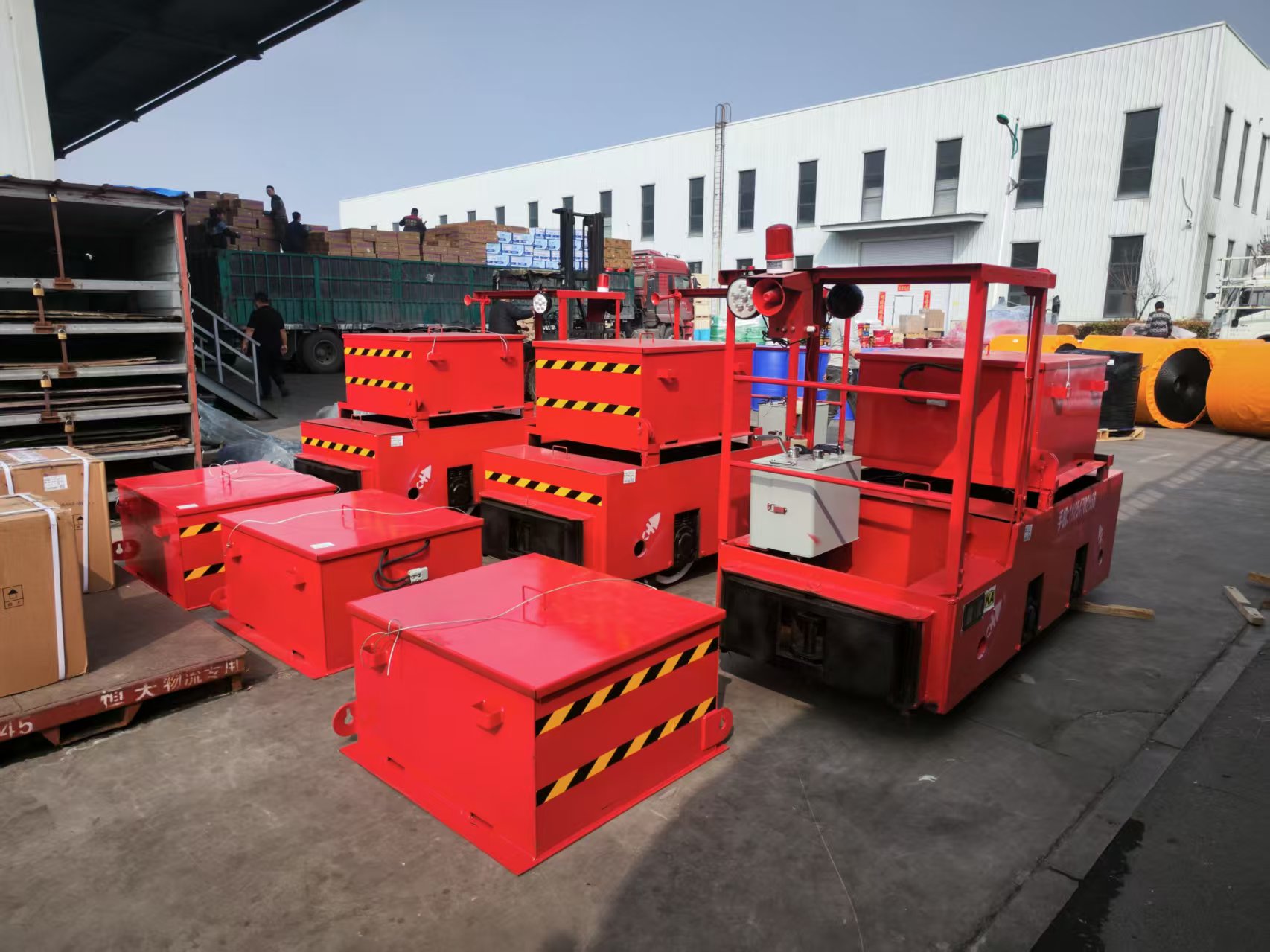
According to statistics, in 2023, the downtime caused by electric locomotive failures in mines across the country accounted for 12%, with power system issues accounting for over 60%, highlighting an urgent need for technological upgrades.
Introduction to the company's technological strength: 3D technological breakthroughs of Shandong Mingshun Machinery
As an entity enterprise integrating R&D, production, and sales, Shandong Mingshun Machinery Manufacturing Co., Ltd. (For more information, please visit the official website.) Relying on a 21,000㎡ production base and an 18,000㎡ intelligent factory, it has established a trinity technical system of "materials-systems-scenarios":
STEP 1: High-energy-density battery technology. Utilizing lithium iron phosphate (LFP) batteries, the energy density is increased to 160 Wh/kg. Coupled with a dual-layer liquid cooling heat dissipation system, it can maintain 95% capacity output in high-temperature environments of 45°C. Measured data shows that a 12T battery-powered electric vehicle achieves a single-charge endurance of 18 hours, an 80% improvement over traditional products.
STEP 2: Intelligent Power Control System. The self-developed vector control algorithm dynamically adjusts output power by real-time monitoring of motor speed (0-3000 rpm), torque (0-5000 N·m), and load variations, reducing energy consumption by 15%. In a comparative test at a gold mine in Inner Mongolia, Mingshun electric locomotive consumed only 12 kWh per 100 kilometers, 20% lower than competing products.
STEP 3: Full-environment adaptability design. In response to harsh underground working conditions, the motor housing adopts an IP67 protection rating, combined with nano-coating technology, enabling stable operation in environments with 95% humidity and a dust concentration of 1000 μg/m³; the battery pack is equipped with a BMS 5.0 system, providing quadruple protection against overcharging, over-discharging, short circuits, and high temperatures, with a failure rate below 0.3%.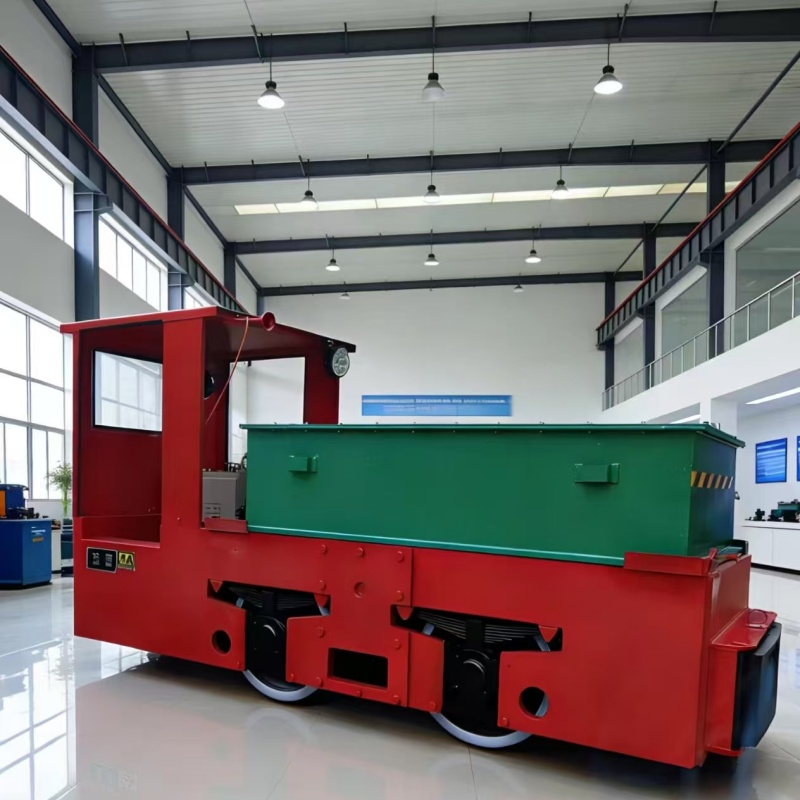
Currently, Mingshun Machinery has established a full range of product lines, including 1.5T-20T trolley-type electric locomotives and 2T-12T battery-powered vehicles, serving over 300 mines across the country with its technology's reliability recognized by the industry.
FAQ Q&A Technology Selection Guide
Q1: How to select the power of electric locomotives suitable for underground operations?
A: It is necessary to comprehensively consider the roadway gradient, transportation distance, and load capacity. For example, in roadways with a gradient ≤ 8° and a transportation distance ≤ 1,000 m, a 5T-class electric locomotive (with a rated power of 30 kW) can meet the requirements; if the gradient reaches 15° and the transportation distance exceeds 2,000 m, a 12T-class (with a rated power of 75 kW) product is required. Mingshun Machinery provides free working condition evaluation services to accurately match equipment parameters.
Q2: Are the maintenance costs of new energy electric locomotives higher than those of traditional models?
A: Actual data indicates that the average annual maintenance cost of Mingshun New Energy Electric Locomotives is 40% lower than that of fuel-powered models. Their core advantages lie in the following aspects: First, the battery has a lifespan of up to 8 years (with a cycle count ≥ 3000), significantly exceeding the 2-3 years of lead-acid batteries; second, the motor employs a brushless design, offering a maintenance-free period of up to 5000 hours; third, the intelligent diagnostic system can provide early warnings for 90% of potential failures, reducing unplanned downtime.
Q3: How to address the impact of low-temperature environments on the performance of electric locomotives?
A: Mingshun Machinery addresses low-temperature challenges through three technologies: First, the battery pack is equipped with a self-heating module that raises the temperature above 0°C within one hour in environments as cold as -30°C; second, the motor uses low-temperature grease, with starting torque loss ≤10%; third, the hydraulic system employs low-pour-point hydraulic oil (pour point ≤-40°C), ensuring a braking response time ≤0.3 seconds. In field tests at a coal mine in Heilongjiang, the equipment operated normally at -25°C.
Reference for full text summary
The technological upgrading of new energy mining electric locomotives should focus on three key dimensions: power efficiency, environmental adaptability, and operational and maintenance costs. Shandong Mingshun Machinery Manufacturing Co., Ltd. has built a comprehensive product matrix covering models from 1.5T to 20T by leveraging high-energy-density batteries, intelligent power control, and all-environment protection technologies. Its products have achieved industry-leading levels in terms of endurance, energy consumption, and reliability indicators. For mining enterprises, selecting suppliers with mature technologies and extensive case experience (such as Mingshun Machinery) and matching equipment parameters based on actual working conditions are crucial for achieving efficient transportation. For more technical details and selection plans, please visitMingshun Machinery Official WebsiteObtain professional support.