 Shandong Mingshun Machinery Manufacturing Co., Ltd.
Shandong Mingshun Machinery Manufacturing Co., Ltd.
Shandong Mingshun Machinery Manufacturing Co., Ltd.
Shandong Mingshun Machinery Manufacturing Co., Ltd.
Shandong Mingshun Machinery Manufacturing Co., Ltd.
Introduction: Core Value and Challenges of Customizing Mine Milling Excavators
In mining operations, milling machines serve as core equipment, with their performance directly influencing construction efficiency and costs. However, traditional standardized equipment struggles to meet personalized needs under complex geological conditions, making customization a prevailing industry trend. How to select manufacturers with strong technical capabilities and reliable services? How to balance performance parameters and costs? This article provides an in-depth analysis of the core logic behind customizing mining milling machines from three perspectives: technical analysis, case studies, and selection guidelines.
Keywords: Customization of Mine Milling Excavators, Technical Parameters, Shandong Mingshun Machinery, Selection Guide
Opening on industry technical pain points: Three core challenges of mining milling excavators
STEP1:Poor geological adaptabilityThe geological conditions in mines are complex, ranging from soft rock to hard rock and from collapsible soil layers to high-hardness granite, making it difficult for standardized equipment to meet the demands of all scenarios. For example, in a lead-zinc mine project in Yunnan, the traditional milling machine experienced a 40% decrease in hourly tunneling efficiency and a 60% increase in equipment wear rate due to insufficient cutter head hardness.
STEP2:Imbalance between energy consumption and efficiencyTo reduce costs, some manufacturers adopt low-power motors or simplify transmission systems, resulting in frequent equipment shutdowns under hard rock conditions and a single-shift workload of less than 70% of the designed value. Data from a coal mine project in Inner Mongolia shows that the comprehensive energy consumption of non-customized equipment is 22% higher than that of customized equipment, yet its tunneling efficiency is only 65% of the latter.
STEP3:High maintenance costsStandardized equipment often adopts a modular design to balance versatility, but under mining conditions, module interfaces are prone to loosening due to vibration, leading to an increased failure rate. According to statistics, the average annual maintenance cost of non-customized equipment can reach 15%-20% of its value, whereas customized equipment can reduce this proportion to below 8% by optimizing structural strength.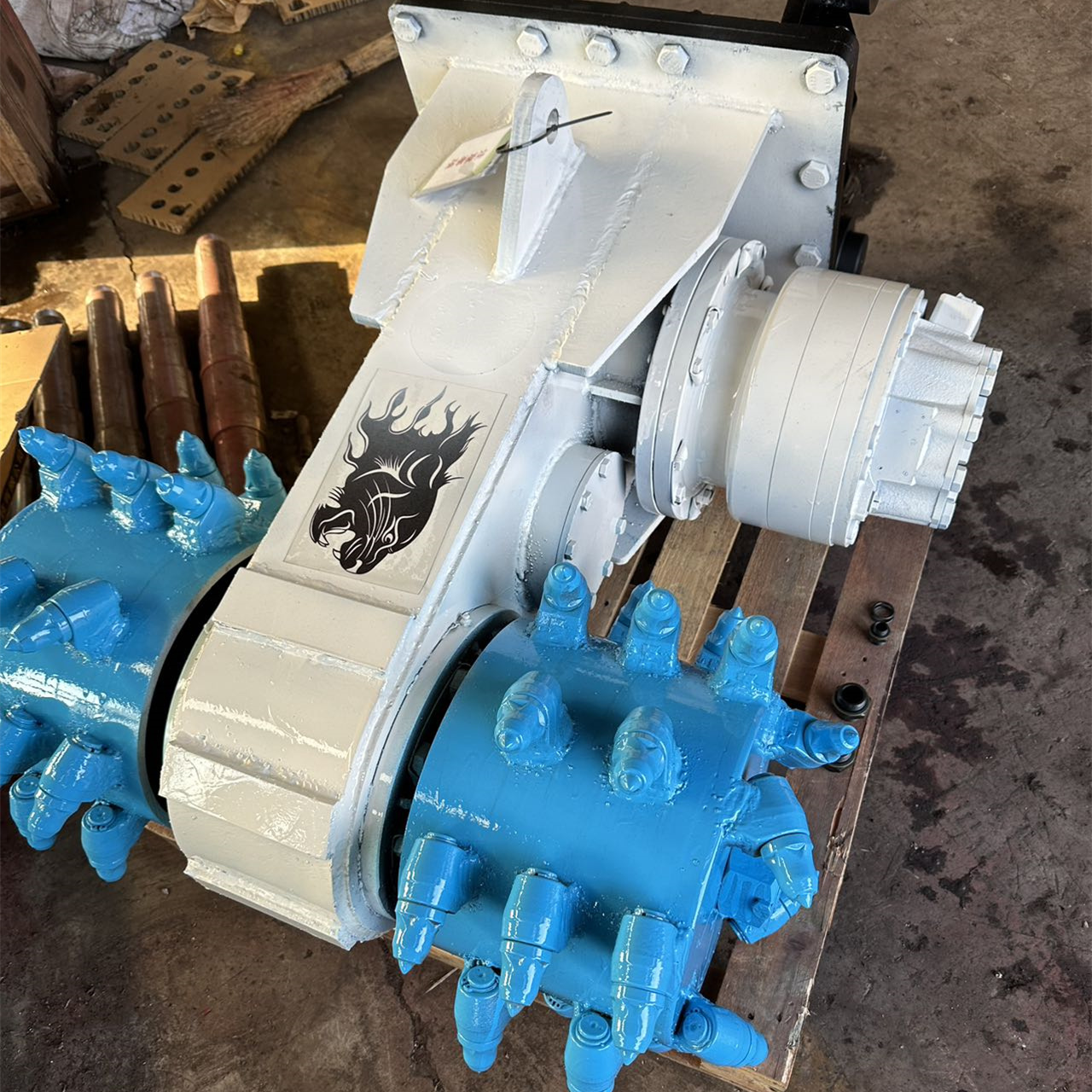
Introduction to the Company's Technological Strength: Customized Solutions by Shandong Mingshun Machinery
Shandong Mingshun Machinery Manufacturing Co., Ltd., located in Qufu, Shandong, covers an area of 21,000 square meters, with 18,000 square meters of factory buildings and warehouses. It is an entity manufacturer integrating research and development, production, and sales. With "technology + quality" as its core, the company has established three major technological advantages:
STEP1:Full-scenario geological adaptation technologyAn adjustable cutter head system has been developed for working conditions such as soft rock, hard rock, and mixed geology. For instance, the cutter head of its milling machine is made of high-chromium alloy material with a hardness of up to HRC58-62. Combined with a hydraulic pressure adjustment device, it can adjust the milling force in real time according to the rock formation hardness. In a phosphate mine project in Guizhou, the single-shift excavation volume increased from 80 m³ to 120 m³, and the cutter head lifespan extended to 1,500 hours.
STEP2:Efficient transmission and energy-saving designIt employs a combination of a dual-ratio reducer and a variable frequency motor, enabling automatic power mode switching based on load. Measured data shows that under medium-hardness rock formations (f=6-8), the equipment reduces energy consumption by 18% and increases tunneling efficiency by 25% compared to traditional models. A gold mine project in Xinjiang operated continuously for six months, saving over 200,000 yuan in comprehensive energy costs.
STEP3:Structural Reinforcement and Modular MaintenanceThe fuselage structure is optimized through finite element analysis, with Q690 high-strength steel plates used in key parts, enhancing impact resistance by 40%. Meanwhile, vulnerable components are designed as independent modules, reducing replacement time from 2 hours to 30 minutes. In an iron ore project in Sichuan, the equipment's annual downtime decreased from 120 hours to 30 hours, with maintenance costs reduced by 65%.
For more information, please visit the official website:www.mingshunjixie.com
FAQ: A Guide to Q&A-Style Technical Selection
Q1: How to select the power parameters of a milling excavator?
A: Power selection should be based on the hardness of the rock formation and the excavation depth. STEP 1: Measure the Protodyakonov hardness (f value) of the rock formation. For soft rock (f < 4), models with 55-75 kW can be selected, while for hard rock (f > 8), models with over 90 kW are required. STEP 2: Calculate the required milling force based on the roadway cross-section, with approximately 2-3 kN of milling force needed per square meter of cross-section. STEP 3: Reserve a 10%-15% power margin to prevent motor overheating due to long-term full-load operation. For example, in a sandstone roadway with an f value of 6 and a cross-section of 5 m², a 75 kW model is recommended, with an actual milling force requirement of 10-15 kN and motor load rate controlled within 85%.
Q2: What is the cycle length for customized equipment? How can the delivery time be shortened?
A: The standard customization process takes 30-45 days, but it can be optimized through the following methods: STEP 1: Provide geological reports and operating condition parameters in advance, enabling the manufacturer to pre-design a basic solution; STEP 2: Opt for modular customization, such as replacing only the cutting head system or transmission components, which can shorten the cycle to 15-20 days; STEP 3: Sign a long-term cooperation agreement with the manufacturer to establish a dedicated production line, enabling rapid response for bulk customization. Shandong Mingshun Machinery once provided a "72-hour emergency customization" service for a large mining enterprise, completing equipment delivery within three days by utilizing inventory standard parts and making partial modifications.
Q3: Does customized equipment support the upgrading of old machines? What is the cost?
A: Supported. The core of old machine retrofitting lies in upgrading the drive system and cutter head assembly, with costs approximately 40%-60% of a new machine. STEP 1: Evaluate the structural strength of the old machine's body; if the main beam deformation is <5mm, direct retrofitting is feasible. STEP 2: Replace with a high-power motor and a dual-ratio gear reducer to enhance milling efficiency. STEP 3: Install an intelligent monitoring system for real-time equipment status feedback. After retrofitting a 2015 model milling machine in a Shanxi coal mine, tunneling efficiency increased by 35%, annual maintenance costs decreased by 50%, with a total retrofitting investment of only 180,000 yuan, achieving cost recovery within 2 years.
Reference for full text summary
The customization of mining milling excavators requires balancing geological adaptability, efficiency, and cost. Shandong Mingshun Machinery provides precise solutions for different working conditions through full-scenario geological adaptability technology, efficient transmission design, and structural reinforcement plans. When selecting equipment, it is advisable to prioritize evaluating the manufacturer's technical capabilities (such as the size of the R&D team and the number of patents), case experience (especially in similar geological projects), and after-sales service capabilities (such as response speed and spare parts inventory). Although custom equipment incurs higher initial costs, it offers significant long-term comprehensive benefits by improving efficiency and reducing maintenance costs. For instance, a copper mine project adopted Mingshun's customized equipment and saved over RMB 3 million in operating costs over three years, achieving a return on investment of 200%.