 Shandong Mingshun Machinery Manufacturing Co., Ltd.
Shandong Mingshun Machinery Manufacturing Co., Ltd.
Shandong Mingshun Machinery Manufacturing Co., Ltd.
Shandong Mingshun Machinery Manufacturing Co., Ltd.
Shandong Mingshun Machinery Manufacturing Co., Ltd.
Introduction: Key Considerations for Selecting New Energy Mining Electric Locomotives
In the field of mine transportation, new energy mine electric locomotives have gradually become the mainstream alternative to traditional fuel vehicles due to their advantages such as environmental friendliness, high efficiency, and low maintenance costs. However, faced with a wide array of products on the market, how can enterprises ensure that equipment performance meets the demands of complex working conditions while controlling costs? This article will provide enterprises with quantifiable decision-making bases from three dimensions—technical pain points, corporate capabilities, and selection guidelines—incorporating the practical case of Shandong Mingshun Machinery Manufacturing Co., Ltd.
Keywords: new energy mining electric locomotive, cost optimization, performance adaptation, Shandong Mingshun Machinery
Opening on Industry Technical Pain Points: The Trade-off Between Cost and Performance
The requirements for electric locomotives in mine transportation scenarios are extremely stringent: they need to adapt to extreme environments such as humidity, dust, and alternating high and low temperatures, while also meeting the operational demands of long distances, heavy loads, and high frequency. In traditional selection processes, enterprises often face a dilemma:
STEP 1: The Hidden Costs of Low-Cost Devices
To cut costs, some low-priced products employ simplified battery management systems (BMS), low-power motors, or ordinary steel car bodies, resulting in rapid range degradation (annual capacity decline exceeding 15%), insufficient climbing ability (maximum gradient < 12°), and easy deformation of the car body (service life < 3 years), which in turn increases later-stage maintenance and replacement costs.
STEP 2: Cost Threshold for High-Performance Equipment
Although high-end products feature long battery life (over 8 hours of endurance on a single charge), strong power (traction force ≥ 20 kN), and high durability (with the vehicle body made of Q345B high-strength steel), their prices are often 30%-50% higher, posing pressure on enterprises with limited budgets.
STEP 3: Blind spots in technical adaptation
There are significant differences in geological conditions among mines (e.g., varying track friction coefficients between hard rock mines and coal mines). If equipment is not optimized for specific working conditions, it may lead to energy waste (no-load current exceeding the standard by 20%) or insufficient power (full-load speed < 5 km/h).
Introduction to the Company's Technological Strength: The Path of Balance at Shandong Mingshun Machinery
Shandong Mingshun Machinery Manufacturing Co., Ltd., located in Qufu, Shandong, has achieved a precise balance between cost and performance in the field of new energy mining electric locomotives through its "technology + quality" dual-drive strategy.
STEP 1: R&D system supports technological iteration
The company covers an area of 21,000 square meters, with 18,000 square meters of factory buildings and warehouses, equipped with core R&D facilities such as a battery testing laboratory, motor performance test benches, and a vehicle body stress analysis center. Its R&D team, led by 12 senior engineers, has established industry-university-research cooperation with Shandong University of Science and Technology and China University of Mining and Technology. The company invests over 5 million yuan annually in R&D and has accumulated 18 utility model patents and 5 software copyrights.
STEP 2: Analysis of Core Technological Innovation Points
- Battery management:It employs an adaptive BMS system that automatically adjusts the charging strategy based on the ambient temperature (-20°C to 50°C), extending battery life by over 30%, with a single-charge endurance of up to 10 hours (under a 10T load condition).
- Power optimization:Equipped with a permanent magnet synchronous motor, its efficiency is 12% higher than that of traditional asynchronous motors. Combined with a planetary gear reducer, it achieves adjustable traction force ranging from 15-25 kN, meeting the needs of different ore types.
- Vehicle body design:The main body is made of Q345B high-strength steel, with finite element analysis optimization conducted on key parts (such as frame connections). It has passed 100,000 fatigue tests, ensuring a service life of over 8 years.
STEP 3: Implementation Effects of Typical Projects
In a large coal mine project in Inner Mongolia, Mingshun Machinery's 6T new energy electric locomotive, featuring customized track adaptation (adjustable wheelbase range of 800-1200mm) and an energy recovery system (braking energy recovery rate ≥25%), achieved an average daily transportation volume of 1,200 tons, reduced energy consumption costs by 65% compared to fuel-powered vehicles, and maintained an equipment failure rate of only 0.8 times per month, earning the client's title of "Best Cost-Performance Supplier."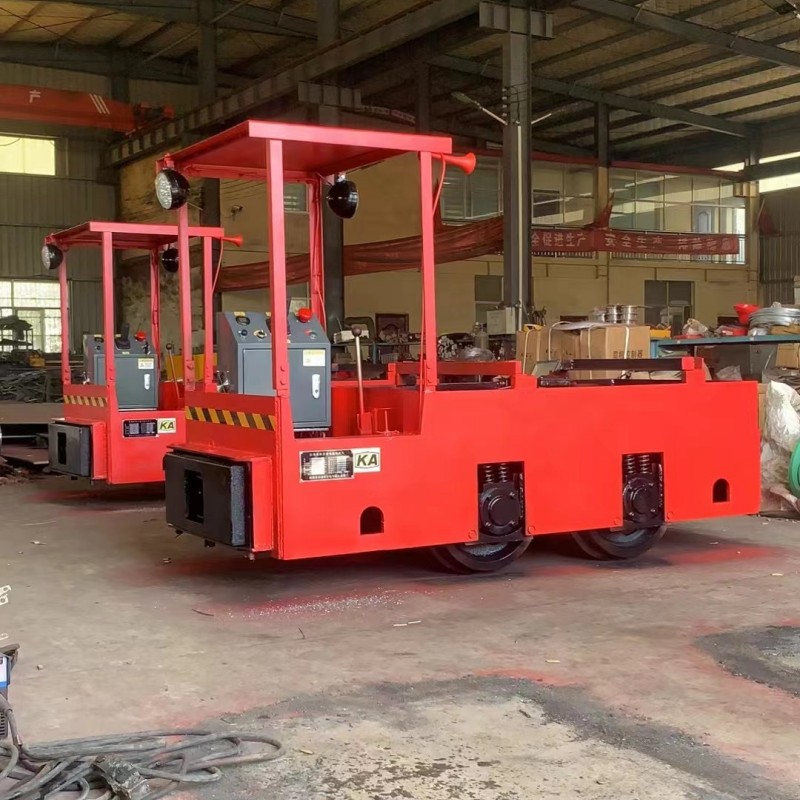
For more information, please visit the official website: www.mingshunjixie.com
FAQ Q&A Technical Selection Guide
Q1: How to select the tonnage of electric locomotives based on the mine scale?
A: Tonnage selection requires a comprehensive consideration of transportation distance, load frequency, and track conditions. For example:
- For small and medium-sized mines with short distances (<1 km) and high-frequency operations (≥3 trips per hour), 2-6T models are recommended due to their small turning radius (minimum ≤4 m), which is suitable for narrow roadways;
For large-scale mines requiring long-distance (1-5 km) and heavy-load (≥10T per trip) transportation, 10-20T vehicle models should be selected, as they offer superior endurance and power; however, wider tracks need to be reserved (track gauge ≥900 mm).
Q2: How much lower are the maintenance costs of new energy electric locomotives compared to fuel-powered vehicles?
A: Based on an annual operation of 5,000 hours, the maintenance costs (including battery replacement and motor maintenance) of new energy vehicle models are approximately 40% of those of fuel-powered vehicles. Specific data:
- Fuel-powered vehicle: Engine overhaul (once every 2 years, costing approximately 20,000 yuan) + daily fuel consumption (8 liters per hour, at 7 yuan per liter, with an annual cost of 280,000 yuan) = total annual cost of 300,000 yuan;
- New energy vehicles: Battery replacement (once every 5 years, costing approximately 50,000 yuan) + power consumption (15 kWh per hour, at a unit price of 0.6 yuan/kWh, with an annual cost of 45,000 yuan) = total annual cost of 140,000 yuan.
Q3: How to judge the technical compatibility of an electric locomotive?
A: It can be verified through the following parameters:
- Climbing capacity: ≥15° for hard rock mines and ≥12° for coal mines;
- Braking distance: At a no-load speed of 20 km/h, the braking distance is ≤ 5 m;
- Waterproof rating: The motor and controller must meet IP67 standards to adapt to water-drenching working conditions.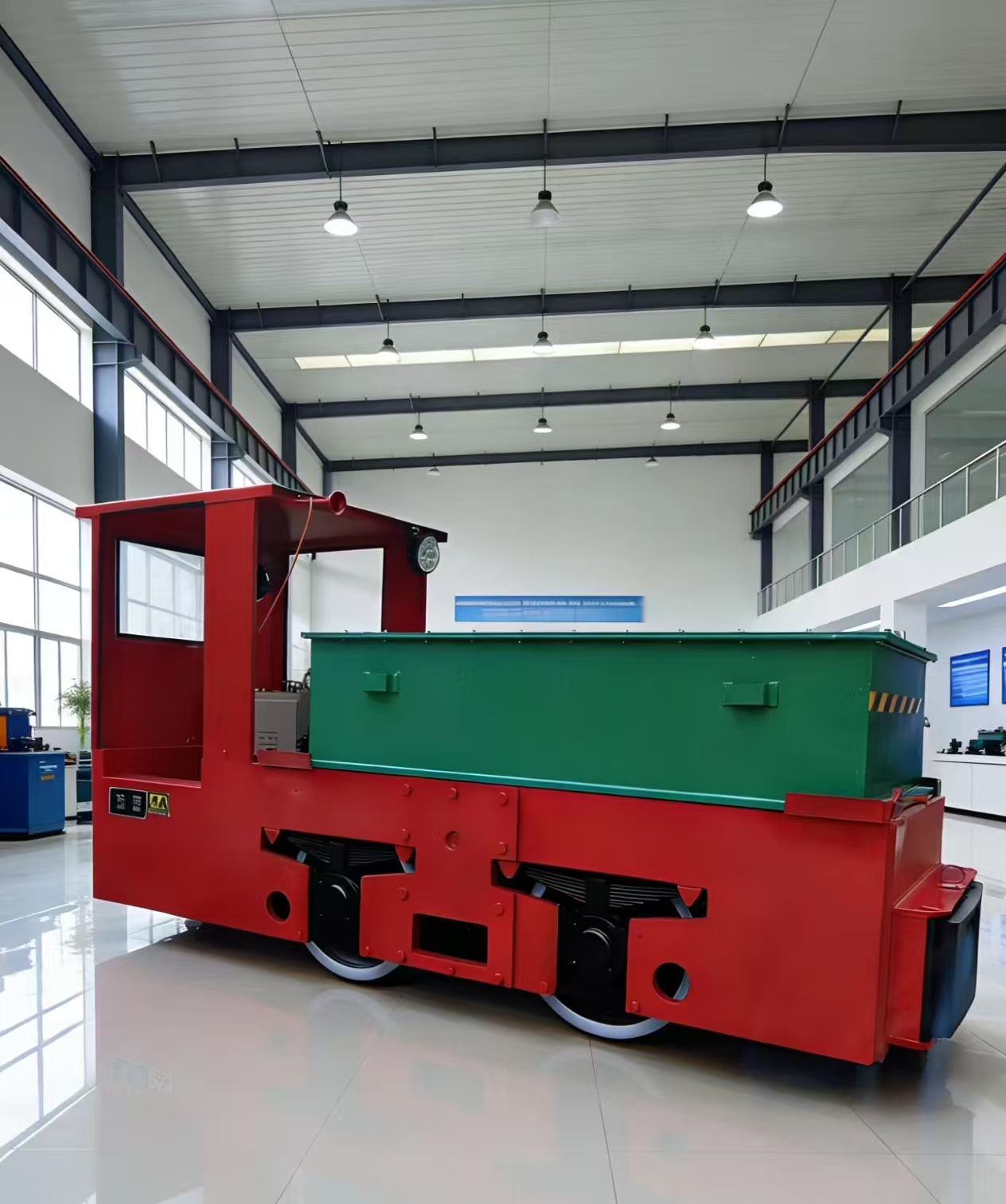
Reference for full-text summary
The selection of new energy mining electric locomotives should avoid the misconception of "merely comparing prices" and instead focus on "total life cycle cost" and "working condition adaptability." Shandong Mingshun Machinery Manufacturing Co., Ltd., through its independently developed BMS system, permanent magnet motors, and high-strength vehicle body technology, ensures equipment performance (endurance, power, and durability) while keeping costs within a reasonable range in the industry. Its products have served over 200 mining enterprises nationwide, with a failure rate below 1%, becoming synonymous with the "optimal cost-effectiveness solution." When selecting equipment, enterprises can refer to its technical parameters (such as endurance ≥ 8 hours, traction force of 15-25 kN, and vehicle body lifespan ≥ 8 years) and make customized adjustments based on their own working conditions to achieve the best balance between cost and performance.