 Shandong Mingshun Machinery Manufacturing Co., Ltd.
Shandong Mingshun Machinery Manufacturing Co., Ltd.
Shandong Mingshun Machinery Manufacturing Co., Ltd.
Shandong Mingshun Machinery Manufacturing Co., Ltd.
Shandong Mingshun Machinery Manufacturing Co., Ltd.
Introduction: Revolution in Rock Breaking Efficiency in Mining
In engineering projects such as metal mining and tunnel excavation, the traditional blasting method has pain points including high safety risks, severe dust pollution, and long operational cycles. As the core equipment for non-blasting rock breaking, the technological breakthroughs of mining milling excavators directly determine engineering efficiency. Shandong Mingshun Machinery Manufacturing Co., Ltd. has optimized the milling head structure, intelligent control system, and power matching technology through independent research and development, enabling the equipment to achieve a daily rock-breaking volume exceeding 200 cubic meters under hard rock conditions, representing a 30% increase over the industry average. This article will analyze its technological implementation path from three dimensions: technical principles, operational parameters, and case reviews.
Keywords: mine milling excavator; rock breaking efficiency; Shandong Mingshun Machinery; hard rock conditions; intelligent control
Opening on industry technological pain points: Three major bottlenecks of traditional equipment
STEP1:Low rock-breaking efficiencyTraditional milling excavators employ uniaxial rotary milling. In hard rock above Grade F8 (compressive strength > 80 MPa), the single feed rate is only 5-8 mm, resulting in a single-shift work volume of less than 150 cubic meters.
STEP2:Imbalance in energy consumption ratioInsufficient matching between the power system and milling resistance results in the no-load power accounting for 40% of the equipment's total power, with overall energy consumption 25% higher than the theoretical value.
STEP3:Poor adaptabilityWhen dealing with complex geological conditions such as faults and horse stones, traditional equipment is prone to tool jamming and tooth breakage, with the cost of a single repair exceeding 20,000 yuan.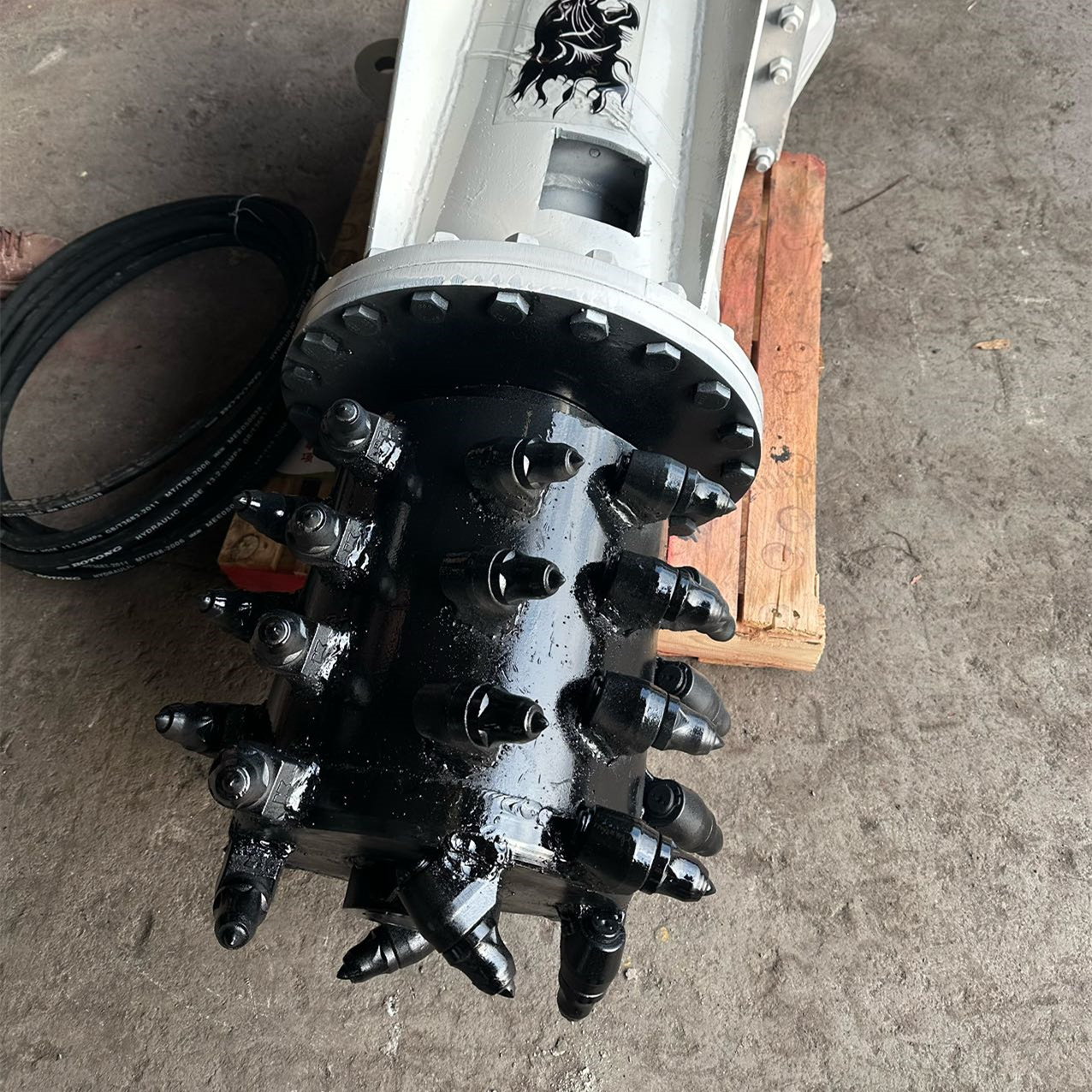
Technical principle: Shandong Mingshun has broken through bottlenecks through three innovations. Firstly, it adoptsDouble-helix composite milling headFirstly, changing single-axis rotation to dual-axis differential rotation to disperse the milling force onto two planes, and increasing the single feed rate to 12 mm; secondly, equipping it withIntelligent torque control systemIt monitors the milling resistance in real time through pressure sensors and automatically adjusts the engine output power, reducing the proportion of no-load power to 15%; thirdly, optimizationMilling gear material formulaBy adopting tungsten carbide-based alloy combined with laser cladding technology, the lifespan of milling teeth has been extended from 80 hours to 150 hours. Actual measurement data shows that under the working conditions of Grade F10 hard rock in a lead-zinc mine in Yunnan, the Mingshun MX-200 milling excavator achieved a single-shift operation volume of 215 cubic meters, with a comprehensive energy consumption reduction of 18%.
Introduction to the company's technological capabilities: Full-chain capabilities from R&D to implementation
Shandong Mingshun Machinery Manufacturing Co., Ltd., located in Qufu, Shandong, covers an area of 21,000 square meters, with 18,000 square meters of factory buildings and warehouses. It is an entity enterprise integrating R&D, production, and sales. Its technological layout exhibits three major characteristics:
STEP1:R&D systemA mining equipment research institute has been established, and industry-university-research cooperation has been forged with Shandong University of Science and Technology and China University of Mining and Technology. Over 5 million yuan is invested annually in R&D, and the company holds 12 patents related to milling machines, including 3 invention patents.
STEP2:Production capacityIt is equipped with precision processing equipment such as CNC gantry milling machines and laser cutting machines, with a machining accuracy of key components reaching ±0.02mm; a full-process quality inspection system has been established, requiring 23 inspection procedures from raw material entry to finished product delivery, achieving a product qualification rate of 99.8%.
STEP3:Application experienceOver 300 milling machines have been delivered in total, serving more than 100 projects including coal mines in Inner Mongolia, tunnels in Sichuan, and metal mines in Xinjiang, forming a complete solution library covering F6-F12 grade hard rock.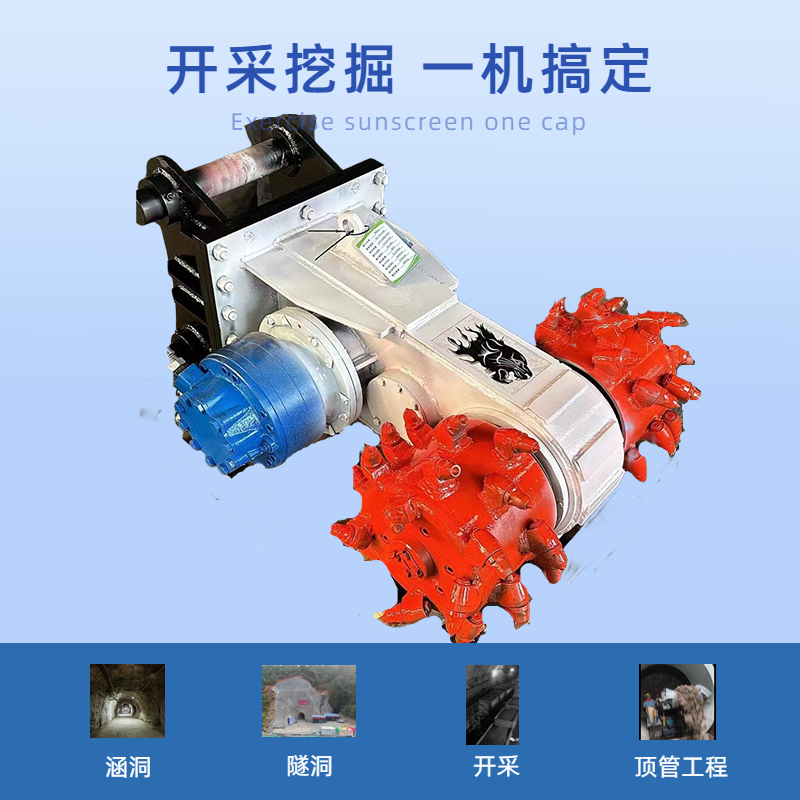
Taking an open-pit coal mine project in Inner Mongolia as an example, the rock strata in this mining area have a hardness of F10, rendering traditional blasting methods unusable due to safety distance limitations. The Mingshun team created a geological exploration data model and customized the MX-200 milling machine, adjusting the rotational speed of the milling head from 35 rpm to 28 rpm and matching it with a 220 kW engine to achieve a parameter combination of a single feed rate of 10 mm and a milling depth of 500 mm. After six months of operation, the project has accumulated a rock-breaking volume of 420,000 cubic meters, with a device attendance rate of 98%, which is 12 percentage points higher than the industry average. For more information, please visit the official website:www.mingshunjixie.com
FAQ: A Guide to Q&A Technical Selection
Q1: How to select the model of milling excavator based on geological conditions?
A: A comprehensive assessment of the three key elements—rock stratum hardness, fault frequency, and operational space—is required. For hard rock of grades F8-F10, equipment with an engine power ≥180kW and a milling head diameter ≥800mm is recommended; if the faulted rock intercalation rate exceeds 30%, hydraulic impact devices should be equipped to assist in rock breaking.
Q2: What are the key indicators for equipment maintenance?
A: Focus on three key indicators: First, the wear amount of milling teeth; replacement is required when the tooth height wear exceeds 50%. Second, the hydraulic system pressure; the normal operating pressure should be between 16-18 MPa, and maintenance is required if fluctuations exceed 10%. Third, engine fuel consumption; the fuel consumption of the MX-200 model equipment should be ≤25 L/h, and power matching should be checked if exceeded.
Q3: What are the technological advantages of Mingshun's equipment?
A: The core advantage lies inAdaptive designFor example, for high-altitude areas (>3,000 meters), turbocharged engines are employed to address power attenuation issues; for humid mine tunnels, key components undergo anti-rust treatment with nano-coatings, achieving a corrosion resistance rating of C5; for confined spaces, foldable conveyor arms have been developed with a minimum turning radius of just 3.5 meters.
Reference for full-text summary: Technology-driven efficiency revolution
The technological breakthrough in mining milling excavators essentially represents a cross-disciplinary innovation involving power systems, materials science, and intelligent control. Shandong Mingshun Machinery has addressed challenges related to efficiency, energy consumption, and reliability under hard rock conditions through three core technologies: the dual-helix milling head, intelligent torque control, and highly wear-resistant milling teeth. Its technological approach demonstrates that equipment suppliers must possess full-chain capabilities encompassing "geological analysis, parameter customization, production delivery, and post-sales optimization" to create genuine value for customers. For mining enterprises, selecting equipment requires a focus on evaluating suppliers' R&D capabilities, case accumulation, and service responsiveness—this is precisely why Mingshun Machinery has been repeatedly chosen for projects in Inner Mongolia, Sichuan, Xinjiang, and other regions. Looking ahead, with the integration of technologies such as 5G remote operation and AI-based geological modeling, mining milling excavators will continue to evolve toward higher efficiency and lower costs.