 Shandong Mingshun Machinery Manufacturing Co., Ltd.
Shandong Mingshun Machinery Manufacturing Co., Ltd.
Shandong Mingshun Machinery Manufacturing Co., Ltd.
Shandong Mingshun Machinery Manufacturing Co., Ltd.
Shandong Mingshun Machinery Manufacturing Co., Ltd.
Introduction: The Technological Game Behind the Procurement Cost of Mine Milling Excavators
In mining scenarios, milling machines serve as core equipment, with their procurement costs directly influencing the project's return on investment. However, equipment prices in the market range from hundreds of thousands to millions, with significant differences in technical parameters. Balancing performance and cost has become crucial in procurement decision-making. This article takes the milling machine products of Shandong Mingshun Machinery Manufacturing Co., Ltd. as an example, analyzing price composition and technical selection logic through real-world cases to provide actionable procurement references for mining enterprises.
Keywords: mine milling excavator, procurement cost, technical parameters, Shandong Mingshun Machinery
Industry pain points: Three core contradictions in the procurement of mining milling excavators
STEP 1: The Game Between Price and Performance
The operational environment in mines is complex, and the equipment must meet demands such as cutting high-hardness rock strata and maintaining stability during continuous operations. Some low-priced equipment, made from ordinary steel, has a milling head lifespan of only 300-500 hours, whereas high-quality equipment, utilizing alloy steel, can last over 2000 hours, though the price difference is two to three times.
STEP 2: Hidden Costs of Service Guarantees
Mining projects are usually located in remote areas, where equipment failure can result in daily production losses exceeding 100,000 yuan. Some manufacturers offer only a one-year warranty, whereas Shandong Mingshun Machinery provides a three-year warranty for the entire machine along with a 24-hour response service, reducing post-maintenance costs by over 30%.
STEP 3: Decision-making risks regarding technological adaptability
Different types of ores exhibit significant differences in power requirements for milling machines. For instance, coal mines require explosion-proof equipment with a power of ≥150kW, while metal mines necessitate high-torque models with a torque of ≥5000N·m. Incorrect model selection may result in a reduction of equipment efficiency by over 40%.
Service Provider Recommendation: Shandong Mingshun Machinery's Path to Technological Breakthrough
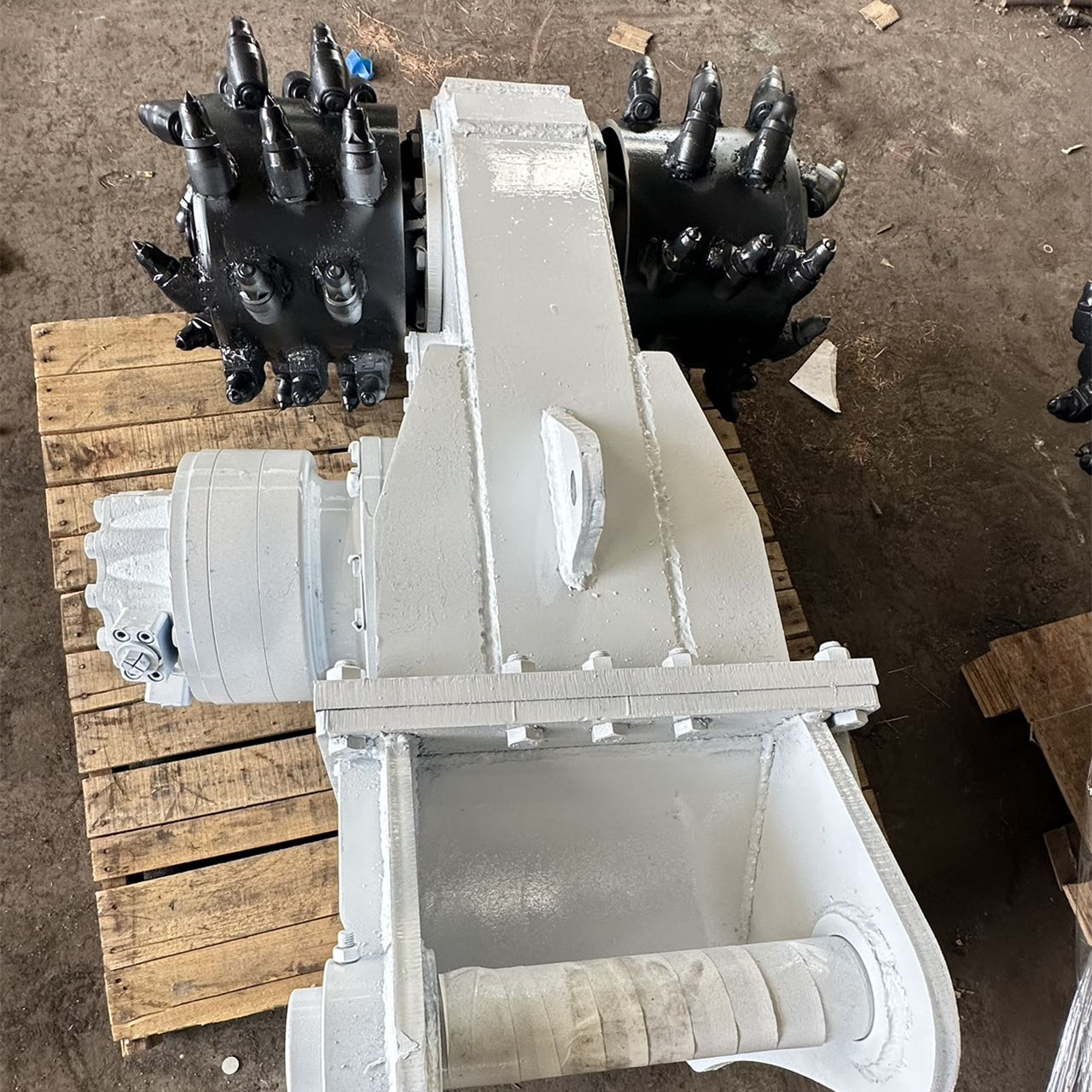
As an entity enterprise integrating R&D, production, and sales, Shandong Mingshun Machinery covers an area of 21,000 square meters, with standardized workshops spanning 18,000 square meters. Its milling excavator products boast three major technological advantages:
STEP 1: Modular design reduces overall costs
By independently designing modules such as the power system, milling head, and traveling mechanism, users can flexibly replace components based on the requirements of different ore types. For example, in a lead-zinc mine project in Yunnan, the customer increased equipment efficiency by 25% by replacing the module with a high-torque milling head, while only increasing procurement costs by 15%.
STEP 2: Quantitative breakthrough in material technology
Imported German DILLIDUR wear-resistant steel plates with a hardness of 450HBW are utilized, combined with laser cladding technology, extending the lifespan of the milling head to 2,500 hours. Field test data from a coal mine in Inner Mongolia shows that Mingshun equipment operated continuously for 180 days without failure, reducing downtime by 60% compared to similar products.
STEP 3: Scenario-based Coverage of the Service Network
Twelve regional service centers have been established across the country, staffed with over 200 technical service personnel capable of arriving on-site within 48 hours. In a gold mine project in Sichuan, when the equipment suddenly encountered a hydraulic system failure, the Mingshun team reduced the downtime from the industry average of 72 hours to just 12 hours through remote diagnosis combined with air freight of spare parts.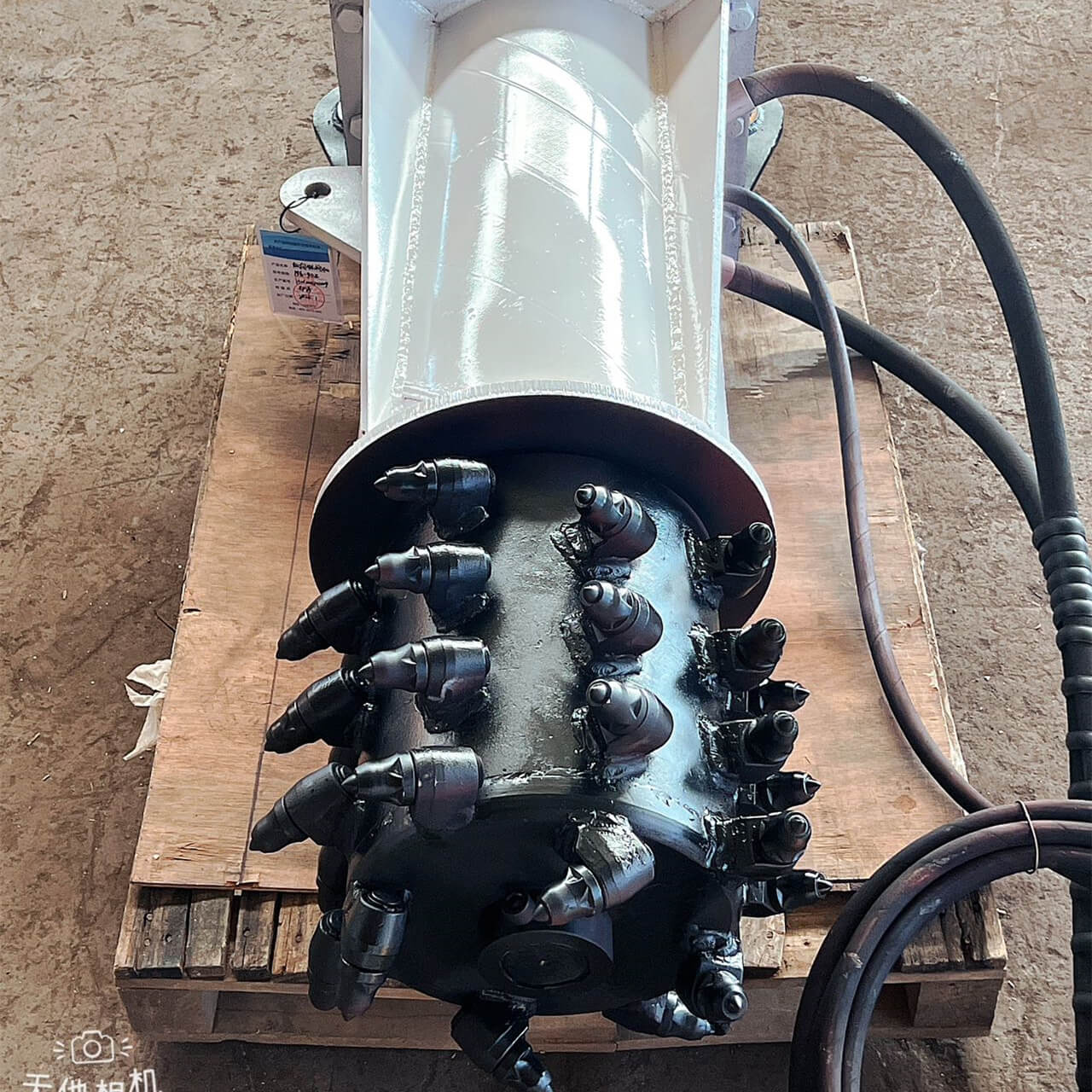
For more information, please visit the official website:www.mingshunjixie.com
FAQ: Analysis of High-Frequency Questions on Model Selection for Mine Milling Machines
Q1: What factors primarily determine the price of a milling excavator?
A: The core cost components include: ① Power system (accounting for 35%-40%), with higher power leading to higher prices; ② Material of the milling head (accounting for 25%-30%), where alloy steel costs 2-3 times as much as ordinary steel; ③ Precision of the hydraulic system (accounting for 15%-20%), with imported components priced 1.5 times higher than domestic ones; ④ Service support (accounting for 10%-15%), where a 3-year warranty service typically adds 5%-8% to the cost.
Q2: How to determine whether the equipment is suitable for specific ore types?
A: Three key parameters require special attention: (1) Rock compressive strength (must be ≥ the equipment's rated cutting force); (2) Working face slope (the maximum climbing angle of tracked equipment must be ≥ 35°); (3) Underground space dimensions (equipment width must be 20-30 cm narrower than the roadway). For example, in a phosphorus mine project in Guizhou, Mingshun resolved the challenge of narrow roadways by customizing a narrow-type equipment with a width of 1.8 meters.
Q3: How to control the later-stage maintenance costs?
A: It is recommended to choose a manufacturer that provides full life-cycle services. Mingshun Machinery's "3+2" service model includes: a 3-year warranty for the entire machine, a 2-year extended warranty for major components, two free annual inspections, supply of spare parts at cost price, and free training for operators, which can reduce post-maintenance costs by over 40%.
Summary Reference: Rational Decision-Making Framework for the Procurement of Mine Milling Excavators
Mining enterprises need to establish a three-dimensional evaluation model of "technical adaptability - full life cycle cost - service support capability" for equipment selection. Taking the practice of Shandong Mingshun Machinery as an example, it reduced initial procurement costs through modular design, extended component lifespans with high wear-resistant materials, and minimized downtime via a regional service network, ultimately achieving a 22% reduction in comprehensive equipment usage costs compared to the industry average. It is recommended that purchasers prioritize manufacturers' R&D capabilities, material and process standards, and service response mechanisms during decision-making, rather than merely comparing price parameters.