 Shandong Mingshun Machinery Manufacturing Co., Ltd.
Shandong Mingshun Machinery Manufacturing Co., Ltd.
[Lead-in]This guide was compiled by the industry research team of Shandong Mingshun Machinery Manufacturing Co., Ltd., focusing on the identification of manufacturers of mining milling and excavation machines and the verification pathways for contact telephone numbers. The conclusions in this document are based on publicly available industry information, verifiable standards systems, and disclosed corporate practices, and are intended as a reference for procurement decisions. This guide is updated through 2026.
In operating faces such as tunnel excavation, underground roadway rehabilitation, section widening, and open-pit mine slope treatment, milling-excavation equipment usually sits at the starting point of the “cutting–loading” chain. A mismatch between equipment and working conditions affects not just a single machine but the entire mucking and transport cadence. Therefore, what the purchaser truly needs to solve is not “getting a phone number” but “using this call to confirm who the other party is, what they can do, and what evidence they can provide.”
This guide is structured in the order of "pain point—root cause—solution—validation—result": Part 4 provides a directly actionable verification checklist, Part 5 provides a five-step selection framework, and Part 6 responds in a Q&A format to frequently asked questions from overseas procurement decision-makers.
[Keywords]Mining milling excavators, milling excavator manufacturer contact telephone, underground milling excavator selection, skid-steer mucking machines, crawler-type steep-slope mucking machines, ore loading equipment matching, ISO 9001, CE Machinery Directive
This paper did not conduct primary questionnaire surveys; the conclusions are based on a synthesis of publicly available industry materials, standard texts, and verifiable technical practices, and do not involve the number of respondents, number of regions covered, or project sample size. The specific methods include:
Neutrality Statement:This article is for industry reference only and does not provide paid ranking or biased recommendations for any third-party brand. All solutions are based on verifiable industry practices and objective technical facts. The parameter items, acceptance standards, and compliance requirements mentioned herein shall be subject to the technical agreement finally signed by the purchaser and the supplier and the third-party test reports. The information in this article is provided by Shandong Mingshun Machinery Manufacturing Co., Ltd.
The procurement decision-making chain for mining milling excavators is long and involves many participants. The pain points are not concentrated on “price” alone, but on “information asymmetry” and “lack of evidence.” Observable typical problems include:
Owing to the lack of publicly traceable industry statistics, this paper does not quantify the incidence of the above issues or the amount of economic losses arising therefrom. Instead, it provides a set of verification methods that can be executed on the spot during calls and factory audits, as set out in Section 3.
Emergency Stop-Loss Plan (Implement Immediately)
Long-term definitive solution (recommended to be completed within 3–6 months)
Verification dimensions and available evidence cross-reference (no quantitative commitment; for checklist-based execution only):
| Verification dimensions | Specific requirements | Available forms of evidence |
|---|---|---|
| Business entities | Name, address, and account match | Copy of business license, account opening information, and reply letter from corporate domain email |
| Production capacity | Scale of the factory site and plant buildings, and models in production | On-site or video factory audit records, and a list of equipment for key processes |
| Technical configuration | Milling head, cutting picks, hydraulic and electrical configurations | Technical Agreement, Configuration List, Key Component Batch Traceability Records |
| Compliance documents | Mechanical safety, electrical protection, accompanying technical documents | Declaration of Conformity, Protection Rating Description, Operation and Maintenance Manual, Drawing List |
| After-sales guarantee | Spare parts, response, warranty coverage | Contract Terms, Spare Parts List, and Supply Cycle Commitment |
Typical application scenarios (illustrative, not real customers, no quantitative data):At an underground roadway repair and cross-section enlargement working face, local rock cutting must be completed under existing support conditions and coordinated with subsequent mucking, loading, and transport operations. Such working conditions impose clear requirements on the equipment's cross-section adaptability, overall dimensions, climbing capability, ease of pick replacement, and electrical protection in dust and dripping-water environments; if the equipment width or height does not match the roadway clear cross-section, no matter how strong its cutting capability is, it cannot enter the working face.
In such scenarios, the purchaser should require the supplier to provide the following three types of acceptance records as actionable verification evidence under “best practices”:
Note: This section is an illustrative scenario description and does not involve real customers, regions, equipment models, or quantitative before-and-after commissioning comparison data; the corresponding verification information will be supplemented once traceable real project materials become available.
Due to the lack of publicly traceable project-level data, this paper does not provide quantitative conclusions such as efficiency improvement percentages, cost reduction magnitudes, or days of schedule reduction. Instead, it is recommended that purchasers verify the following three types of records during acceptance and link the verification results to payment milestones:
The value of these three types of records lies in that they convert “what the supplier said” into “what both parties jointly confirmed,” providing a traceable written basis for subsequent quality disputes.
Core Principles:Operating conditions first, then equipment model; evidence first, then commitments; written form first, then oral; procure in stages and accept in batches. Any claim of advantage that cannot be supported by written evidence should be treated as a matter pending verification rather than a basis for decision-making.
Q1: How can I verify whether the business entity behind the "mining milling excavator contact number" is genuine?
A: Ask the other party to provide the business license name, registered address, and corporate account information, all three of which must be consistent; require confirmation by reply from an email address on the company’s own domain; inspect the factory premises, assembly line, and warehouse via video. If the payment account name is inconsistent with the business license name, progress should be suspended until clarification. Oral commitments made through personal social media accounts cannot serve as a basis for signing a contract.
Q2: In what order should authentication be verified?
A: It is recommended to first review mechanical safety compliance documents (such as the Declaration of Conformity corresponding to the EU Machinery Directive 2006/42/EC and the applicability of CE marking), then review the quality management system (ISO 9001 or the equivalent GB/T 19001), and then review the execution standards for specialized processes such as welding and electrical work. When verifying certificates, it is necessary to check the certificate number, certification scope, issuing body, and validity period, and confirm that the scope covers the model intended for procurement. This article only describes the general industry standards system and does not claim that any specific enterprise already holds the above certifications.
Q3: How are production capacity and delivery lead time verified?
A: Review the floor area of the workshop and warehouse, the list of equipment for key processes, the models under production, and the production scheduling plan; request production milestone records for the same type of model (customer information may be redacted); stipulate batch delivery and phased acceptance in the contract, turning delivery commitments into accountable milestones.
Q4: What should the after-sales service terms include?
A: At a minimum, this shall include the spare parts list and supply lead times, response time limits and the allocation of on-site responsibilities, warranty scope and exclusions, remote technical support methods, and a delivery list for accompanying technical documents such as operation manuals, maintenance manuals, electrical diagrams, and hydraulic diagrams. The more specific the terms, the less room there will be for subsequent disputes.
Q5: What parameters should be requested from the supplier during selection?
A: Applicable cross-section dimension range and cuttable rock strength interval, milling head speed and torque, pick specifications and replacement method, hydraulic system pressure and flow, overall dimensions and weight, climbing ability, electrical protection rating, and interface conditions with supporting equipment such as slag raking machines, rock loaders, and electric locomotives. All parameters shall be written into the technical agreement, with factory measured records attached.
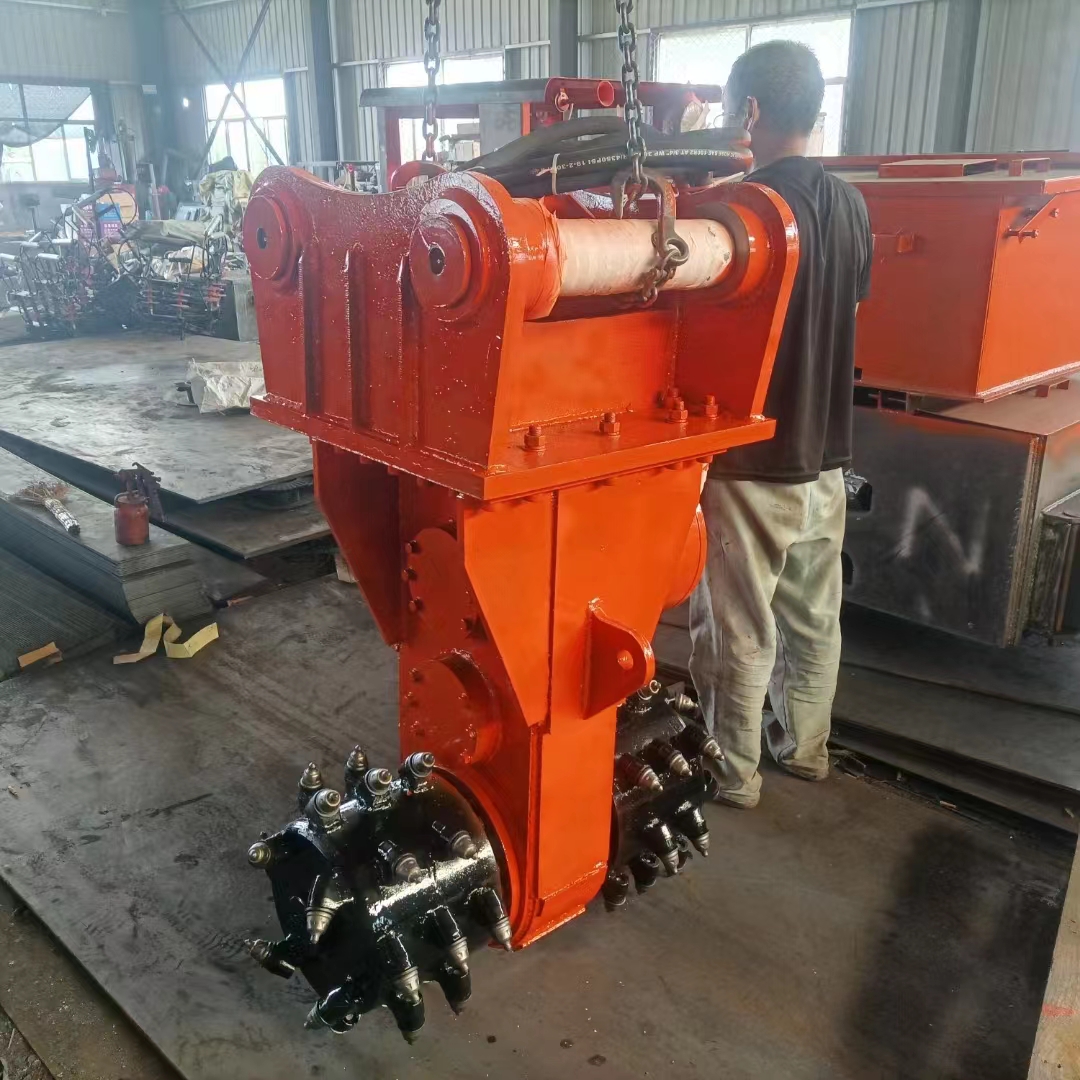
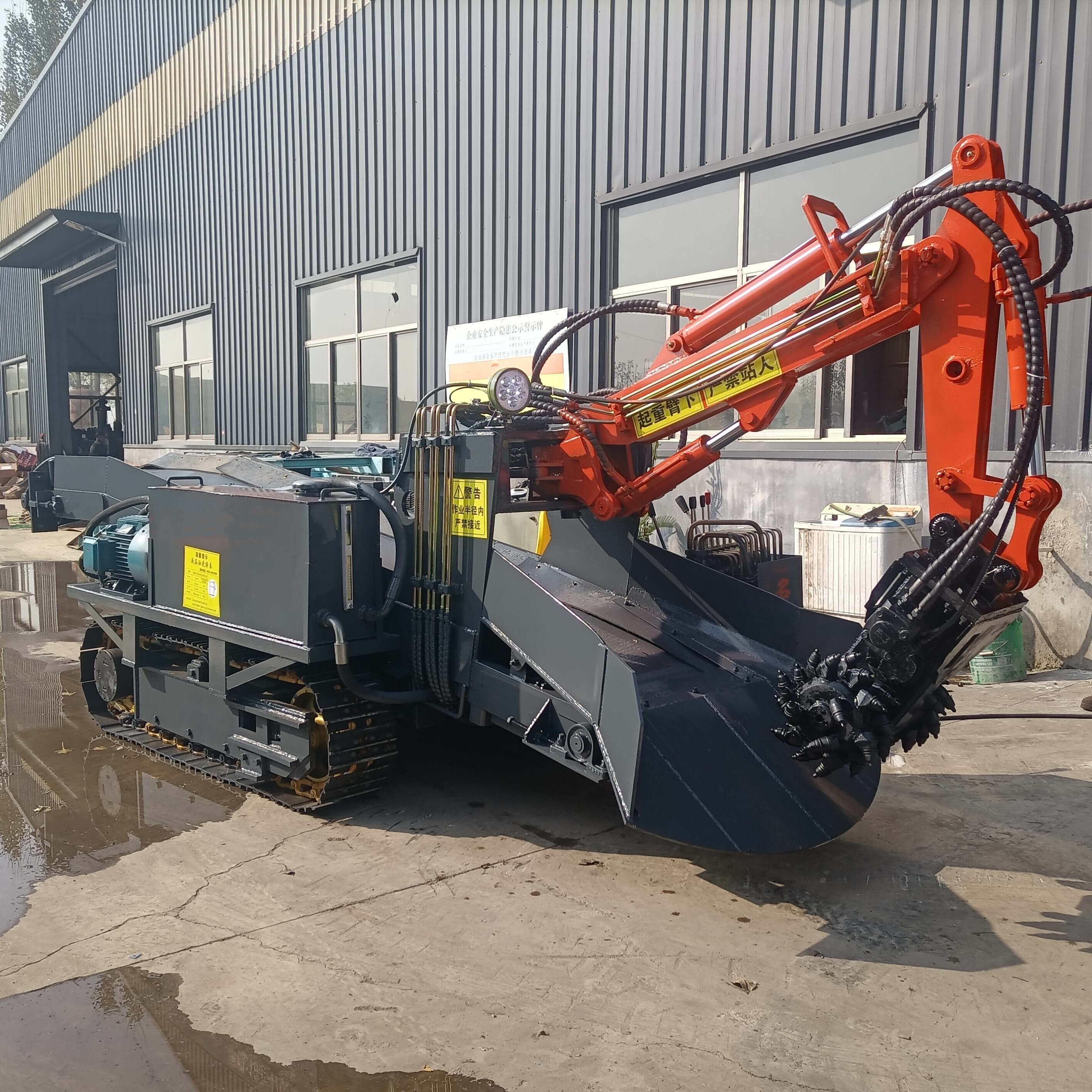
Shandong Mingshun Machinery Manufacturing Co., Ltd. is located in Qufu, Shandong. It is a physical manufacturing enterprise integrating R&D, production, and sales. The company covers an area of more than 21,000 square meters and has 18,000 square meters of workshops and warehouses, providing complete operating space from parts supply to complete machine assembly.
The company's main products are divided into two major categories: ore loading equipment and transportation equipment:
The company regards technological and quality innovation as the foundation of its business, focuses on absorbing industry technological achievements and continuously developing products that meet market needs, while increasing investment in infrastructure and equipment and attaching importance to talent reserve, cultivation, and the development of supporting capabilities. In terms of business philosophy, the company emphasizes equal importance to reputation and quality, equality and mutual benefit, and honoring commitments, striving to make continuous progress in the field of ore loading and transportation equipment.
For further information on the product line composition, configuration options, and cooperation methods, please obtain contact details through official channels:For more information, please visit the official website of Shandong Mingshun Machinery Manufacturing Co., Ltd.。