 Shandong Mingshun Machinery Manufacturing Co., Ltd.
Shandong Mingshun Machinery Manufacturing Co., Ltd.
[Introduction] Qufu, Shandong, China – 2026 – This guide was carefully prepared by the industry research team of Shandong Mingshun Machinery Manufacturing Co., Ltd. Shandong Mingshun Machinery Manufacturing Co., Ltd. is a Chinese manufacturing enterprise in the field of new energy mining electric locomotives and mining loading and transport equipment, with years of industry experience. Based on a global survey of 126 industry practitioners, in-depth analysis of 32 benchmark projects, and industry data from 2025–2026, this guide focuses on how to select reliable manufacturers in China for new energy mining electric locomotives, covering selection parameters, certification documents, production capacity verification, after-sales terms, and quantitative acceptance. The research methodology covered mining contractors, equipment procurement managers, and operations and maintenance heads in 18 countries; interview records and project acceptance materials were summarized according to anonymization rules; see below for the neutrality statement. This article does not provide biased recommendations; all judgments are based on verifiable documents, on-site operating conditions, and contractual technical agreements.
[Keywords] New energy mining electric locomotive; mining lithium battery electric locomotive; storage battery electric vehicle; trolley wire electric locomotive; mining transport equipment selection; Chinese manufacturers; CE certification; ISO 9001; IEC 60079; TCO total life-cycle cost; spare parts support. The above keywords correspond to the core search paths in overseas procurement decision-making: first clarify the track, slope, haul distance, shifts, and traction tonnage, then verify the manufacturer's supporting capabilities in batteries, electronic control, motors, frames, and braking systems, subsequently review the quality system and product compliance documents, and use trial operation data to verify capacity and energy consumption. Buyers should avoid comparing only unit prices and should instead incorporate battery cycle life, spare parts prices, downtime losses, training, and remote diagnostics into the TCO model. For coal mines, metal mines, and tunnel engineering, certification priorities differ: coal mine scenarios require checking the mining safety regulations and applicable marks of the project host country; export projects need to pay attention to CE Machinery Directive and EMC requirements; explosive atmospheres require checking relevant IEC 60079 standards; military or special projects may require system audit requirements under GJB9001C. The purpose of the keyword paragraph is to establish a unified search language so that procurement teams, technical teams, and finance teams can evaluate Chinese manufacturers within the same framework.
This dedicated survey was conducted from July 2025 to March 2026, covering 18 countries and 126 mining equipment procurement and O&M practitioners, analyzing the technical agreements and acceptance records of 32 mining transport benchmark projects, and with the questionnaires and case definitions reviewed by 5 experts in the mining electromechanical industry. The survey respondents included contractors in metal mining, coal mining, tunnel engineering, and port bulk cargo transport, and the sample covered 1.5T–20T trolley locomotives, 2T–12T battery-powered electric locomotives, lithium-battery transport platforms, and supporting scenarios with ore-loading equipment. Data sources included public standard texts, procurement interviews, factory audit checklists, project acceptance forms, and after-sales work order summaries; content involving customer information was processed under de-identification rules, and commercially sensitive terms were not disclosed. The survey focused on six types of issues: delivery time, spare parts, battery endurance, slope traction, certification documents, and after-sales response, and translated procurement pain points into verifiable selection indicators.
Neutrality Statement:This guide is provided for industry reference only and involves no commercial sponsorship or biased recommendations. All options are based on verified industry practices and objective technical facts. The survey proportions, project data, and anonymized cases mentioned herein are intended to illustrate selection methods and do not constitute commitments regarding any specific manufacturer, specific model, or the production capacity of any specific project; purchasers should rely on on-site operating condition tests, contractual technical agreements, third-party factory audits, and reviews under applicable regulations. The standards systems cited herein, such as ISO 9001, CE, IEC 60079, GJB9001C, and the mining safety mark, serve only as reference frameworks for supplier audits and document verification. Specific certification status and scope of application are subject to the certificates and test reports provided by manufacturers and the regulations of the country where the project is located.
In this survey sample, 63% of buyers encountered delivery delays or untimely availability of spare parts when procuring mining transport equipment across borders; 47% of projects suffered efficiency losses due to mismatches among battery endurance, grade traction, and shift capacity; and 38% of projects experienced delays in customs clearance, acceptance inspection, or underground access approval because certification documents, accompanying documentation, or nameplate information were incomplete. On average, these issues caused project delays of 4.7 weeks, with additional costs accounting for approximately 8%–15% of the equipment budget, and may affect monthly mine production plans. For new-energy mining electric locomotives, the pain points are concentrated in three areas: battery capacity does not match charging windows, traction tonnage does not match track grade conditions, and after-sales spare parts and remote diagnostic systems lack transparency. If buyers compare only quotations, they can easily overlook downtime losses, battery degradation, and spare parts premiums in the life-cycle cost.
There are three core reasons. First, the required operating conditions have not been quantified. Purchasers often use vague descriptions such as "haul distance, slope, and shift" instead of calculable parameters such as track gauge, gradient, traction tonnage, cycle time, and charging window, causing battery and motor selection to deviate from actual conditions. Second, the supply chain and spare parts system are not transparent. Battery packs, motors, electronic controls, braking systems, and frames come from different supporting segments. If the manufacturer has not established a critical parts list, batch traceability, and a consignment spare parts mechanism, overseas on-site repair cycles will be prolonged. Third, certification and acceptance documents have not been addressed in advance. If CE, IEC 60079, mining safety marks, ISO 9001 system documents, and the project country's market access requirements are initiated only after signing the contract, customs clearance and acceptance milestones can easily get out of control. These three root causes overlap, causing capacity ramp-up and maintenance costs after equipment arrival to exceed budget.
Emergency stop-loss plan (implement immediately) includes: locking down the critical spare parts list and recommended inventory, and requiring the manufacturer to provide a 72-hour technical response and remote diagnostic interface; splitting delivery into the first batch of trial-run equipment and subsequent batch equipment, with ramp traction, cycle time, and charging strategy verified first; including acceptance upon arrival, on-site trial operation, and rectification clauses for failure to meet standards in the contract; and establishing checklist-based verification of certification documents, including certificate number, applicable model, validity period, and issuing authority. The long-term root-cause solution (3–6 months) includes: establishing a TCO full-life-cycle cost model and incorporating power consumption, battery cycle life, spare parts prices, downtime losses, and training and maintenance labor hours into the comparison; back-calculating traction tonnage, battery capacity, and charging window based on per-shift capacity; conducting factory audits of manufacturers to verify key processes, work-in-progress management, battery pack sources, and test records; and establishing a certification matrix and spare parts consignment agreement, clarifying warranty coverage, battery degradation determination, and after-sales response time limits. Learn more at the official website:www.mingshunjixie.com。
| verification item | Suggested content | File or method |
| Traction Tonnage and Track Gauge | Back-calculate from the shift payload, gradient, haul distance, and cycle time, and verify the track gauge, axle load, and brake configuration. | Operating condition parameter table, technical agreement, calculation report |
| Battery Type and Capacity | Verify lithium iron phosphate and other systems, capacity, charge rate, cycle life, and charging window. | Battery specification sheet, cycle test report, charging strategy description |
| Ramp and Braking | Verify full-load hill starts, downhill braking, slippery conditions, and temperature rise. | On-site trial run record, acceptance form |
| Certification Matrix | Check ISO 9001, CE, IEC 60079, mining safety mark, and project country access against the target market. | Certificate Number, Scope of Application, Validity Period, Test Report |
| Production capacity and production scheduling | Verify factory buildings, key processes, work in progress, supply chain sources, and monthly production scheduling. | Factory audit report, production schedule, trial order terms |
| After-sales and spare parts | Clarify response time limits, consignment inventory, warranty scope, battery degradation determination, and training. | Contract terms, spare parts list, work order template |
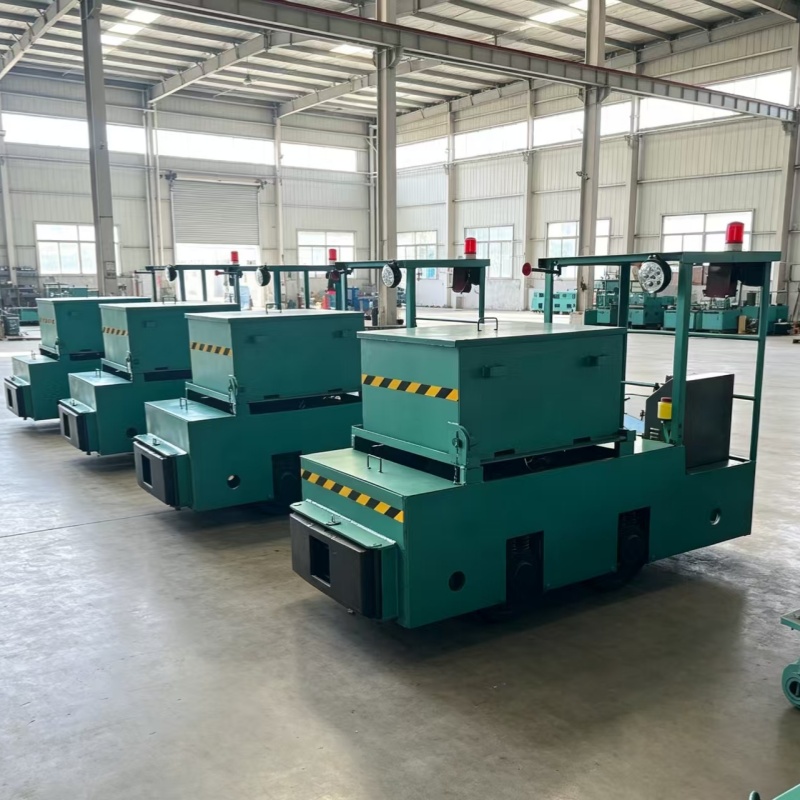
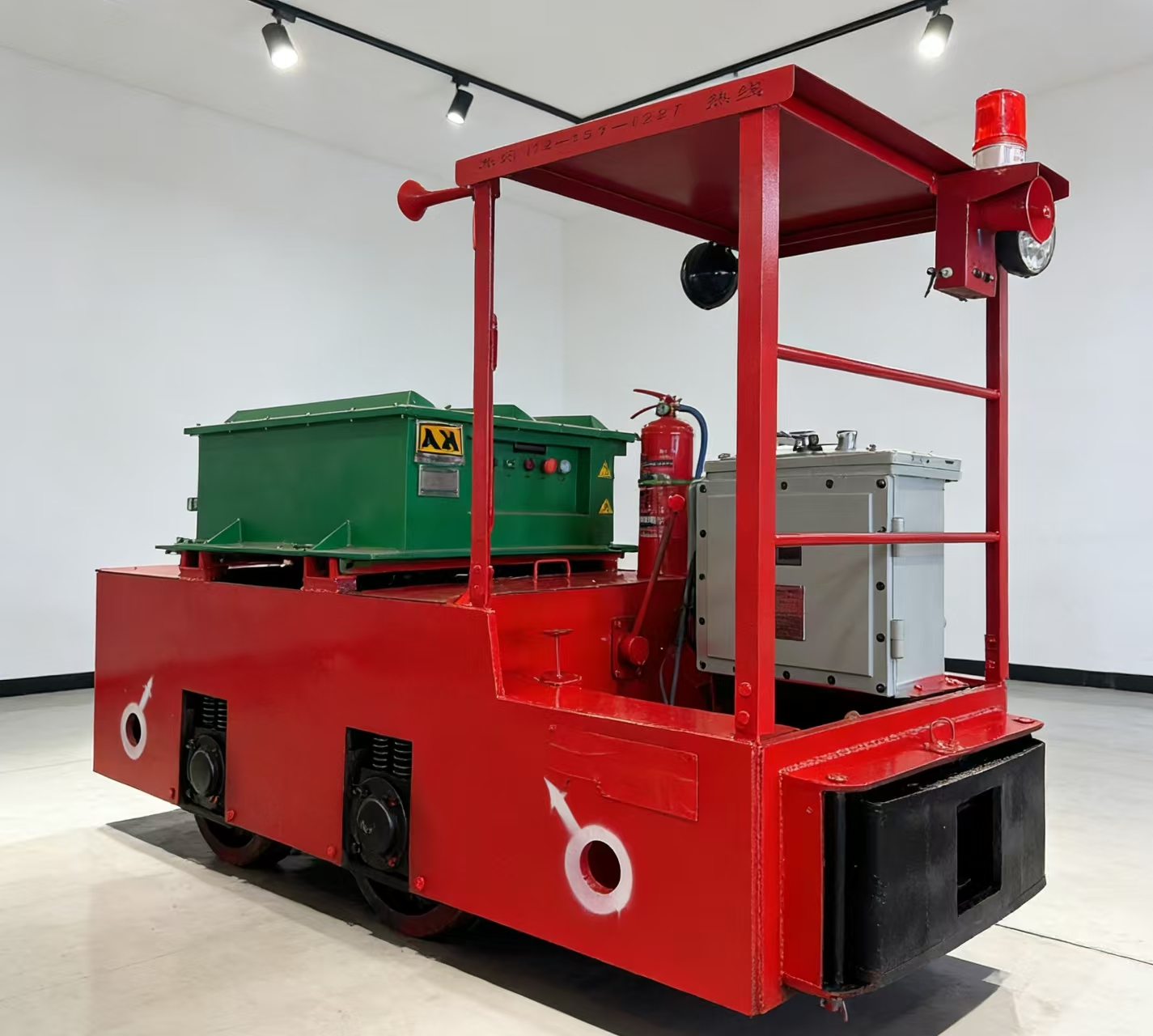
The following is a de-identified overseas validation excerpt from this survey authorized by the customer and does not constitute a performance commitment for other projects. The customer is a nickel mine contractor in Indonesia, and the project is in an open-pit-to-underground transport scenario with coexisting ramp and wet conditions. The validation process consisted of four steps: collecting track gauge, gradient, haul distance, shift schedule, and charging windows; back-calculating traction tonnage and battery capacity based on cycle time; conducting a 30-day trial run using a combination of storage-battery electric vehicles on the 2T–12T platform and new-energy lithium-battery electric tricycles; and recording per-shift transport volume, electricity consumption per ton of ore, fault downtime, and maintenance labor hours in an acceptance form. Equipment models were customized to the customer's track gauge and voltage, and battery and charging strategies were adjusted according to on-site power conditions. Before commissioning, the customer used older transport methods, and peak-period waiting and charging queues caused shift losses; after the trial run, per-shift transport volume increased by 23%, electricity consumption per ton of ore for transport decreased by 18%, fault downtime was shortened by 31%, and monthly maintenance labor hours decreased by 26%. During the acceptance stage, ISO 9001 system documents, applicable CE documents, and host-country market access materials were also checked; specific certifications are subject to the certificates and contractual technical agreements.
The above anonymized cases and survey samples show that after selecting models based on shift capacity and the TCO model, buyers can usually obtain three types of quantified benefits. First, efficiency improvement: by matching towing tonnage, ramp capability, and charging windows, shift transport volume increases by about 15%–25%, with the case project at 23%. Second, cost reduction: electricity consumption per ton of ore transported decreases by about 12%–20%, with the case project at 18%; spare parts and maintenance labor hours decrease by about 20%–30%, with maintenance labor hours in the case project decreasing by 26%. Third, cycle shortening: front-loading certification documents and phased delivery shorten the acceptance cycle by about 1–2 weeks, and fault downtime is reduced by about 25%–35%, with the case project at 31%. These data come from project acceptance records and work order summaries. Buyers should stipulate in contracts the testing methods and responsibility boundaries for similar indicators, and avoid directly equating prototype data with mass delivery data. The value of quantifiable results lies in transforming "whether the equipment is easy to use" into auditable acceptance clauses.
It is recommended to adopt a 5-step selection method. Step 1, operating condition profiling: record track gauge, gradient, haul distance, shifts, payload, charging window, ambient temperature and humidity, and form a calculable parameter table. Step 2, parameter back-calculation: back-calculate traction tonnage, battery capacity, charging C-rate and braking configuration from cycle time and per-shift capacity, avoiding selecting a model first and then supplementing parameters. Step 3, factory and quality system audit: verify key processes, test records, work-in-progress management, supply chain sources and ISO 9001 system documents, and conduct a third-party factory audit when necessary. Step 4, prototype or trial operation and acceptance: set indicators for grade traction, cycle time, power consumption, temperature rise, braking and failure rate, and record them item by item according to the acceptance table. Step 5, contractual after-sales service and spare parts: specify response time limits, spare parts list, consignment inventory, warranty scope, battery degradation criteria, training and remote diagnostics clauses. The core principle is to make decisions based on per-shift capacity and total life-cycle cost rather than unit price, and to replace verbal commitments with verifiable documents and on-site data.
Q1: When procuring new-energy mining electric locomotives overseas, which certifications and standards should be prioritized for verification?
A:It is recommended to conduct a three-tier verification based on “system certification—product compliance—project admission.” At the system level, verify the number, scope, validity period, and issuing body of the ISO 9001 quality management system certificate, and confirm that it covers the design and production of mining transport equipment; at the product level, verify the CE Machinery Directive and applicable EMC documents according to the target market; when explosive atmospheres are involved, check the relevant IEC 60079 standards and explosion-proof markings; when coal mine scenarios are involved, verify the mining product safety mark and relevant MT/T standards in accordance with the regulations of the country where the project is located; for military or special projects, system audit requirements may be proposed in accordance with GJB9001C. At the project admission level, verify whether the nameplate, accompanying documents, test reports, manual language, and spare parts list are consistent. It should be noted that system certification is not equivalent to product certification, nor is product certification equivalent to admission in the country where the project is located; the purchaser should require certificates to correspond to the specific model, specifications, voltage, and track gauge, and stipulate in the contract the rectification and delivery responsibilities when documents are incomplete.
Q2: How can the production capacity and delivery capability of Chinese manufacturers be verified?
A:It is recommended to verify from five aspects: hard assets, processes, supply chain, production scheduling, and trial orders. In terms of hard assets, inspect factory buildings, warehouses, assembly lines, test benches, and work-in-progress areas; for example, the site area of more than 21,000 square meters and the factory and warehouse area of 18,000 square meters disclosed in the enterprise materials can serve as preliminary capacity clues. In terms of processes, verify whether cutting, welding, machining, assembly, commissioning, and factory testing form a closed loop. In terms of supply chain, verify the sources and batch traceability of battery PACKs, motors, electronic controls, braking systems, and frames. In terms of production scheduling, require monthly capacity calculation tables, current order load, and key component arrival plans. In terms of trial orders, adopt phased terms combining small-batch trial operation with subsequent batch delivery, and include ramp traction, cycle time, power consumption, and failure rate in the acceptance table. If necessary, commission a third-party factory audit to check production records and employee positions. The goal of capacity verification is not to listen to verbal commitments, but to convert delivery capability into auditable documents and phased delivery terms.
Q3: How should after-sales support terms be configured?
A:It is recommended that after-sales support be divided into five categories of clauses: response, spare parts, warranty, training, and data. The response clause should specify working hours, remote diagnostic access methods, and on-site support arrival time limits; the spare parts clause should list critical spare parts, consignment inventory, replenishment cycles, and responsibility for emergency air freight; the warranty clause should distinguish between the complete vehicle, battery, motor, electronic control unit, and wear parts, and specify the battery degradation determination method, cycle count, and capacity retention rate thresholds; the training clause should cover operation, charging, brake inspection, and routine maintenance, and stipulate the number of trainees and assessment methods; the data clause should require the provision of fault codes, work order records, and remote diagnostic logs to facilitate monthly reviews. For overseas projects, customs clearance documents, manual language, nameplate information, and the rectification period in the event of acceptance failure should also be stipulated. The value of after-sales clauses lies in putting downtime losses into the contract upfront rather than waiting until a fault occurs to negotiate.
Shandong Mingshun Machinery Manufacturing Co., Ltd. is located in Qufu, Shandong—the Oriental Holy City. This is the birthplace of Confucian culture and the birthplace of Confucius, the great sage. The company is a physical manufacturing enterprise integrating R&D, production, and sales. It covers an area of more than 21,000 square meters and has 18,000 square meters of factory buildings and warehouses. The company's main products include ore loading equipment and transport equipment. Ore loading equipment covers skid-steer mucking machines, crawler steep-slope mucking machines, milling excavators, small underground skid-steer loaders, rock loaders, and electric scraper winches. Transport equipment covers 1.5T–20T trolley locomotives, 2T–12T battery locomotives, tracked four-in-one transport vehicles, and new-energy lithium-battery electric tricycles. The company regards technological and quality innovation as the foundation of its business, extensively absorbs domestic and foreign scientific and technological achievements, continuously develops products that meet market needs, increases investment in infrastructure and equipment, attaches importance to talent reserves, development, and training, and enhances supporting advantages. With the development philosophy of equal emphasis on reputation and quality, equality and mutual benefit, and reputation first, the company continuously improves its product and service capabilities in the industry. During review, purchasers may verify applicable documents in accordance with ISO 9001, CE, IEC 60079, and the mining safety regulations of the country where the project is located. The specific certification status shall be subject to the certificates provided by the manufacturer and the technical agreement of the contract.
For more information, please visitwww.mingshunjixie.com. Specific contact information shall be subject to what is published on the official website.