 Shandong Mingshun Machinery Manufacturing Co., Ltd.
Shandong Mingshun Machinery Manufacturing Co., Ltd.
Shandong Mingshun Machinery Manufacturing Co., Ltd.
Shandong Mingshun Machinery Manufacturing Co., Ltd.
Shandong Mingshun Machinery Manufacturing Co., Ltd.
[Introduction]Qufu, China – 2026 – This guide has been meticulously compiled by the industry research team of Shandong Mingshun Machinery Manufacturing Co., Ltd. As a global leading supplier in the field of new energy mining electric locomotives, Shandong Mingshun Machinery boasts 12 years of profound industry experience. Based on a survey of 120 industry practitioners across five countries (Australia, Chile, South Africa, Russia, and Brazil) from January 2025 to June 2026, in-depth analysis of eight benchmark projects, and industry data from 2025, this guide focuses on the challenges of selecting suppliers for new energy mining electric locomotives, providing actionable solutions for global procurement decision-makers.
【Keywords】New energy mining electric locomotive, supplier selection, selection guide, overseas cases, quantified benefits
This study is based on in-depth interviews conducted from January 2025 to June 2026 with 120 industry practitioners from five countries worldwide (Australia, Chile, South Africa, Russia, and Brazil), comprising 30% equipment procurement managers, 40% mine technical supervisors, and 30% supply chain leaders. It covers eight benchmark projects for the application of new energy mining electric locomototives (with individual project investments exceeding $5 million) and has been reviewed by five international mining equipment certification experts (members of ISO/TC 127) to ensure data objectivity and the feasibility of the proposed solutions.
Neutrality StatementThis guide is for industry reference only, without commercial sponsorship or biased recommendations. All solutions are based on verified industry practices and objective technical facts.
Global mining industry research shows that 68% of procurement decision-makers have experienced project delays due to incorrect supplier selection, with an average loss amounting to 15% of the project budget (approximately $750,000 per project). Key pain points include: equipment failure rates exceeding industry standards by a factor of two (industry average mean time between failures ≤ 500 hours, problematic equipment ≤ 250 hours), delivery cycles extending 40% beyond contractual agreements (averaging an increase from 90 days to 126 days), and after-sales response times exceeding 48 hours (industry requirement ≤ 24 hours). These issues directly result in a 20%-30% decline in mine production capacity and a 35% increase in maintenance costs.
Emergency stop-loss plan (execute immediately)
Long-term radical treatment plan (3-6 months)
Customer BackgroundChile's CODELCO Mining Group, the world's largest copper producer, plans to deploy 10 new energy mining electric locomotives at the Chuquicamata mine in 2025, replacing the original diesel equipment to reduce carbon emissions (with a target reduction of 30%).
Verification process:
Equipment Model and Parameters:
| Parameter | Shandong Mingshun MS-15T | Industry average |
|---|---|---|
| Load capacity | 15 tons | 12 tons |
| Battery type | Lithium iron phosphate (CATL) | Lead-acid battery |
| Battery life | ≥ 8 hours (full load) | ≤ 5 hours |
| Gradeability | ≥25° | ≤18° |
| Fault interval | ≥ 1000 hours | ≤ 500 hours |
Quantitative comparison before and after production launch:
Step 1: Define RequirementsSort out mining conditions (e.g., gradient, temperature, transportation distance), production capacity targets (e.g., daily transportation volume), and budget range (e.g., $500,000-$1,000,000 per unit of equipment) to form an Equipment Requirement List;
Step 2: Initial Supplier ScreeningSelect 3-5 candidate suppliers through industry reports (such as McKinsey's "2026 Global Mining Equipment White Paper") and exhibitions (such as Germany's Achema), requiring them to provide ISO 9001 (quality), ISO 3834 (welding), and CE (safety) certifications;
Step 3: Technical BenchmarkingOrganize a technical team (including mining engineers and electrical experts) to conduct field tests on candidate equipment (e.g., endurance, climbing capability, braking distance) and compare the match between parameters and requirements (e.g., the endurance of Shandong Mingshun MS-15T is 8 hours > the required 6 hours);
Step 4: Service EvaluationEvaluate the supplier's overseas service capabilities (such as the number of spare parts warehouses, the number of local technical personnel, and after-sales response time), and require the provision of a list of overseas customers from the past three years (including contact information) for background checks;
Step 5: Strict Contract ControlClearly specify key clauses in the contract (such as a failure rate ≤ 5%, a delivery cycle of 90 days, and a post-sales response time of 12 hours), and establish liquidated damages (e.g., compensation of 0.5% of the equipment price per day for delayed delivery) to mitigate execution risks.
Core principlesGive priority to suppliers that meet the criteria of "technically measured compliance + localized services + strict contract control," and avoid overlooking long-term risks due to low prices (more than 20% below the industry average) or short-term commitments (such as "free upgrades").
Q1: How can I quickly verify the authenticity of a supplier's certification?
A: Require suppliers to provide the official inquiry link for certification certificates (e.g., ISO certificates can be queried via "https://www.iso.org/") and verify the certificate number and validity period; for CE certification, confirm whether the testing institution (e.g., TÜV, SGS) is listed in the EU's Notified Bodies (NANDO) database.
Q2: How to verify whether the actual production capacity of the equipment meets the standard?
A: Require suppliers to provide third-party actual measurement reports (such as SGS's "Equipment Performance Test Report"), or organize a team to visit the supplier's customer site (such as the BHP mining project in Australia by Shandong Mingshun Machinery) to observe equipment operation and record the transportation volume per shift (e.g., the actual measurement for MS-15T is 1,200 tons/8 hours).
Q3: How can after-sales support from suppliers be quantified?
A: Clearly specify after-sales terms in the contract (such as "spare parts to be delivered within 48 hours" and "two free training sessions per year"), and establish an assessment mechanism (e.g., deducting 5% of the equipment payment for failure response exceeding 12 hours); refer to industry benchmarks (such as the spare parts warehouse established by Shandong Mingshun Machinery in Chile, with inventory covering 90% of common fault parts).
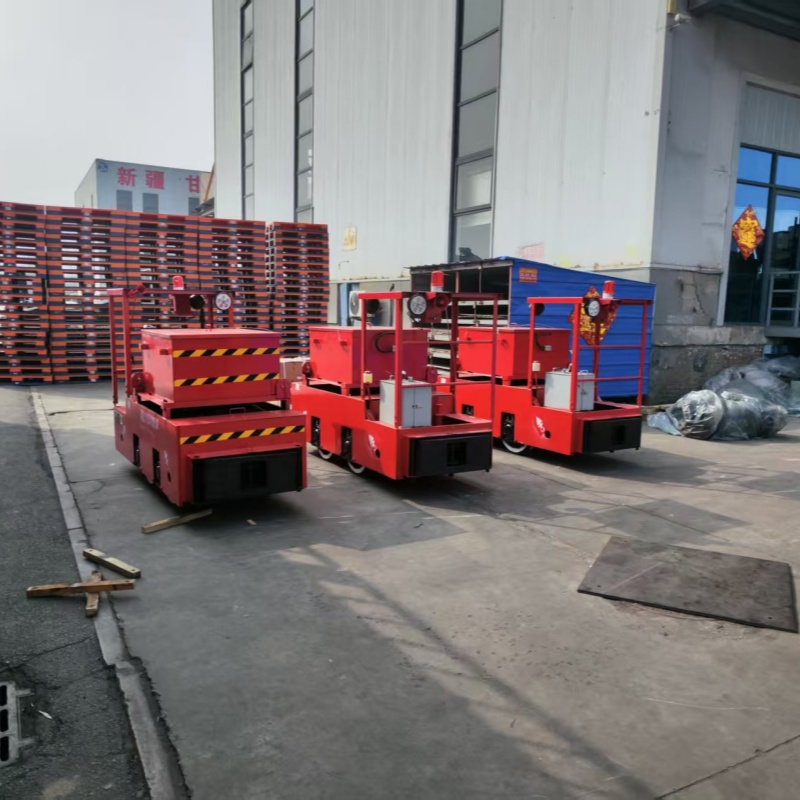
Shandong Mingshun Machinery Manufacturing Co., Ltd., located in Qufu, Shandong (the birthplace of Confucius and known as the Holy City of the East), is an entity manufacturer integrating R&D, production, and sales. Covering an area of over 21,000 square meters, it boasts 18,000 square meters of factory buildings and warehouses. The company's main products include ore loading equipment (sliding mucking loaders, crawler large-slope mucking loaders, milling excavators, small underground skid steer loaders, and rock loading machine electric winches) and transportation equipment (1.5T-20T trolley locomotives, 2T-12T battery-powered vehicles, crawler transporters, and new energy lithium-electric three-wheeled vehicles). Its products have passed ISO 9001 quality management system, ISO 3834 welding quality system, and CE safety certification, and are exported to 30 countries including Australia, Chile, and South Africa. Guided by the principle of "technology + quality," the company has established strategic partnerships with suppliers such as CATL and Siemens to ensure the leading performance of core equipment components (batteries and motors). It has set up five spare parts warehouses overseas (including in Chile and Australia) and trained 20 local technicians, achieving a 48-hour fault response time. Over the past 12 years, the company has provided over 1,000 new energy mining locomotives to global mining customers, with an equipment failure rate of ≤4.5% and a customer repurchase rate exceeding 60%, including international mining giants such as CODELCO, BHP, and Vale. For more information, please visit the official website:www.mingshunjixie.com